Winter Gear Storage Bins: Organize Hats Gloves and Boots
Every winter the same thing happens by the front door: one glove on the mat, the other in a coat pocket, three hats on the floor and a pile of wet boots nobody wants to step around. Winter gear is bulky, it comes in pairs that love to split up, and it gets used every single day for months. A few well-chosen winter gear storage bins fix most of that chaos without a renovation or a custom mudroom.
This guide walks through how to set up a simple bin system for hats, gloves, scarves and boots, how to keep things dry and fresh, and which bin sizes make sense for an entryway, a closet shelf and the garage.
Why Winter Gear Storage Bins Work Better Than Hooks Alone
Hooks are great for coats, but small accessories fall off them, and a hook full of scarves quickly becomes a tangle. Bins solve three specific problems:
- Pairs stay together. Gloves and mittens dropped into a bin stay in one place instead of migrating around the house.
- Everyone knows where things go. One bin per person (or per category) gives kids and adults an easy drop zone when they come in the door.
- Off-duty gear gets out of the way. Spare hats, ski gloves and snow pants can go up on a shelf until the next snow day.
Clear bins are especially handy for winter accessories because you can spot the purple mittens or the work gloves without pulling every container down.
Step by Step: Set Up a Winter Gear Bin System
- Gather everything first. Pull every hat, glove, mitten, scarf, neck gaiter, ear warmer and pair of boots into one spot. Match up pairs and set aside anything that is outgrown, torn or missing its partner.
- Sort by person or by use. Families with kids usually do best with one bin per child. Couples or roommates may prefer bins by category: hats and headbands, gloves and mittens, scarves and gaiters.
- Split daily gear from backup gear. The items you wear every day belong at the door. Heavy ski gloves, spare hats and snow-day extras can live in a second bin on a closet shelf.
- Choose a home for each bin. Daily-use bins go on a low shelf, bench or closet floor where kids can reach them. Backup bins can stack higher.
- Label the front. A simple name or category label on each bin keeps the system working after the first busy week.
- Set a drying rule. Wet gloves and hats should dry before they go into any bin. More on that below.
Picking the Right Bin Size for Each Spot
Entryway and Closet Shelves: Small Clear Bins
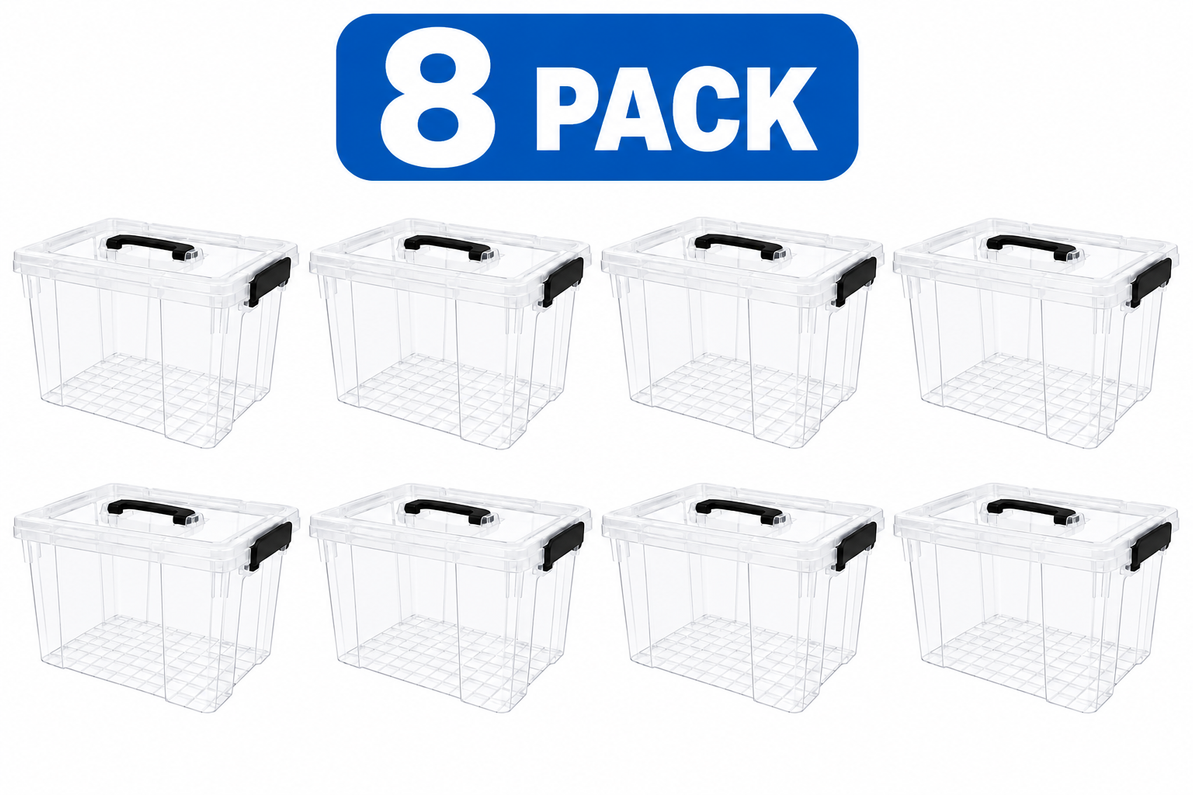
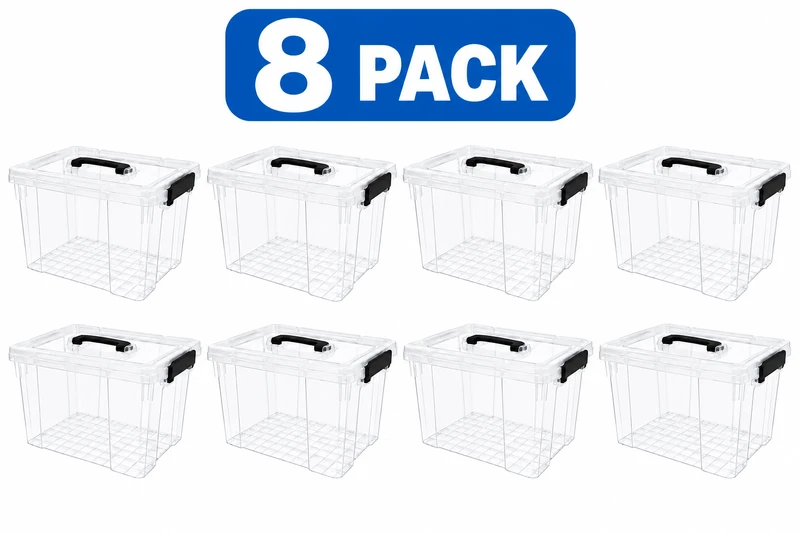
For hats, gloves and scarves, a mid-size bin is the sweet spot. Too big and items sink to the bottom; too small and a puffy pair of mittens will not fit. The 24 quart clear stackable storage bins measure 15.75 inches long, 11.375 inches wide and 9.125 inches high each, which fits comfortably on most closet shelves and entry benches. They come as a pack of 8, which is enough for one bin per family member plus a few for backup gear and boot accessories. Because the plastic is clear, you can see contents without opening anything.

Garage and Car Gear: Larger Snap Lid Totes
Winter gear is not only clothing. Ice scrapers, snow brushes, traction aids, tire chains and sealed bags of ice melt tend to pile up in the garage. Those items belong in a tougher, larger tote. The 12 gallon snap lid storage bins measure 24.5 by 16.5 by 9 inches, have a lid that locks into place to help keep out dust and liquids, and include built-in handle grooves for pulling them off a garage rack. The listing notes these bins are designed for garage or workshop items and are not suitable for fabric, so keep hats and gloves in the clear bins and use the black totes for tools and supplies.

Keep Winter Gear Dry and Fresh
The biggest mistake with winter gear storage is putting damp items into a bin. Moisture trapped inside plastic leads to musty smells and, in the worst cases, mildew. A few habits prevent that:
- Dry first, store second. Lay wet gloves and hats on a drying rack, over a heat register (not directly on a heater) or on a towel overnight before they go back in the bin.
- Leave a lid off for daily bins. For the entryway bins you use every day, an open bin lets air move. Save closed storage for clean, fully dry backup gear.
- Wash before long-term storage. At the end of the season, wash hats, scarves and gloves according to their care labels and let them dry completely before packing them away.
- Air out new bins. Some new plastic containers have a slight odor at first. Separating them and letting them air out for a day or two helps.
What About Boots
Boots are the messiest part of winter storage. Wet boots should sit on a waterproof tray or mat by the door until they dry. Once dry, out-of-rotation boots (last year's sizes, special-occasion boots, spare work boots) can go into a larger bin in a closet or garage. Stuff the toes with paper to help them hold their shape. Keep boot accessories like spare laces, traction cleats and waterproofing spray together in one small bin so they are easy to find.
Quick Winter Gear Storage Checklist
- One clear bin per person for daily hats and gloves at the door
- A backup bin on a higher shelf for snow-day and ski gear
- A labeled bin for scarves, gaiters and ear warmers
- A sturdy garage tote for scrapers, brushes and traction aids
- A drying spot so nothing goes into a bin wet
- Stack only as high as you can safely lift and reach
Safety note: When you stack bins on shelves, keep heavier bins low and lighter ones up top, and use a step stool rather than reaching overhead for a full bin. Do not stack higher than the manufacturer recommends for your bins.
Frequently Asked Questions
What size storage bin is best for hats and gloves?
A mid-size bin in the 20 to 30 quart range works well for one person's hats, gloves and a scarf or two. It is large enough for bulky mittens but not so deep that small items get lost at the bottom.
Should winter gear bins have lids?
For daily-use bins at the door, leaving the lid off helps items air out. For backup gear stored on a shelf or for end-of-season storage, a closed bin keeps dust off, as long as everything inside is clean and completely dry.
Can I store wet gloves in a plastic bin?
It is best not to. Moisture trapped in a closed bin can cause odors and mildew. Dry gloves and hats fully first, then put them back in the bin.
How do I store winter gear in the off-season?
Wash or clean everything, let it dry completely, sort by person or category, and pack it into labeled bins on a high closet shelf or in a dry storage area. When the first cold snap arrives, you can pull down exactly what you need.
Get Your Entryway Ready Before the First Snow
A simple bin system takes an afternoon to set up and saves time every cold morning for the rest of the season. Start with the 24 quart clear stackable bins for hats and gloves, add the 12 gallon snap lid totes for garage supplies, and browse the full home storage bins collection for more sizes.
Recent Posts
-

Folding Tables Versus Workbenches for Real Work
A garage project can change quickly: one day you are assembling shelves, and the next you need the f …Nov 15, 2026 -

Aluminum Versus Steel Ladders for Work and Home
A ladder that is awkward to carry often gets left in the garage. A ladder that is too light-duty for …Nov 14, 2026 -
Office Supply Cart Guide for Smarter Workspaces
A supply closet may hold plenty of inventory, but it does not help much when envelopes, labels, pape …Nov 13, 2026