
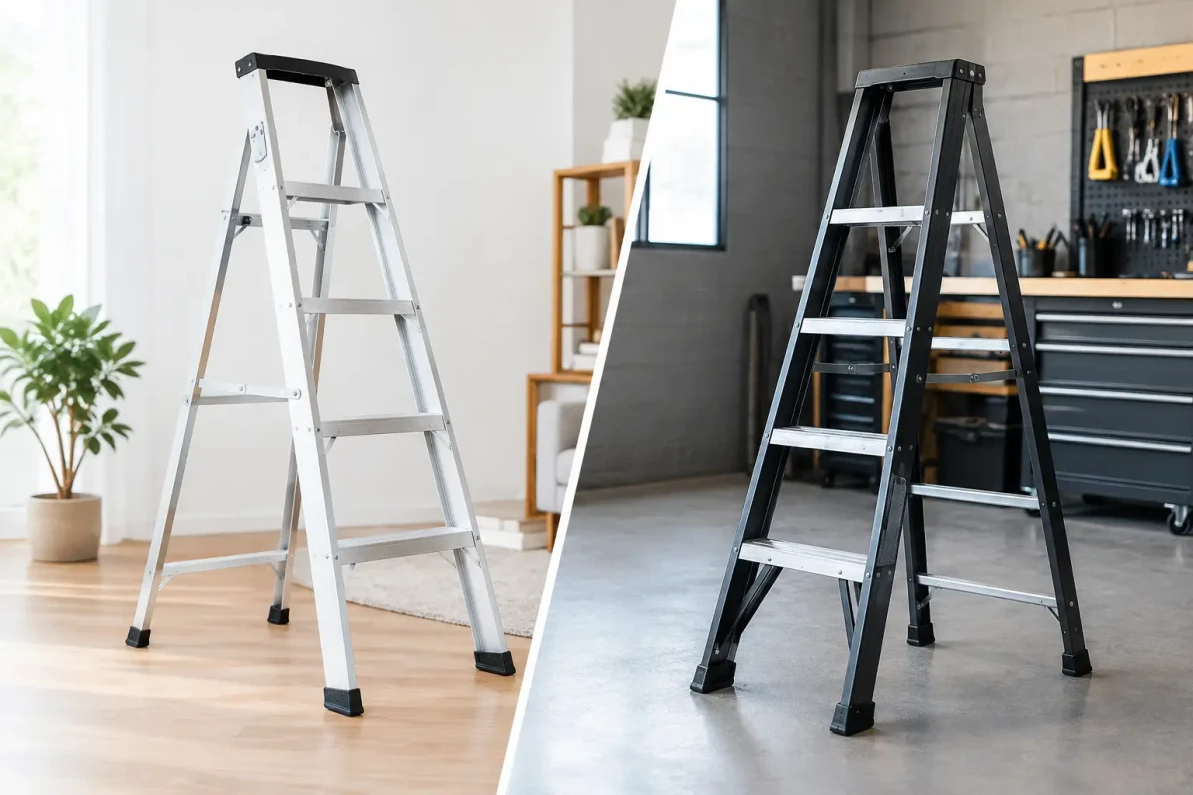
Aluminum Versus Steel Ladders for Work and Home
A ladder that is awkward to carry often gets left in the garage. A ladder that is too light-duty for the job can feel unsteady before work even begins. When comparing aluminum versus steel ladders, the better choice comes down to where it will be used, how often it will move, and the weight and wear it needs to handle.
For most homeowners, renters, and mobile maintenance crews, aluminum is the convenient everyday option. Steel can make more sense for stationary indoor use, budget-minded purchases, and certain shop or warehouse tasks. Material matters, but it is only one part of a smart purchase. Height, duty rating, tread design, storage space, and intended work all deserve equal attention.
Aluminum Versus Steel Ladders: The Main Difference
The clearest difference is weight. Aluminum ladders are usually much easier to lift, carry, position, and load into a vehicle. That matters when you are cleaning gutters, changing exterior fixtures, painting several rooms, stocking shelving, or moving between maintenance calls.
Steel ladders are generally heavier. The extra weight can make them less convenient to transport, especially in taller sizes. On the other hand, a heavier ladder may feel more planted for indoor tasks where it stays in one area. A steel step ladder used in a storeroom, stockroom, or workshop does not need to travel far, so portability may not be the deciding factor.
Both materials can be dependable when the ladder is properly designed, used within its rated capacity, and stored correctly. Do not assume a steel ladder automatically holds more weight or that every aluminum ladder is for light use. Always check the manufacturer’s duty rating and the product specifications for the specific model.
Weight and Portability
Aluminum has a practical advantage for anyone who carries a ladder often. A lighter ladder reduces the effort of moving it through hallways, around furniture, up a driveway, or onto a work vehicle. It is also easier for one person to reposition safely rather than drag across floors or force through tight storage areas.
This makes aluminum a strong fit for household use, property maintenance, painting, cleaning, light repairs, and mobile service work. Folding aluminum step ladders are particularly useful where storage is limited, such as apartments, utility closets, garages, and small business back rooms.
Steel is less convenient when frequent transport is part of the job. A compact steel step stool may still be easy enough to handle, but the difference becomes more noticeable with larger step ladders. If several employees share equipment, think about who will move it and how far. The ladder that is easiest to handle is more likely to be used correctly and returned to its storage spot.
Durability and Everyday Wear
Steel is valued for its rigidity and resistance to dents in demanding indoor environments. It can be a practical choice for a utility room, warehouse workstation, retail stock area, or workshop where a step ladder is used repeatedly for similar tasks. A steel frame can tolerate ordinary bumps and contact well, although it is not immune to damage.
Aluminum is also durable, but it can dent or bend if it is dropped hard, overloaded, or used as a makeshift bridge or support. A dented rail, loose rivet, damaged step, or bent spreader is a reason to remove the ladder from service until it can be properly evaluated or replaced. The same rule applies to steel ladders.
Neither material should be judged only by appearance. Check the steps, feet, hinges, locking mechanisms, fasteners, and rails regularly. A ladder can look acceptable from a distance while having worn foot pads or loose hardware that affects stability.
Rust, Corrosion, and Storage Conditions
Aluminum does not rust in the way steel does, making it a more forgiving choice for damp garages, outdoor storage areas, and jobs that involve occasional moisture. It can still corrode under certain conditions, especially when exposed to harsh chemicals or salt-heavy environments, but routine cleaning and dry storage go a long way.
Steel can rust if its finish becomes scratched or if it is repeatedly exposed to moisture. This does not mean steel is unsuitable for practical use. It simply needs more attention in humid basements, open sheds, near exterior doors, or other damp spaces. Wipe off water, remove dirt that holds moisture, and store the ladder in a dry location when possible.
For a ladder that will regularly be carried outside and returned indoors, aluminum usually requires less maintenance. For a steel step ladder that lives in a dry warehouse or workshop, corrosion may never become a major concern.
Stability Is About More Than Material
Shoppers sometimes assume steel is always safer because it is heavier. In practice, stable ladder use depends on the ladder’s design, condition, placement, and capacity. Wide steps, non-slip foot pads, secure spreaders, a level floor, and a correctly sized ladder can matter more than the frame material.
A quality aluminum step ladder can be very stable when set up on a flat, firm surface. A steel ladder can still shift if one foot is on cardboard, loose debris, a floor drain, or an uneven surface. Before climbing, fully open the ladder, lock the spreaders, make sure all feet contact the ground, and face the ladder while ascending or descending.
Avoid standing on the top cap or any step marked as unsafe for standing. Keep your belt buckle between the side rails instead of leaning far to one side. If the work area requires repeated sideways reaching, move the ladder rather than stretching from it.
Electrical Work Requires a Different Choice
Aluminum and steel are both conductive metals. Neither is the right choice when there is a risk of contact with energized electrical equipment or overhead power lines. For those situations, a nonconductive fiberglass ladder designed for the job is generally the appropriate option.
This is one of the few buying decisions where aluminum versus steel ladders is not the main comparison. If electrical exposure is possible, do not select a metal ladder simply because it is lighter, lower priced, or already on hand. Plan the work around the correct ladder material and follow the safety guidance for the equipment and worksite.
Choosing the Right Ladder for Common Jobs
For quick indoor tasks, such as reaching upper kitchen cabinets, replacing a smoke alarm battery, organizing closets, or accessing high shelves, a compact aluminum or steel step stool can work well. Aluminum is easier to move from room to room. Steel may be a good value if it will stay in one area and be kept dry.
For painting, routine home maintenance, gutter cleaning, and property turnover work, aluminum often makes more sense because frequent carrying is expected. Look for a height that lets you work without standing on restricted steps or overreaching.
For warehouse and stockroom work, consider the floor surface, frequency of use, and what employees will carry while climbing. A stable step ladder with a suitable duty rating, wide standing area, and durable foot pads may be more useful than choosing by material alone. If the ladder will serve a fixed picking station, steel can be a practical, cost-conscious option. If it must move through aisles all day, aluminum can reduce handling effort.
For contractors and maintenance teams, transport usually favors aluminum. The time saved lifting, loading, and repositioning a lighter ladder adds up over a week. Still, verify that the selected model has the capacity and height needed for tools and the type of work being performed.
What to Check Before Buying
Start with the intended task, then compare specifications instead of shopping by material alone. Confirm the ladder’s maximum working height and remember that a taller ladder is not always better if it is difficult to store or safely position. Review the duty rating, which should account for the user, clothing, and tools or materials carried.
Look at the step depth and number of steps, especially if the job requires standing in one place for more than a few minutes. Check whether the ladder folds flat, how much storage room it needs, and whether replacement foot pads or other parts are available for the model. For businesses buying multiple units, consistent sizes and styles can simplify training, storage, and replacement planning.
Price matters, but the lowest-priced ladder is not always the best value if it is too small, too heavy for the user, or poorly suited to the environment. A practical ladder should make routine work easier without creating new handling or storage problems.
The right ladder is the one that fits the job before anyone climbs it. Choose aluminum when easy carrying and moisture resistance are priorities, choose steel when stable indoor use and straightforward value fit the need, and check the specifications every time before making the final call.
Recent Posts
-
Folding Tables Versus Workbenches for Real Work
A garage project can change quickly: one day you are assembling shelves, and the next you need the f …Nov 15, 2026 -
Aluminum Versus Steel Ladders for Work and Home
A ladder that is awkward to carry often gets left in the garage. A ladder that is too light-duty for …Nov 14, 2026 -
Office Supply Cart Guide for Smarter Workspaces
A supply closet may hold plenty of inventory, but it does not help much when envelopes, labels, pape …Nov 13, 2026
