Whirlpool Appliance Parts for a Washer That Won't Drain
A washer full of standing water does not automatically need a new drain pump. Before buying Whirlpool appliance parts, check whether the problem is a blocked hose, a clogged filter or a household drain that cannot accept the water. Those checks can prevent an unnecessary repair and help you identify the right replacement if a component has failed.
This guide covers the parts most closely connected to draining, what their symptoms can tell you and when to stop troubleshooting. Your washer’s model-specific instructions take priority, because Whirlpool front-load and top-load machines do not all use the same drain layout or safety controls.
Make the Washer Safe Before Inspecting Anything
Cancel the cycle and disconnect power before removing a panel, opening a pump filter or touching an internal component. Turn off the water supply valves if you will move the washer or disconnect hoses. If the floor is flooded, do not walk through water to reach the plug; isolate power safely and get help if needed.
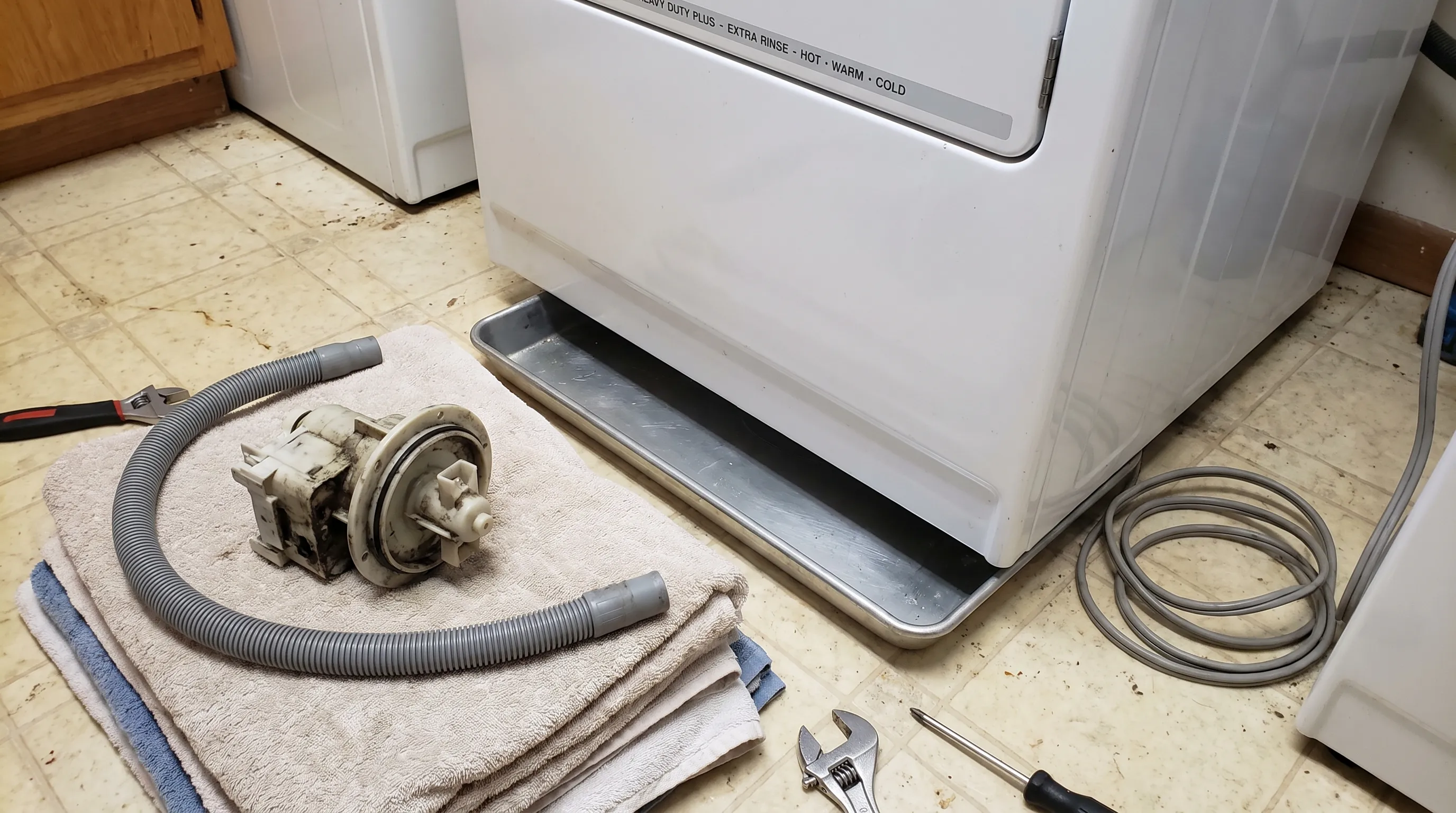
Standing water creates two additional hazards: spills and scalding. Let hot wash water cool, keep towels nearby and use a shallow pan where the model’s draining procedure calls for one. Never force a locked door open or loosen a pump filter quickly while the tub is full.
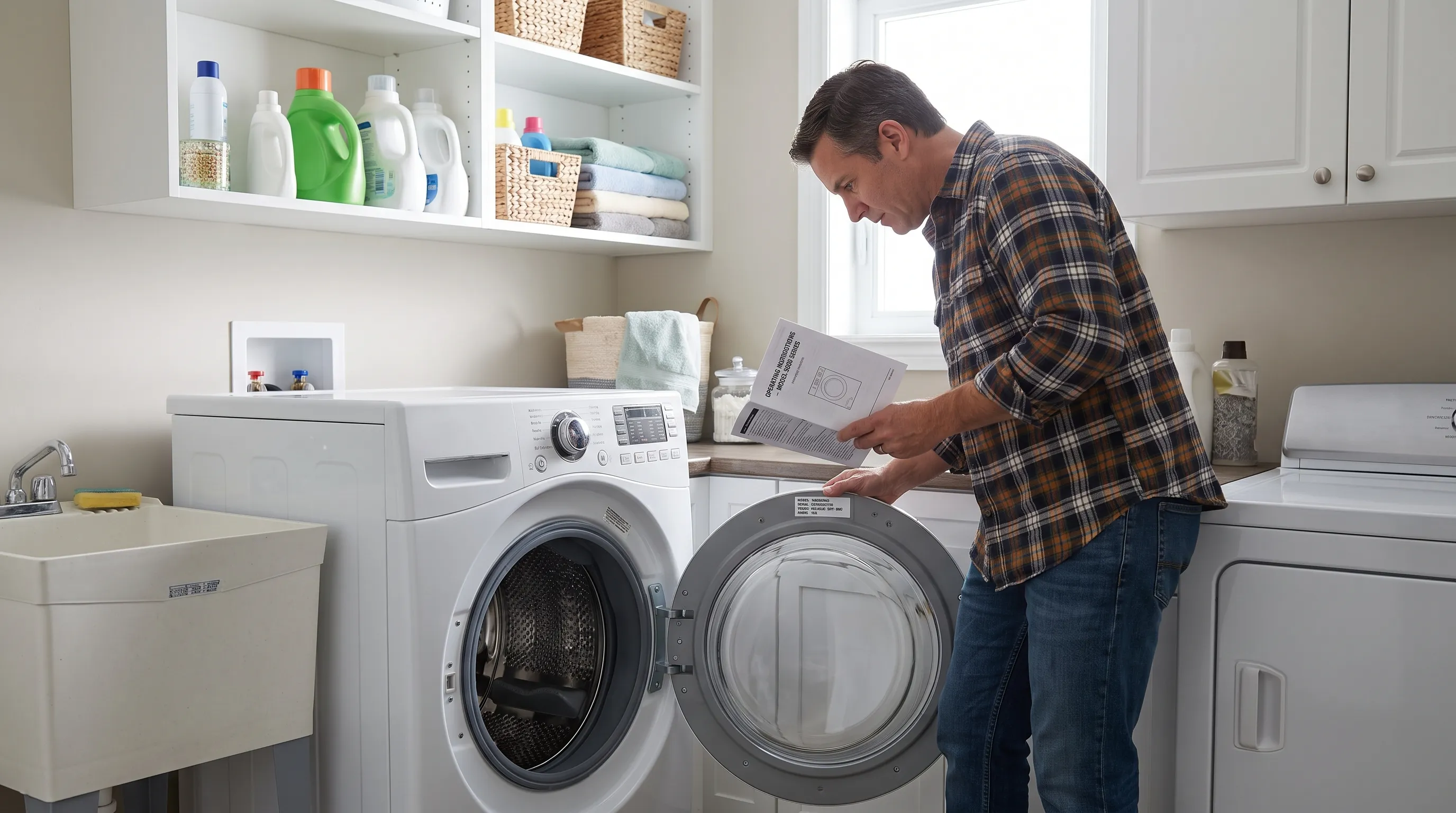
Before inspecting Whirlpool appliance parts, find the washer’s model number and consult the Whirlpool appliance manuals for its access and draining instructions. Some machines have a user-accessible pump filter; others require cabinet disassembly.
If the manual provides an emergency drain procedure, follow it exactly. Do not tip a water-filled washer to reach the underside. A heavy machine can shift unexpectedly, damage its hoses or spill water onto electrical components.
Rule Out Installation and Plumbing Problems First
A drain pump cannot move water properly through a crushed hose or into a backed-up household drain. Start with the visible plumbing before opening the washer.
Look behind the machine for a kinked, pinched or flattened drain hose. A washer pushed too close to the wall can compress the hose even when the pump is working normally. Check the installation instructions for the required drain height, hose insertion depth and connection method rather than applying a universal measurement.
An incorrectly positioned hose can also cause siphoning, where water leaves the tub at the wrong time. That is an installation issue, not necessarily a failed component.
If the standpipe overflows when the washer attempts to drain, or nearby fixtures also drain slowly, investigate the household plumbing. Replacing Whirlpool appliance parts will not clear a blocked standpipe or laundry sink drain.
Also distinguish water remaining in the tub from clothes that are wet after spinning. A washer that empties but does not spin effectively may have a load-balance, cycle-selection or drive-system problem. Confirm that water is actually being retained before buying a drain-related part.
Whirlpool Appliance Parts to Check First
Drain Pump: Check for Obstructions Before Replacing It
The drain pump moves water from the tub toward the discharge hose. Small objects, lint buildup or debris can obstruct its inlet or impeller, producing symptoms that resemble pump failure.
Listen during a drain attempt only while the washer is fully assembled and safe to operate. Humming with little water movement can suggest a blockage or stalled pump, but it does not prove the motor is defective. Silence is equally inconclusive: the pump may not be receiving a command or electrical power.
With power disconnected, inspect only the areas accessible under your model’s instructions. Do not put your fingers into a pump opening blindly; trapped glass or metal can be sharp. A cracked housing, a confirmed leak from the pump body or a damaged impeller warrants closer evaluation.
Among Whirlpool appliance parts, the drain pump is a logical replacement only after obstructions and installation problems have been ruled out. A technician may need to determine whether the pump receives the correct supply during a drain command. That requires energized testing and is not a casual DIY check.
If you find an obstruction, remove it safely and inspect for damage before deciding whether the pump itself needs replacement.
Pump Filter and Tub-to-Pump Hose: Look for Trapped Debris
Some Whirlpool washers have a drain pump filter or debris trap. Not every model does, and not every filter is accessible through a small front panel. Check the manual rather than assuming a filter exists behind a particular cover.
Where a user-serviceable filter is provided, drain the water using the specified procedure before opening it. Remove trapped objects and clean the filter according to the instructions. Inspect its cap and seal for cracks, debris or damage that could cause a leak after reassembly.
The internal hose between the tub and pump can also trap small garments or objects. Inspecting it may require panel removal and releasing hose clamps, so leave that work to a technician if access is difficult.
A dirty filter usually needs cleaning, not replacement. A damaged filter cap, seal or internal hose requires an exact model match rather than a visually similar substitute.
Drain Hose: Check for Both Blockage and Physical Damage
A hose can look normal outside while being obstructed inside. Inspect the accessible length for sharp bends, crushed sections, splits and signs of leakage around connections.
Disconnecting a hose can release retained water, so prepare a container and follow the model’s instructions. Avoid forcing a wire or sharp tool through the hose; it can puncture the wall or damage a molded fitting.
When comparing Whirlpool appliance parts for a hose replacement, check the required length, routing and connection ends. A hose that fits loosely or bends too tightly can create a new leak or drainage restriction.
After clearing a blockage or replacing a hose, secure all connections and reinstall every access panel before restoring power. Run the manufacturer’s recommended drain or test procedure while watching for leaks. Stop immediately if water escapes.
Lid Switch or Door Lock: Consider the Cycle Sequence
On some top-load washers, a lid switch or lid lock fault can interrupt the sequence that leads to draining or spinning. Front-load washers use a door lock assembly, but a lock problem does not universally prevent drainage. The effect depends on the model and its control logic.
Look for a lid or door that does not close properly, a damaged strike or a lock-related message. Check for trapped clothing and visible debris before assuming the electrical assembly has failed.
Never bypass a lid switch or door lock. These are safety devices, and defeating them can expose you to moving components.
Whirlpool appliance parts for lid and door locking systems should be considered only when the model’s troubleshooting information points to that assembly. A lock indicator alone is not enough evidence: a front-load washer may keep its door locked because water remains inside, making the locked door a consequence rather than the original fault.
Wiring and Control Board: Leave Electrical Diagnosis Until Last
A loose connector, damaged wiring harness or control fault can prevent the pump from operating. However, these possibilities should come after checks for blocked hoses, trapped debris and plumbing restrictions.
With power disconnected, a technician can inspect connectors and wiring for damage. Confirming the electrical cause may require further testing using the correct technical information and equipment.
Do not buy Whirlpool appliance parts such as a control board simply because the washer will not drain or displays an error. An error describes what the machine detected; it does not always identify the failed part.
Control boards can also have model-specific configuration requirements. Guessing at one can turn a straightforward drain problem into a more expensive repair.
Use the Symptoms to Narrow the Inspection
The following observations help choose the next check. They are clues, not definitive diagnoses.
| What you observe | What to check first | What it does not prove |
|---|---|---|
| Pump hums but water stays in the tub | Pump obstruction, filter and restricted hoses | That the pump motor needs replacement |
| Household standpipe overflows | Standpipe or household drain blockage | That a washer component has failed |
| Washer empties but clothes remain very wet | Spin setting, load balance and spin operation | That the drain pump is defective |
| Drain attempt is silent | Cycle state, model-specific controls and electrical diagnosis | That the control board is faulty |
| Water leaks near the pump or hose | Exact leak location, seals, housing and connections | That the entire pump assembly must be replaced |
Use this evidence to narrow your search for Whirlpool appliance parts rather than ordering several possible fixes. If the washer repeatedly fails to drain after accessible blockages are cleared, or you find damaged wiring, arrange service through a qualified technician or Whirlpool’s service and repair resources.
Match the Replacement to Your Exact Washer
“Fits Whirlpool” is not enough to establish compatibility. Washers within the same brand can use different pumps, hoses, filters and lock assemblies.
Find the complete model number on the appliance’s identification label. Its location varies, but common places include the door opening and areas around the lid. Record the serial number too, since production changes can sometimes affect which replacement is needed.
Use a model-specific parts diagram or verified compatibility information to identify the service part number. A number molded into the old component may be a manufacturing or subcomponent reference rather than the correct ordering number. Appearance alone is also unreliable: similar pumps can have different mounts, connectors or hose ports.
When shopping for Whirlpool appliance parts, confirm whether the listing describes an original equipment manufacturer (OEM) component or an aftermarket replacement. OEM identifies the source of the part; an aftermarket listing should still clearly state the supported models and replacement references.
Check whether the repair requires separate seals, clamps or other hardware, and verify what the package includes. Do not assume accessories shown in a photo are included.
Finally, review current availability, shipping information and return requirements before ordering, especially before opening or installing an electrical component. A confirmed diagnosis and compatibility match are more valuable than a low price on the wrong part.
Frequently Asked Questions
Does a washer that will not drain always need a new pump? No. A blocked filter, obstructed hose, incorrect drain installation or household plumbing backup can produce the same symptom. Check those possibilities before replacing the pump.
Do all Whirlpool washers have a drain pump filter I can clean? No. Filter design and accessibility vary by model. Some require cabinet access rather than a simple user-serviceable panel. Follow the owner’s manual and do not remove panels while the washer is plugged in.
Can I identify the failed part from an error code? An error code helps narrow the problem, but it is not a replacement instruction. Check its meaning in the documentation for your exact model, then investigate the possible causes listed there.
How do I choose the correct Whirlpool appliance parts? Use the full washer model number, the verified service part number and the listing’s compatibility information. Do not rely only on the brand name, a photograph or a number stamped on the old component.
When should I call a repair technician? Get help when draining or access cannot be done safely, the fault requires live electrical testing, wiring is damaged or the problem continues after accessible restrictions have been cleared.
Shop After You Have Identified the Fault
Once you know which component has failed and have confirmed its replacement number, explore the appliance parts selection at Easy Deal USA. Compare the listing with your washer’s exact model and required connections before checkout. If compatibility remains uncertain, resolve it before placing the order rather than treating installation as a trial fit.
Recent Posts
-
How to Hand Wrap a Pallet | Easy Deal USA
A pallet that leaves your dock tight and square should arrive the same way. A pallet that's wrapped …Oct 09, 2026 -
Samsung Dryer Not Heating? Causes and How to Fix It
Your Samsung dryer tumbles, the timer counts down, and the clothes come out just as damp as they wen …Oct 07, 2026 -
How to Store Holiday Decorations in Latching Storage Totes
Every January the same scene plays out: ornaments rolled loose in a cardboard box, a tangle of light …Oct 07, 2026