Stretch Wrap Gauge and Width: How to Pick the Right Roll
Buying stretch wrap looks simple until you see the listings: 60 gauge, 80 gauge, 15 inch, 18 inch, 1,000 feet, 1,500 feet, clear, black, pre-stretched or not. Pick the wrong combination and you either burn through film that tears on every corner or pay for more plastic than your loads need. This guide explains stretch wrap gauge and width in plain terms so you can match the roll to what you actually ship, move or store.
If you already know how to wrap a pallet and just want to buy the right roll, start with the quick checklist further down. If you are new to hand wrap, read the gauge and width sections first, because those two numbers decide most of how a roll performs.

What Stretch Wrap Gauge Means
Gauge is the thickness of the film. In the stretch film world, the gauge number divided by 100 gives the approximate thickness in mils (thousandths of an inch). So 80 gauge film is roughly 0.8 mil and 60 gauge is roughly 0.6 mil. A higher gauge number means thicker film.
Thicker film is not automatically better. It resists punctures and tears more, but it also takes more effort to stretch by hand and uses more plastic per wrap. The goal is the thinnest film that still holds your load together without tearing.
How common gauges are typically used
- Lighter gauges (around 60 and below): bundling boxes, wrapping light and uniform cartons, keeping small items together on a shelf.
- 80 gauge: the everyday workhorse for hand wrapping. It handles typical mixed-carton pallets, furniture for moving and loads with a few corners or edges.
- Heavier gauges (90 and up): sharp-edged, irregular or very heavy loads where punctures are a real risk.
If you are not sure where your loads fall, 80 gauge is the safe middle choice for most small businesses, warehouses and home moves. It is thick enough to survive box corners and handling, and still manageable to stretch by hand.
Choosing Stretch Wrap Width: 15 Inch vs 18 Inch
Width is the height of the roll, which is how much of the load each pass covers. Hand wrap is most often sold in widths from about 12 to 20 inches. The two widths you will see most for hand wrapping are 15 and 18 inches.
When 18 inch film makes sense
Wider film covers a pallet in fewer passes, so you finish faster on full-height loads. It is the go-to width for wrapping pallets all day. The trade-off is weight: a wide, long roll is heavier to hold and swing around a load, which is why a dispenser handle helps a lot.
When 15 inch film makes sense
A narrower roll is lighter and easier to control. It suits smaller loads, shorter pallets, bundling long items and wrapping furniture, where you are working around legs, drawers and cushions rather than flat carton faces. If several people share the wrapping job, or you wrap only now and then, the lighter roll is often the more comfortable choice.

Roll Length, Color and Other Specs to Check
Length. Longer rolls mean fewer roll changes. A 1,500 foot roll lasts longer than a 900 foot roll of the same gauge, but it is also heavier. High-volume shippers usually prefer long rolls; occasional users often prefer shorter, lighter ones.
Clear or black. Clear film lets you read labels and count cartons without unwrapping. Black film hides what is on the pallet, which some businesses prefer for higher-value goods, and it blocks light.
Pre-stretched or not. Pre-stretched film has already been stretched at the factory, so it is thinner and easier to pull. Film that is not pre-stretched keeps its full thickness and gives you more stretch to work with on the load.
Core size. Check that your dispenser or handle fits the roll core. Many hand dispensers are built for 2 to 3 inch cores.
Stretch Wrap Gauge Buying Checklist
- Describe the load. Light and uniform cartons, mixed cartons, furniture, or sharp and irregular items?
- Pick the gauge. Lighter gauge for light bundling, 80 gauge for most general wrapping, heavier gauge for sharp or very heavy loads.
- Pick the width. 18 inch for frequent full-pallet wrapping, 15 inch for lighter handling, furniture and smaller loads.
- Pick the length. Long rolls for high volume, shorter rolls if the wrapper needs a lighter roll.
- Choose clear or black based on whether people need to see the contents.
- Add a dispenser if you wrap more than a pallet or two at a time.
- Buy enough for the season. Holiday shipping and year-end moves can double how much film you go through.
Why a Stretch Film Dispenser Helps
Holding a bare roll with your hands is tiring, and it is hard to keep even tension, which leads to loose wraps or torn film. A pole-style dispenser holds the roll on a core shaft so you can walk the load with steady tension and change rolls quickly.

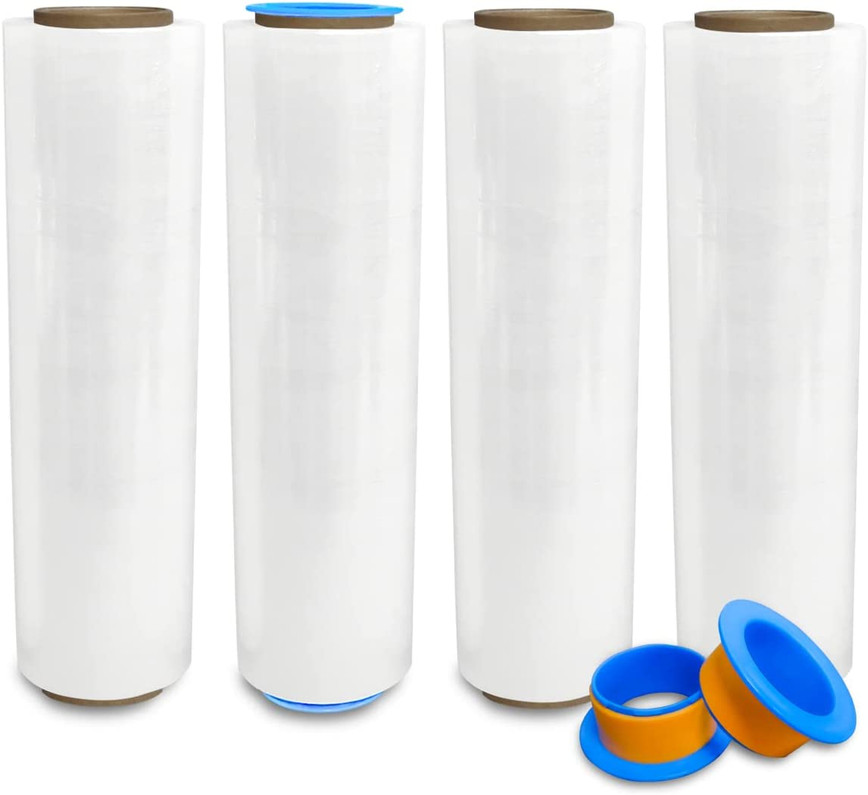
Our stretch film dispenser pole holder fits rolls with 2 to 3 inch diameter cores and lengths from 12 to 24 inches, so it covers both 15 and 18 inch hand rolls. The 18 inch 80 gauge 4-roll pack also includes free roll holders, which is handy if you want a backup at a second packing station.
Safety Tips for Hand Wrapping
- Walk forward around the load and watch your footing. Walking backward is a common cause of trips.
- Keep the pallet stable on the floor or a pallet jack before you start. Do not wrap a load that is leaning.
- Do not use stretch wrap as a substitute for proper strapping on very heavy or unstable loads.
- Lift heavy rolls with your legs, not your back, and keep spare rolls at waist height when you can.
- Cut film with a safety cutter, not an open blade, and keep cutters away from the film path.
Frequently Asked Questions
Is 80 gauge stretch wrap good for moving furniture?
Yes. 80 gauge is a common choice for furniture because it resists tears on corners and edges and keeps drawers and doors closed in transit. A 15 inch roll is often easier to handle around furniture than a wide roll.
What is the difference between 60 and 80 gauge stretch wrap?
80 gauge is thicker, about 0.8 mil compared with about 0.6 mil for 60 gauge. It is more puncture resistant and better for mixed or edged loads, while 60 gauge suits lighter bundling where less strength is needed.
Should I buy 15 inch or 18 inch stretch wrap?
Choose 18 inch if you wrap full pallets often and want fewer passes. Choose 15 inch if you want a lighter roll that is easier to control on smaller loads, furniture or occasional jobs.
How many times should I wrap a pallet?
Most loads need several wraps at the base to lock the cartons to the pallet, overlapping passes up the sides, and a few more wraps at the top. Add extra passes for heavy or uneven loads rather than switching to an overly thick film.
Find the Right Stretch Wrap for Your Loads
For most pallets, furniture and moving jobs, an 80 gauge film in the right width is all you need. Shop the 18 inch x 1500 ft 80 gauge 4-roll pack, the lighter 15 inch x 900 ft 80 gauge pallet wrap and the stretch film dispenser, or browse all shipping supplies at Easy Deal USA.
Recent Posts
-
How to Organize Toys With Clear Storage Bins
Toy clutter tends to peak right before the holidays, when birthday gifts from the year are still sca …Oct 23, 2026 -
Folding Chairs for Church Halls and Community Centers
Church halls, fellowship rooms and community centers ask more of their seating than almost any home. …Oct 23, 2026 -
Restaurant Bus Cart Guide: Using a Utility Cart for Bussing
Every busy dining room hits the same wall at some point in a shift: dirty plates stack up, servers m …Oct 23, 2026