Restaurant Bus Cart Guide: Using a Utility Cart for Bussing
Every busy dining room hits the same wall at some point in a shift: dirty plates stack up, servers make trip after trip to the dish pit carrying more than they should, and tables sit uncleared while guests wait at the host stand. A restaurant bus cart fixes that bottleneck. One rolling cart lets a busser clear several tables in a single loop, keeps heavy tubs off arms and shoulders, and makes the dining room look calmer and more professional. This guide explains what to look for in a utility cart for bussing, how to set it up, and how to run it safely during a rush.
Why a Restaurant Bus Cart Beats Hand Carrying
Carrying a full bus tub through a crowded dining room is slow and risky. Staff can only carry one tub at a time, glassware gets stacked too high, and a single slip can mean broken dishes, a spill on the floor and a hurt employee. A cart changes the math:
- Fewer trips. Two shelves hold several bus tubs, so one person can clear a whole section before heading back to the kitchen.
- Less strain. Rolling a load is far easier on the back and wrists than carrying it.
- Cleaner presentation. Dirty dishes stay in tubs on a cart instead of being balanced in front of guests.
- More flexible staffing. The same cart can restock silverware, move linens, carry clean racks or haul supplies from the stockroom before opening.
What to Look for in a Utility Cart for Bussing
Not every cart works well on a dining room floor. Use this checklist before you buy.
Size That Fits Your Aisles
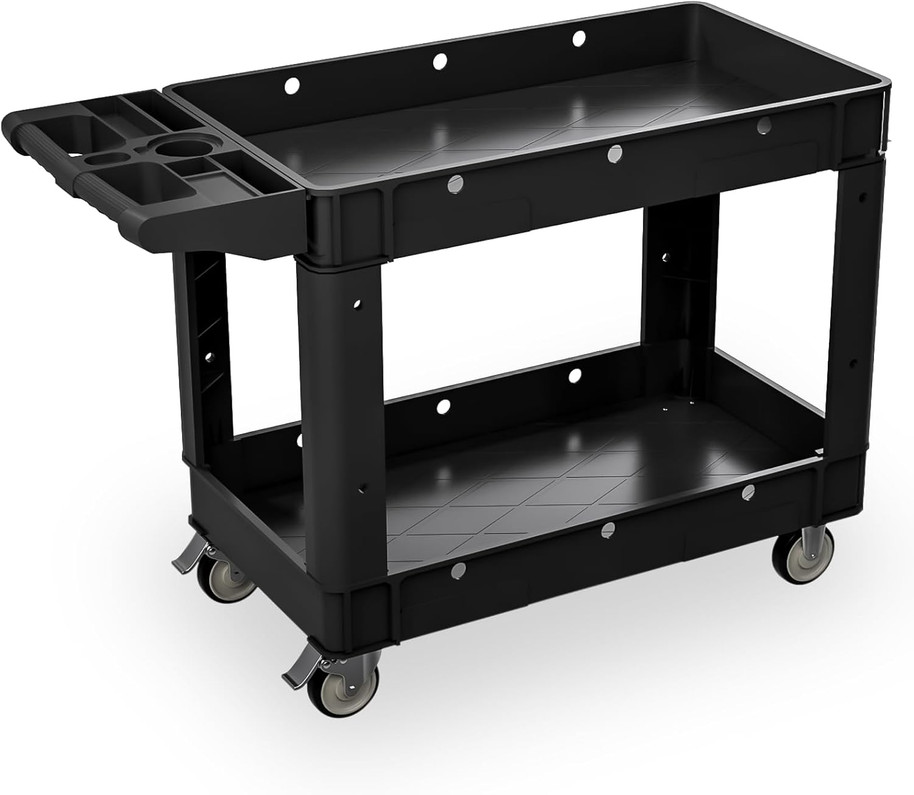
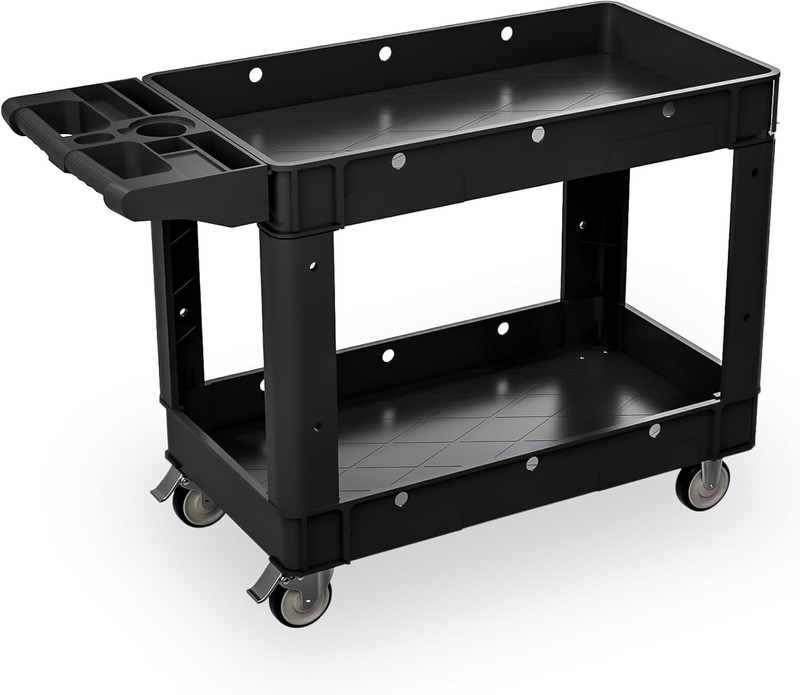
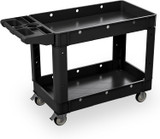
Measure the narrowest path the cart has to travel: the gap between table rows, the kitchen door and any tight corner near the dish station. The cart should fit through with room to spare for a guest walking past. The Easy Deal USA utility service cart measures 40 inches long by 17.5 inches wide by 33.25 inches tall, which gives a long, narrow footprint that suits lanes between tables. A cart that is too wide will block servers and guests during service.
Load Capacity
Plates, glassware and leftover liquid get heavy fast. Look for a stated weight capacity and stay well below it in daily use. Our two shelf service cart is rated for 550 lbs, which leaves a large margin for typical bussing loads, but the real limit is what one person can push and stop safely, not the number on the label.
Wheels and Brakes
Swivel casters let the cart turn in tight spaces and pivot around chairs. Brakes matter just as much: when a busser parks next to a table to load tubs, the cart must stay put. The service cart uses 360 degree swivel wheels with two locking wheels, and its 5 inch wheels roll more easily over floor transitions, mats and thresholds than small casters.
Shelf Edges and Easy Cleaning
Raised shelf edges help keep tubs and loose items from sliding off when the cart turns. Choose a surface you can wipe down quickly between shifts. The cart has rounded corners that help protect walls, door frames and furniture, plus an anti-rust and anti-scratch surface that the product page describes as easy to clean.
Height and Handle Position
A comfortable push height means staff stand upright instead of hunching. At 33.25 inches tall, the cart puts the handle around waist height for most adults, and the top shelf works as a loading surface without bending.
How to Set Up a Bus Cart for Service
- Top shelf for light items. Put an empty bus tub for glassware and silverware on top, where staff can see it and avoid crushing stems.
- Bottom shelf for heavy items. Place a second tub for plates and bowls on the lower shelf. Keeping weight low makes the cart more stable when turning.
- Add a scrap container. A small lidded bin or bucket for food scraps keeps waste out of the dish tubs and speeds up the dish pit.
- Carry a cleaning kit. Clip a sanitizer bucket and clean towels to the cart so the busser can wipe the table right after clearing it.
- Park it in a set spot. Give the cart a home near the kitchen door where it does not block the server path, and lock the brakes whenever it is parked.

Bussing Cart Safety Rules for Your Team
A cart only helps if it is used safely. Train every new hire on these basics:
- Push, do not pull. Pushing gives better control and lets staff see what is ahead.
- Never overstack. Keep glassware and plates below the top edge of the tub. Tall piles tip over on turns and bumps.
- Slow down at corners and doors. Announce yourself with a quick "behind" or "corner" so servers know the cart is coming.
- Stay under the rated capacity. Never load beyond the stated weight limit, and remember that a heavy cart takes longer to stop.
- Lock the brakes when loading. A rolling cart can drift into a guest or a chair while staff are stacking dishes.
- Watch for wet floors. Spills from tubs can make floors slick. Wipe them right away and use a wet floor sign.
Other Ways Restaurants Use a Utility Service Cart
Once you have a cart, it quickly earns its spot beyond bussing. Kitchens use it to move cases of produce from the delivery door to the walk-in, to carry clean racks back to the line, and to stage plated items for large parties and banquets. Front of house staff use it to set tables before opening, refill condiment stations and roll out linens. Cafes and bakeries use it for restocking display cases and moving supplies from the back room. The product page notes the cart suits workshops, classrooms, offices, kitchens and restaurants, so the same model can serve several jobs in one business.
Keeping Your Bus Cart in Good Shape
A little routine care keeps a cart rolling smoothly for years:
- Wipe shelves and handles at the end of every shift so food residue does not build up.
- Check the wheels weekly for hair, string and food debris wrapped around the axles and clear them out.
- Test the brakes regularly and replace any caster that wobbles or drags.
- Tighten any loose hardware so the shelves stay level and firm.
Frequently Asked Questions
What size bus cart do I need for a small restaurant?
Measure your tightest aisle first. A long, narrow cart like a 40 by 17.5 inch two shelf model usually fits between table rows better than a wide square cart, while still holding a tub on each shelf.
Is two shelves enough for bussing?
For most small and mid-size dining rooms, yes. Two shelves let you separate glassware from heavy plates, which is the most important split. Larger banquet operations sometimes add a second cart rather than a taller one, since tall carts are harder to see over.
Can a utility cart replace a dedicated bussing cart?
In many restaurants it can. A sturdy utility service cart with swivel wheels, brakes, raised shelf edges and an easy to clean surface does the same job and can also be used for stocking and setup.
How do I keep a bus cart quiet in the dining room?
Larger wheels roll more quietly over uneven floors than small casters. Avoid overloading, set tubs down gently rather than dropping them, and keep the wheels clean so they do not squeak or rattle.
Speed Up Table Turns With the Right Cart
A dependable restaurant bus cart helps your team clear tables faster, protects staff from heavy lifting and keeps the dining room looking organized. Check out the Utility Service Cart 2 Shelf 550 lbs for bussing, stocking and setup, or browse our full selection of warehouse carts and trucks to find the right fit for your kitchen and back room.
Recent Posts
-
How to Organize Toys With Clear Storage Bins
Toy clutter tends to peak right before the holidays, when birthday gifts from the year are still sca …Oct 23, 2026 -
Folding Chairs for Church Halls and Community Centers
Church halls, fellowship rooms and community centers ask more of their seating than almost any home. …Oct 23, 2026 -
Restaurant Bus Cart Guide: Using a Utility Cart for Bussing
Every busy dining room hits the same wall at some point in a shift: dirty plates stack up, servers m …Oct 23, 2026