Plastic Totes vs Cardboard Boxes for Moving: Which to Use
Every move starts the same way: you need dozens of containers, fast. Most people grab cardboard boxes without thinking, but plastic totes vs cardboard boxes for moving is a real decision that affects how well your things survive the truck, how long packing takes and what you are left with when the last box is unpacked. Pick the wrong container for the wrong item and you end up with crushed corners, damp books or a garage full of flattened cardboard you have to haul to the curb.
This guide compares the two side by side, shows which items belong in which container, and explains how to pack plastic totes so they stack safely in a moving truck and keep working as storage bins long after move day.
Plastic Totes vs Cardboard Boxes for Moving: The Quick Comparison
Both containers can get you from one home to the next. The difference is in how they handle moisture, weight, stacking and reuse.
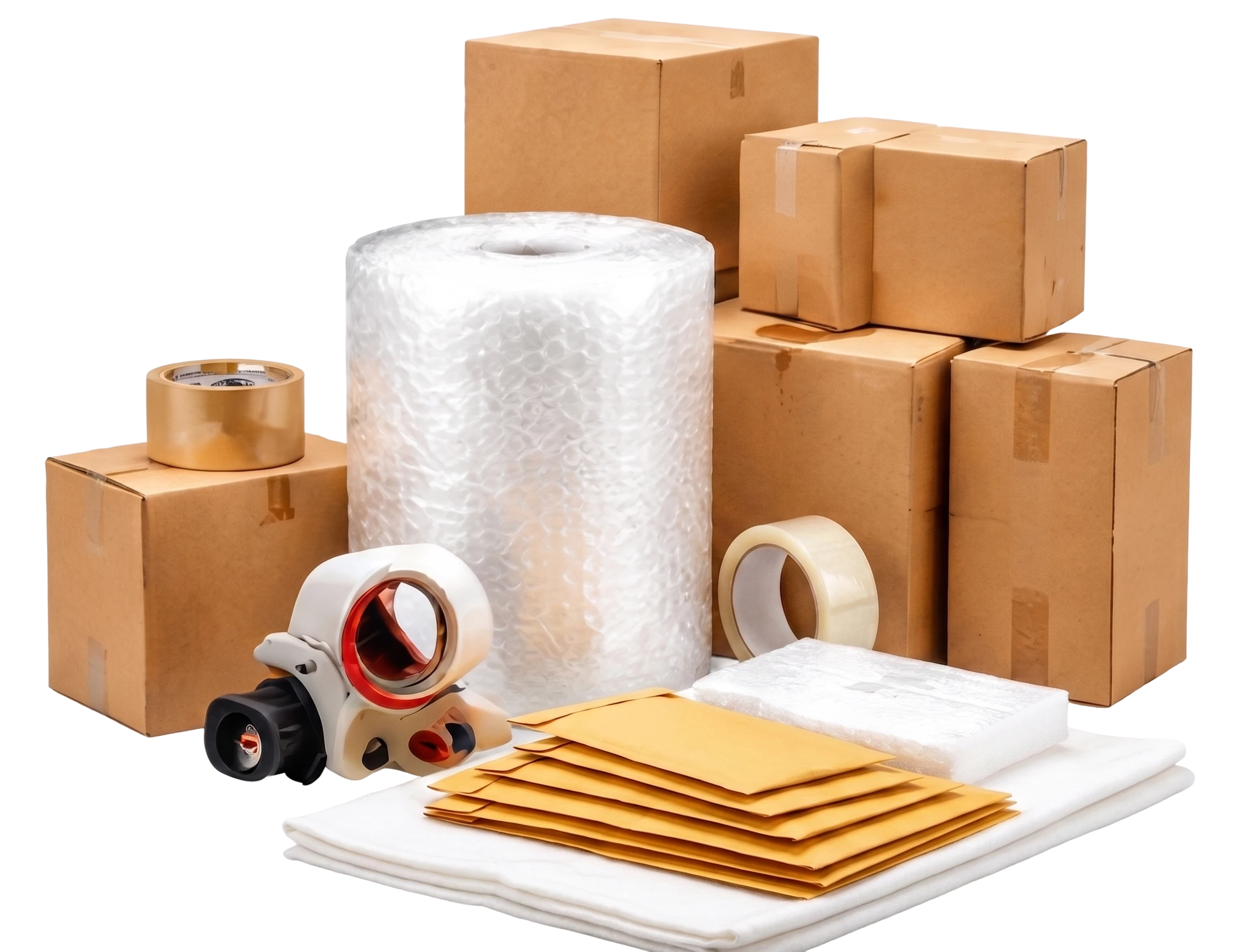
- Strength: Rigid plastic walls hold their shape when stacked and do not soften or tear at the corners. Cardboard weakens with humidity, rain on moving day or repeated handling.
- Moisture and dust: A plastic tote with a lid that locks or snaps into place keeps out dust and splashes. Cardboard absorbs water and can stain or collapse if it sits on a wet driveway.
- Packing speed: Totes need no assembly and no tape. You fill them, close the lid and move on. Boxes need folding, taping and labeling.
- Reuse: After the move, totes become garage, closet or basement storage. Cardboard usually goes to recycling after one or two uses.
- Odd shapes and one-way trips: Cardboard wins when you are shipping something across the country, sending items you will not see again, or packing oddly sized pieces that will not fit a standard tote.
Which Items Belong in Plastic Totes
Use plastic totes for the things that are most likely to be damaged by crushing or moisture, and for anything you plan to keep in storage after you arrive.
- Seasonal clothing and linens in bins rated for household use, with a secure lid to keep out dust.
- Important documents and photos that should never sit in a damp box.
- Kids' toys, craft supplies and hobby gear that will go straight into a closet or playroom.
- Garage and workshop items such as hand tools, cords, car care products and hardware.
- Pantry staples and cleaning supplies that might leak; a closed tote contains small spills.
Keep cardboard for books (small boxes keep weight manageable), framed art in purpose-made cartons, and anything you are giving away or shipping out.
Choosing the Right Tote Size for a Move
The biggest mistake with plastic totes is buying one huge size for everything. A very large tote filled with heavy items becomes too heavy to carry safely. Mix sizes instead.
Medium totes for heavy or dense items
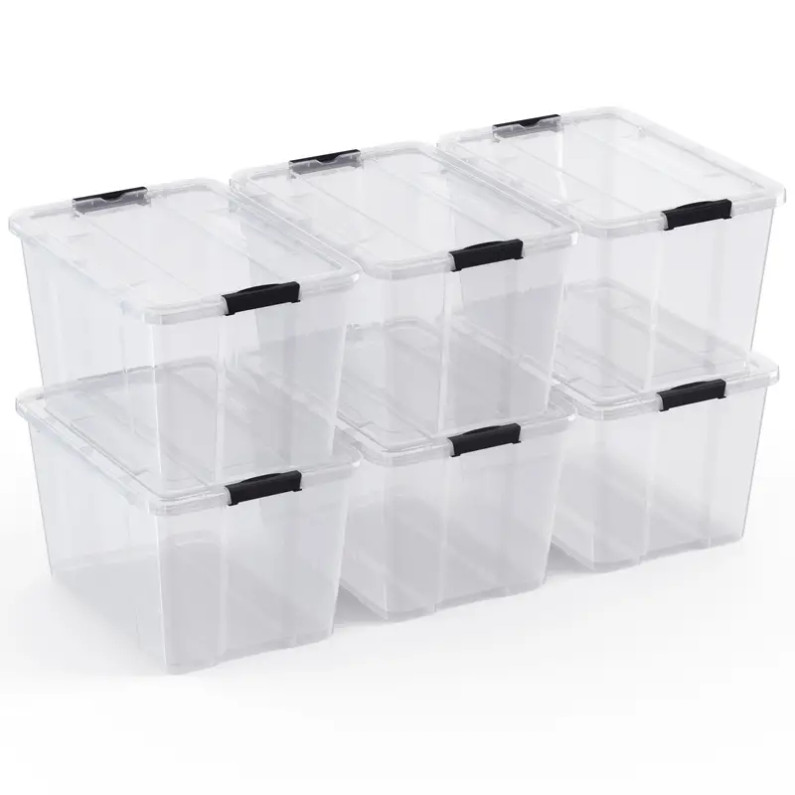
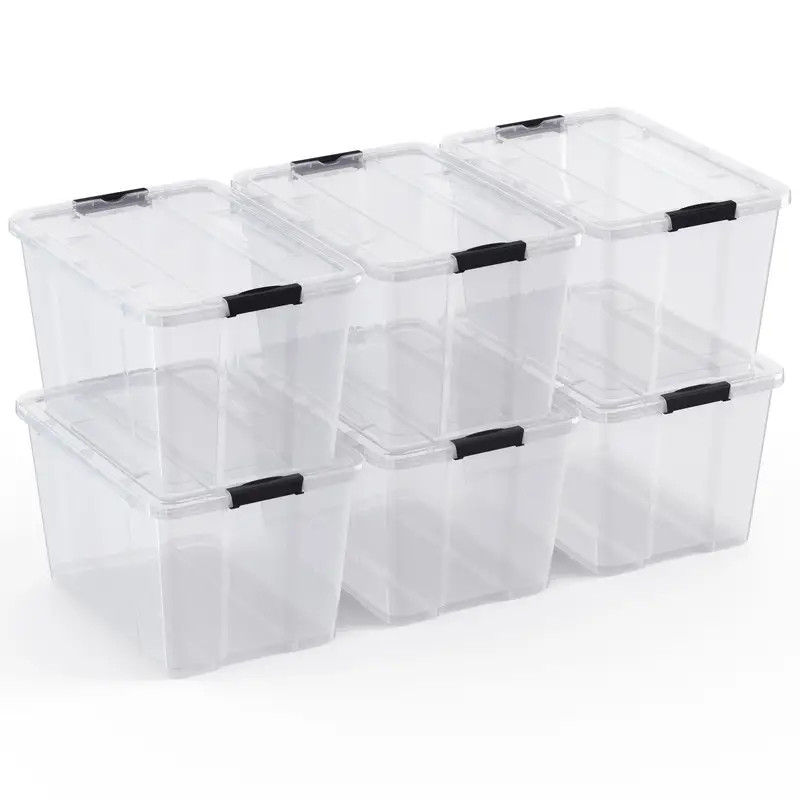
The 6 Pack Stackable Plastic Tote Box in 34 quart is a practical middle size. Its black latches fasten the lid, it is designed to stack, and the product page suggests it for seasonal clothing, toys and important documents. A medium size keeps weight reasonable when you pack denser things like kitchen items or paperwork.
Deeper totes for the garage and workshop
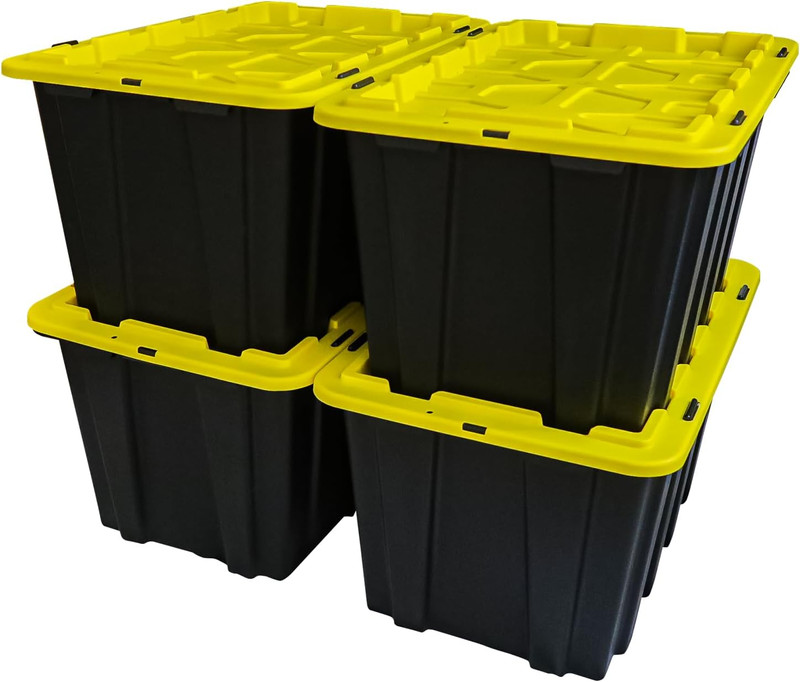
The 17 Gallon Snap Lid Storage Bin, Set of 4 measures 24.5 x 16.5 x 13.5 inches, has a lid that locks into place, built-in handle grooves on the sides and is designed to stack up to 4 levels high. Empty bins nest inside each other, which saves space before and after the move. The product page notes these bins are meant for garage and workshop storage, not fabric or consumable products, and that they may have a slight odor at first, so air them out before packing.
Large clear totes for bulky, light items
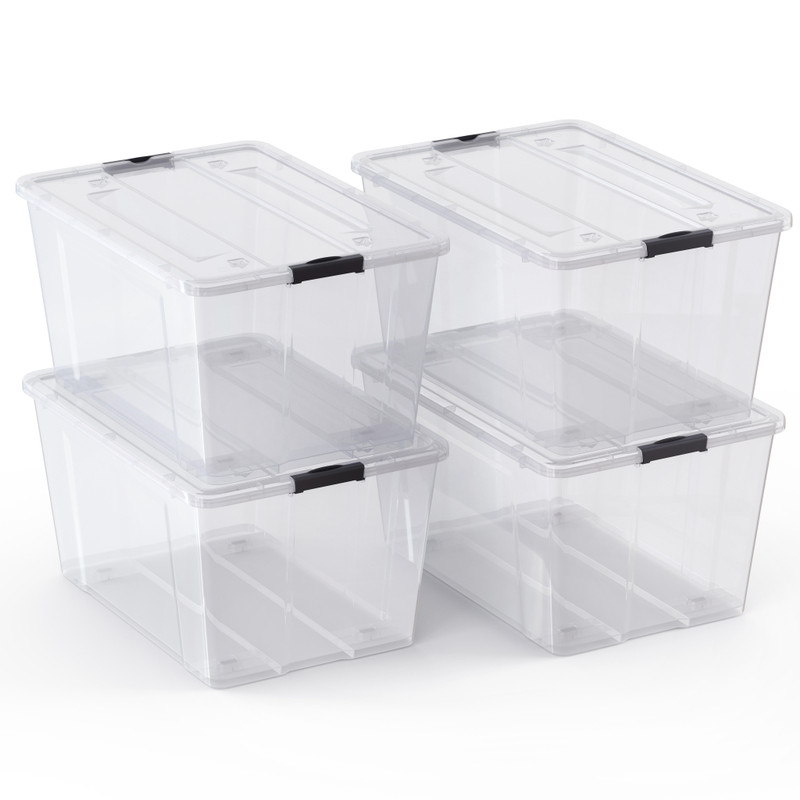
Bulky but light things such as pillows, comforters, holiday decor and stuffed animals fit well in large bins. The 75 Qt Stackable Plastic Storage Bin with Lid in clear measures 25.5 x 18 x 13.25 inches and has a stackable design. Clear walls let you see what is inside without opening every lid, which makes unpacking much faster.
How to Pack Plastic Totes for a Move
- Air out new bins. Separate them and let them breathe for a day if they have a plastic smell.
- Heavy on the bottom, light on top. Inside each tote, place the heaviest items flat on the bottom and fill gaps with towels or soft goods.
- Do not overfill. The lid must close flat and lock or snap without force. A bulging lid will not stack safely.
- Label two sides and the lid. Write the room and a short contents list. Labels on the sides stay visible when totes are stacked.
- Stack by size. Put the largest, heaviest totes on the floor of the truck and keep stacks within the limit the product page lists.
- Load with a dolly. Stack two or three closed totes on a hand truck rather than carrying them one at a time.
Safety note
A full tote can get heavier than you expect. Lift with your legs, keep the load close to your body and ask for help with anything awkward. Never stack totes higher than the manufacturer recommends, and do not stand or sit on a stack.
Frequently Asked Questions
Are plastic totes better than boxes for moving?
For most household items, yes. Totes resist crushing and moisture, need no tape and turn into long-term storage after the move. Cardboard is still useful for one-way shipments, books in small boxes and odd shapes.
How many plastic totes do I need for a move?
It depends on how much you own and how many items will go into cardboard instead. A simple method is to count the closets, cabinets and shelves you need to empty, then plan a mix of medium totes for heavy items and large totes for bulky light ones.
Can I store clothes in plastic totes after moving?
Yes, if the bin is intended for household items. Use clean, dry totes with secure lids and check each product page for usage notes. Some heavy-duty garage bins are not meant for fabric.
Should I buy clear or solid totes?
Clear totes make it easy to find things during unpacking and in storage. Solid color totes hide clutter and work well in garages and workshops.
Get Ready for Your Move
Plastic totes make moving faster and leave you with organized storage on the other side. Start with the 34 quart latching totes, add 17 gallon snap lid bins for the garage and 75 quart clear bins for bulky items, or browse every option in our home storage bins collection.
Recent Posts
-
How to Organize Toys With Clear Storage Bins
Toy clutter tends to peak right before the holidays, when birthday gifts from the year are still sca …Oct 23, 2026 -
Folding Chairs for Church Halls and Community Centers
Church halls, fellowship rooms and community centers ask more of their seating than almost any home. …Oct 23, 2026 -
Restaurant Bus Cart Guide: Using a Utility Cart for Bussing
Every busy dining room hits the same wall at some point in a shift: dirty plates stack up, servers m …Oct 23, 2026