How to Use a Hand Truck Safely on Stairs and Ramps
A hand truck can turn a back breaking job into an easy one, but only when it is used correctly. Many hand truck mishaps come from the same few mistakes: an overloaded or badly stacked load, tilting too far or too fast, losing control on stairs, or letting a load roll away on a ramp. Knowing how to use a hand truck safely protects your back, your floors and whatever you are moving.
This step by step guide covers how to load a hand truck, how to tilt and balance it, and how to handle stairs, ramps and curbs, whether you are moving boxes at home, making deliveries or working in a warehouse.
Before You Start: Check the Hand Truck and the Route
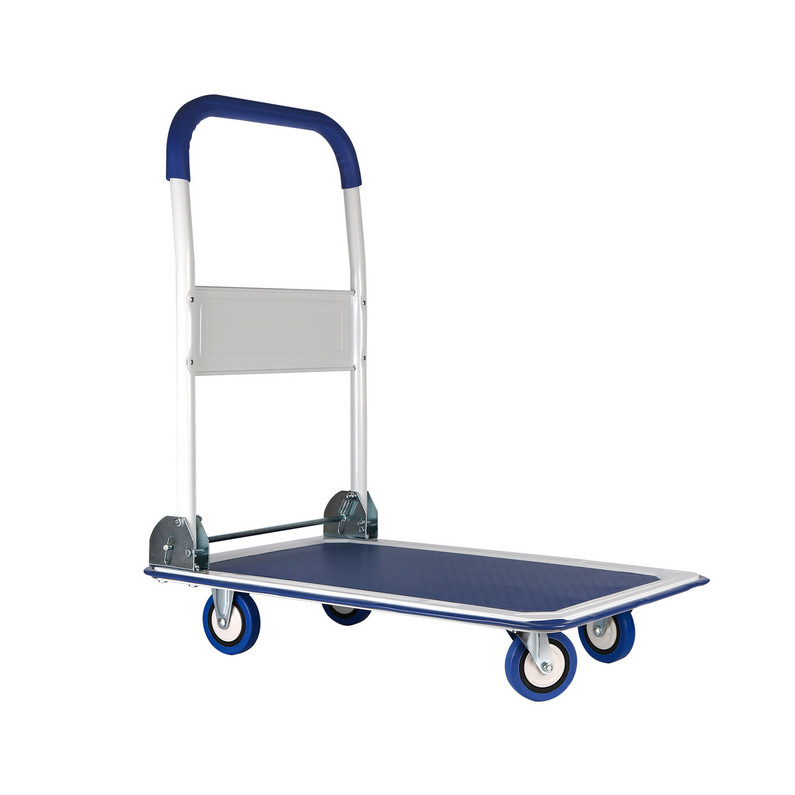
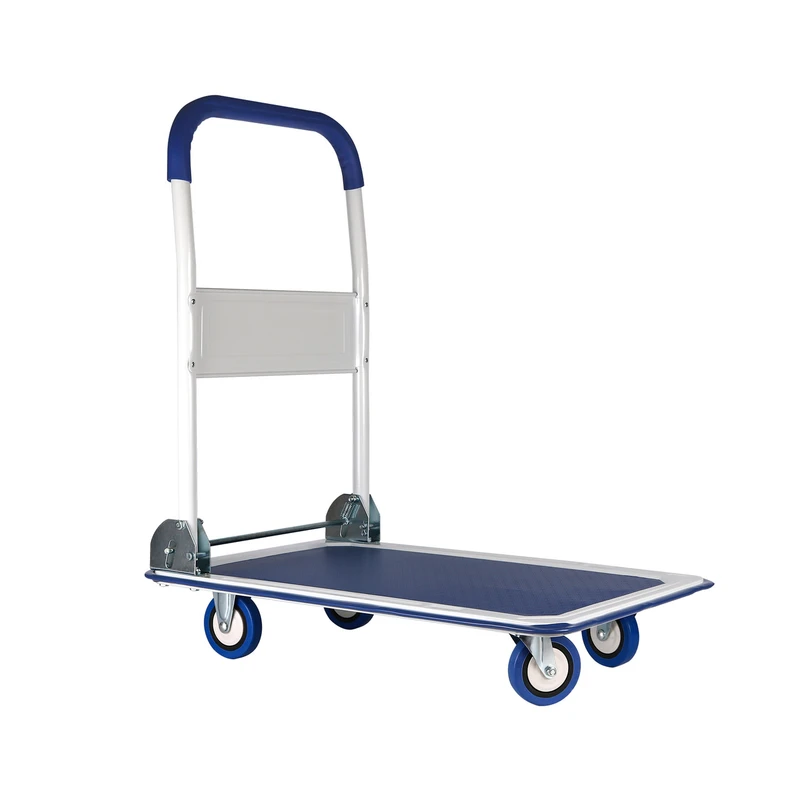
- Know the load capacity. Every hand truck has a maximum rated load. Never exceed it. The Folding Hand Truck Dolly Cart is offered in 330 lb and 660 lb versions, so pick the one that matches your heaviest regular load.
- Inspect the wheels and frame. Wheels should spin freely, and the frame, handle and nose plate should be straight with no cracks or loose parts.
- Walk the route first. Look for thresholds, cords, rugs, wet spots, tight corners, stairs and ramps. Open doors and prop them before you load up.
- Wear the right gear. Closed toe shoes with good grip are a must. Work gloves help on rough boxes.
- Get a helper for heavy or awkward loads. Stairs, heavy loads and tall stacks call for a second person.
How to Load a Hand Truck Safely
- Position the hand truck. Stand it upright and slide the nose plate fully under the bottom item. If the item is heavy, tip it slightly toward you with one hand and push the nose plate under with your foot.
- Put the heaviest item on the bottom. Stack heavy boxes first, then lighter boxes on top. This keeps the center of gravity low and the load stable.
- Keep the load against the frame. Items should rest flat against the back of the hand truck, not hang off the sides or lean forward.
- Keep the stack below eye level. You need to see where you are going. If the stack blocks your view, split it into two trips.
- Secure the load. Use straps or bungee cords around the load and frame, especially for multiple boxes or anything that can shift.
How to Tilt, Balance and Move a Hand Truck
Place one foot on the axle or a wheel to keep the hand truck from rolling, grip the handle with both hands and pull it back toward you slowly. Find the balance point, the angle where the load feels almost weightless in your hands. That is where the axle, not your arms, carries the weight.
- Push, do not pull, on flat ground. Pushing lets you see ahead and use your legs. Pull only when the situation requires it, such as on stairs.
- Keep your back straight. Bend at the knees, not the waist, when tilting the load back or setting it down.
- Move at walking pace. Slow down for turns, doorways and floor transitions. Sudden stops can shift or topple the load.
- Never ride on a hand truck or let anyone else ride on it.

How to Use a Hand Truck on Stairs
Stairs are the riskiest part of using a hand truck, so take your time and bring a helper for anything heavy or tall.
Going up stairs
- Back up to the first step with the hand truck tilted to its balance point and the load facing away from the stairs.
- You stay above the hand truck, moving up the stairs backward. Your helper stays below, guiding and steadying the load without lifting it.
- Pull the hand truck up one step at a time, letting the wheels roll up onto each step. Pause and rebalance on every step.
Going down stairs
- Tilt the load back to the balance point at the top of the stairs.
- Go down one step at a time, letting the wheels roll gently off each edge. Keep a firm grip and a slow pace.
- Your helper stays below the load, guiding it. Never let the hand truck bounce or slide down several steps at once.
If a load is too heavy to control on stairs, stop and use more people, split the load or use a different route such as an elevator or ramp.
Ramps, Curbs and Uneven Ground
- Keep the load on the downhill side of you. Going down a ramp, keep the hand truck in front of you. Going up, keep it behind you as you pull it. That way, if you lose grip, the load cannot roll into you.
- Take curbs square on. Approach a curb straight, tilt the load back and roll the wheels up or down the edge slowly. Never take a curb at an angle.
- Slow down on gravel, grass and broken pavement. Small wheels can catch on uneven surfaces. Check that the load is secured before crossing.
- Avoid wet or icy surfaces whenever possible.
Unloading and Storing Your Hand Truck
Bring the hand truck back to upright slowly, bending your knees. Remove straps, then take items off the top first. To remove the nose plate from under the last item, tip the item slightly and slide the hand truck out. A folding hand truck like this one is designed to be compact and easy to store when not in use, so fold it and keep it out of walkways where someone could trip over it.
Frequently Asked Questions
How much weight can I put on a hand truck?
Only as much as its rated capacity, which is listed on the product page or the hand truck itself. Stay below that limit, especially on stairs and ramps where control is harder.
Should you push or pull a hand truck?
Push it on flat surfaces so you can see ahead and use your legs. Pull it when going up stairs or up a ramp, keeping the load below you.
Can one person move a hand truck up stairs?
Light loads can be manageable for one experienced person, but a helper is strongly recommended for any heavy, tall or valuable load.
When should I use a platform cart instead of a hand truck?
Choose a platform cart for wide, flat or many separate items that cannot be stacked safely on a nose plate. A hand truck is better for tall stacks of boxes and moving through narrow spaces.
Move Heavy Loads the Safe Way
The right technique matters as much as the right equipment. Shop the Folding Hand Truck Dolly Cart in 330 lb and 660 lb versions, or browse our full range of warehouse carts and trucks for platform carts, utility carts and more.
Recent Posts
-

How to Organize Toys With Clear Storage Bins
Toy clutter tends to peak right before the holidays, when birthday gifts from the year are still sca …Oct 23, 2026 -
Folding Chairs for Church Halls and Community Centers
Church halls, fellowship rooms and community centers ask more of their seating than almost any home. …Oct 23, 2026 -
Restaurant Bus Cart Guide: Using a Utility Cart for Bussing
Every busy dining room hits the same wall at some point in a shift: dirty plates stack up, servers m …Oct 23, 2026