
How to Replace Dolly Wheels and Keep Your Cart Rolling
A dolly that wobbles, squeals, drags or pulls to one side is more than an annoyance. It makes every load harder to push and it can tip at the worst moment. The good news is that worn casters are one of the easiest problems to fix. Knowing how to replace dolly wheels, and how to look after them between jobs, can add years to a push dolly or hand truck you already own.
This guide explains how to tell when wheels need replacing, how to choose a matching set, the step-by-step swap, and a simple maintenance routine for dollies and hand trucks used at home, in the garage or in a warehouse.
Signs Your Dolly Wheels Need Replacing
Check the wheels whenever the dolly starts to feel harder to push. Replace them if you notice any of the following.
- Flat spots or chunks missing from the tread, which cause a thumping roll.
- Cracked or split wheels, often from rolling over curbs, thresholds or debris under load.
- Swivel casters that stick or flutter instead of turning smoothly.
- Wobble or play in the wheel even after you tighten the axle bolt, a sign of a worn bearing or bracket.
- Bent mounting brackets that make the dolly sit unevenly or pull to one side.
- Hair, string or tape wrapped around the axle that cleaning cannot fully remove.
If only one wheel is damaged, it is still smart to replace the full set so all four roll at the same height and wear evenly.
How to Choose Replacement Dolly Wheels
A replacement set has to match your dolly's mounting pattern and load rating. Before you order, take these measurements from the wheels you are replacing.
- Load rating: Match or exceed the capacity your dolly was built for. Never install wheels rated lower than the loads you move.
- Wheel size: Measure the wheel diameter and width. A different size changes the deck height and can make the dolly rock.
- Mounting plate and bolt-hole spacing: Measure the plate and the distance between holes so the new brackets line up with your deck.
- Swivel versus fixed: Note how many swivel and fixed casters you have now and where they sit.
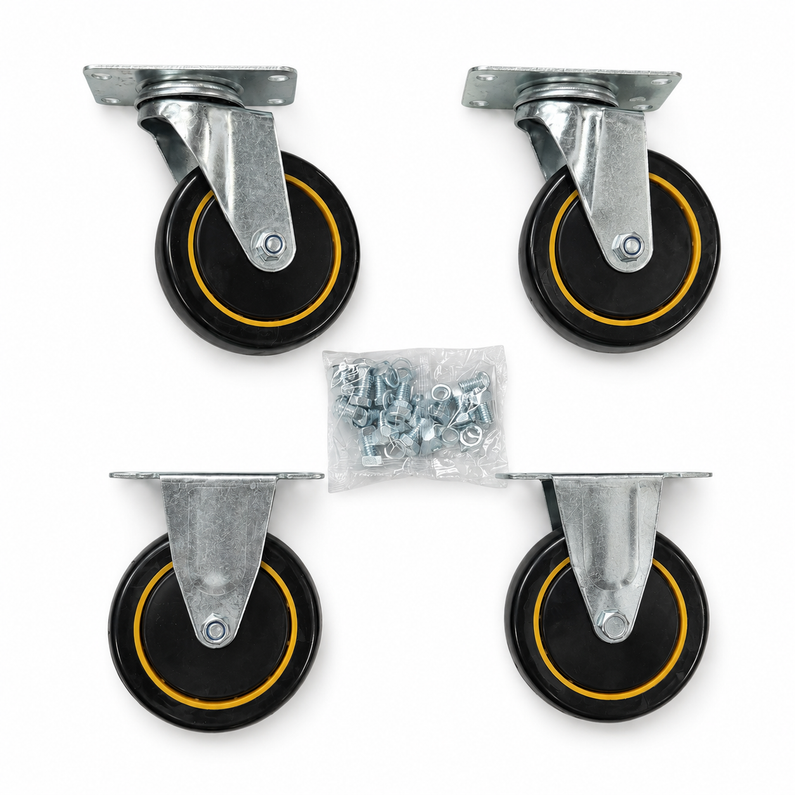
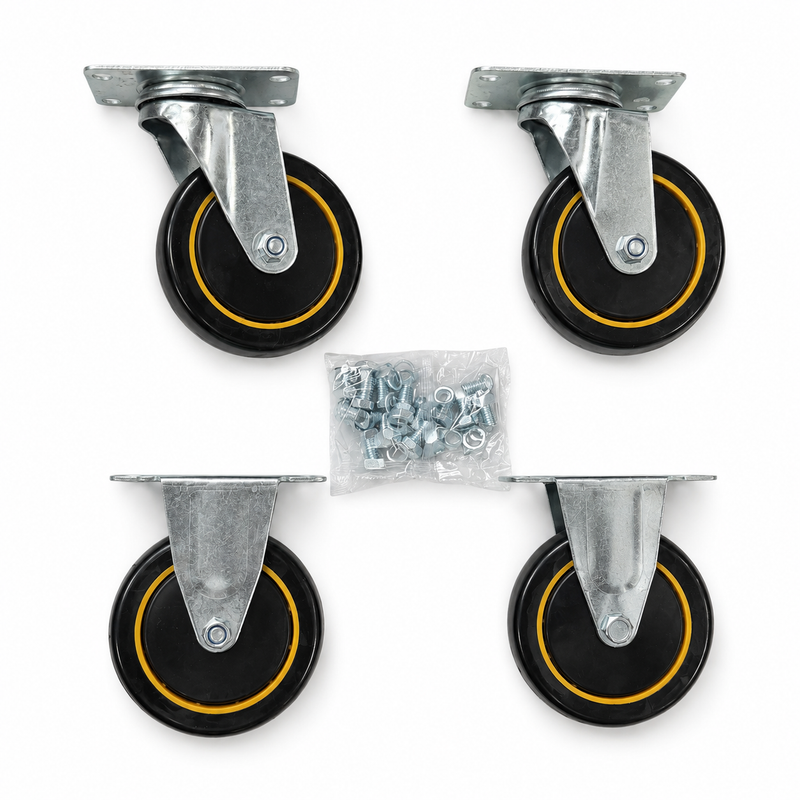
The Yellow Push Dolly Wheels and Hardware set is designed for compatible 330 lb capacity push dollies. It includes 2 swivel caster wheels for steering, 2 fixed caster wheels for stable movement, mounting bolts, nuts and washers, and durable metal mounting brackets. The product page does not list wheel size or bolt-hole spacing, so compare the photos and your existing wheels before ordering. The dolly itself is not included.
How to Replace Dolly Wheels Step by Step
You only need basic hand tools: a wrench or socket set that fits the bolts and a pair of gloves.
- Unload and clean the dolly. Remove everything from the deck and brush off dirt so you can see the bolts.
- Flip it over on a soft surface. Lay a blanket or cardboard down to protect the floor and the deck.
- Remove one caster at a time. Loosen the nuts, pull the bolts and lift off the old caster. Working one at a time keeps you from mixing up swivel and fixed positions.
- Check the holes. Make sure the bolt holes are not cracked or stripped. Do not mount new wheels to a damaged deck.
- Install the new caster. Line up the bracket, insert the bolts with washers and thread the nuts on by hand first.
- Tighten evenly. Snug each bolt in a crisscross pattern so the plate sits flat, then tighten fully. Do not overtighten into wood decks.
- Repeat for each wheel, keeping swivel casters in the same positions as before.
- Test before loading. Flip the dolly upright, roll it empty in a straight line and in a turn, then test with a light load.
Safety note
Wear gloves when handling brackets and bolts. Never exceed the load rating of the dolly or the wheels, whichever is lower. Recheck bolt tightness after the first few uses, since new hardware can settle.
Hand Truck and Dolly Maintenance Routine
Most wheel failures start with dirt, overloading or storage habits. A few minutes of care keeps any cart rolling smoothly.
- After each use: Wipe off mud and grit, and pull any string or tape from the axles.
- Monthly: Check that every bolt is tight, spin each wheel by hand and listen for grinding.
- Store it dry: Keep dollies and hand trucks indoors or under cover so metal parts do not rust.
- Store it unloaded: Do not leave heavy items sitting on a dolly for days, which can flatten wheels.
- Roll, do not drop: Ease wheels over curbs and door thresholds instead of bumping down hard.
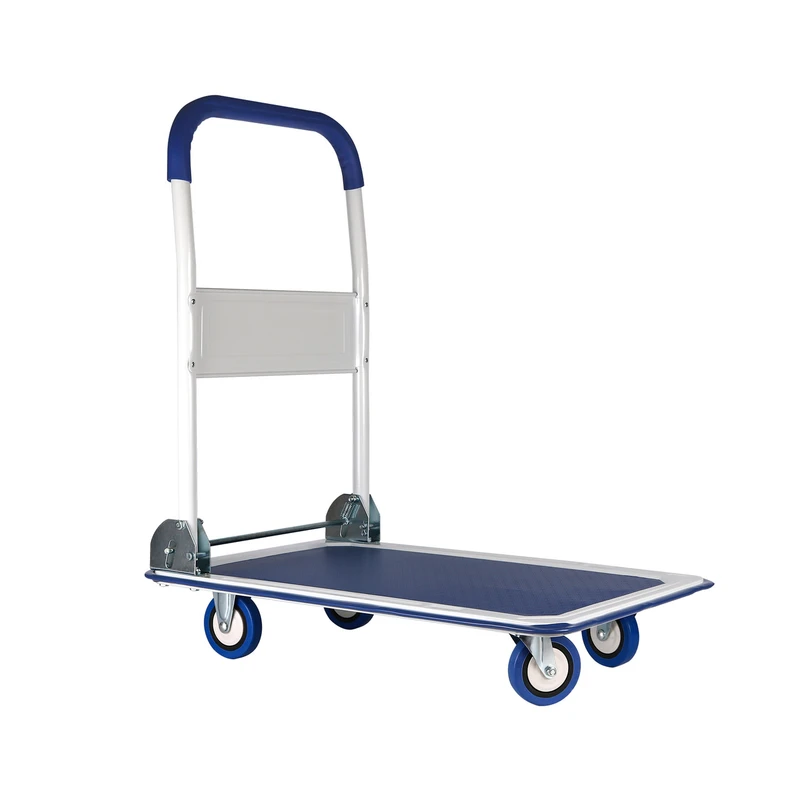
If your hand truck frame is bent or the folding mechanism no longer locks, replacement is usually safer than repair. The Folding Hand Truck Dolly Cart comes in 330 lb and 660 lb capacity options in yellow, blue or white, and folds compactly for storage when not in use.
Frequently Asked Questions
Can I replace just one dolly wheel?
You can, but replacing all four keeps the deck level and the wear even. Mixing old and new casters often leads to wobbling.
Why does my dolly pull to one side?
Common causes are a seized swivel caster, a bent bracket, debris wrapped around an axle or one wheel worn more than the others. Clean and inspect each wheel, then replace any that do not spin and swivel freely.
Should I lubricate dolly wheels?
Follow the wheel maker's guidance. In general, keep axles and swivel joints clean, and if you apply lubricant, use a small amount and wipe off the excess so it does not collect dust.
How do I know which replacement wheels fit my dolly?
Match the load rating, wheel size, mounting plate and bolt-hole spacing to your current wheels. Check the product page details and photos before ordering.
Keep Your Carts Rolling
Fresh casters can make an old dolly feel new again. Pick up the push dolly replacement wheel set, upgrade to a folding hand truck, or browse our full range of warehouse carts and trucks.
Recent Posts
-

How to Organize Toys With Clear Storage Bins
Toy clutter tends to peak right before the holidays, when birthday gifts from the year are still sca …Oct 23, 2026 -
Folding Chairs for Church Halls and Community Centers
Church halls, fellowship rooms and community centers ask more of their seating than almost any home. …Oct 23, 2026 -
Restaurant Bus Cart Guide: Using a Utility Cart for Bussing
Every busy dining room hits the same wall at some point in a shift: dirty plates stack up, servers m …Oct 23, 2026
