
Foam Play Mat Setup Guide for Babies and Toddlers
Once a baby starts rolling, scooting and crawling, the floor becomes the main play area, and hard floors suddenly feel very hard. A foam play mat gives little ones a cushioned, wipeable surface for tummy time, crawling practice and building blocks. Getting a foam play mat set up the right way takes a little planning, though: how many tiles to buy, where to put them, how to keep the edges flat and how to keep the mat clean.
This guide walks through foam play mat setup step by step, along with safety and care tips that keep the play area in good shape as your child grows.

Why Choose an Interlocking Foam Play Mat
Interlocking foam tiles have become a go-to for nurseries, playrooms and daycare corners for good reasons:
- Cushioning. A soft surface helps protect against bumps and tumbles while babies learn to sit, crawl and stand.
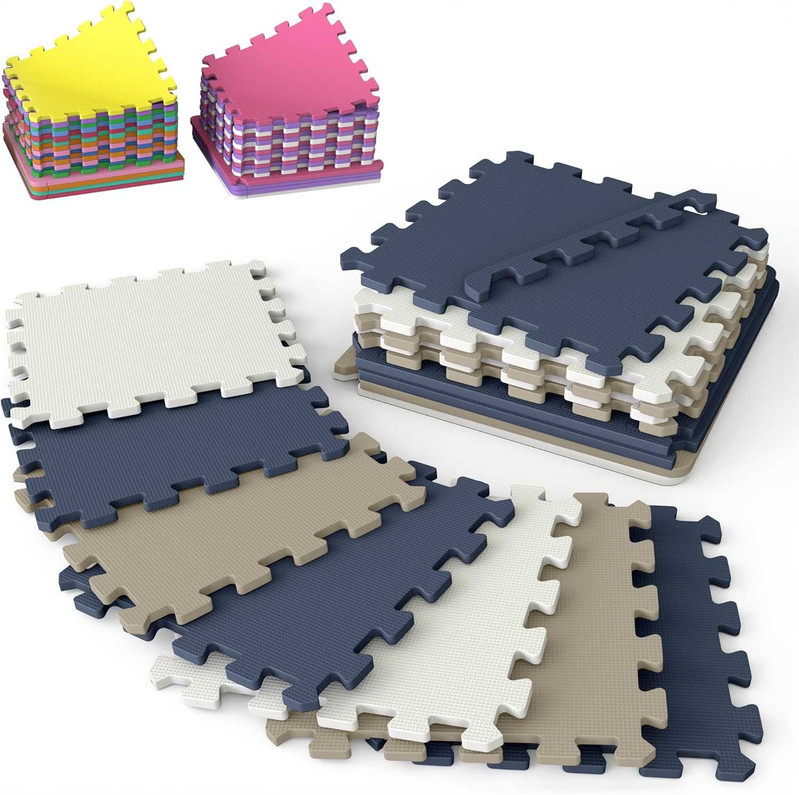
- Custom fit. Tiles connect like puzzle pieces, so you can build a square, a long rectangle or an L shape that fits your room.
- Easy cleaning. Foam wipes clean, and you can pull up a single tile to wash it instead of cleaning a whole rug.
- Portable. Tiles stack flat for storage or travel to a grandparent's house.
Our EVA foam play mat uses non-toxic EVA foam tiles with an interlocking design and a cushioned surface. It comes in dark blue, multicolor, or pink and purple, in quantities of 16 or 32 tiles.
How Many Foam Play Mat Tiles Do You Need
Start by measuring the floor area you want to cover. For 12x12 inch tiles, each tile covers about one square foot, so the math is simple:
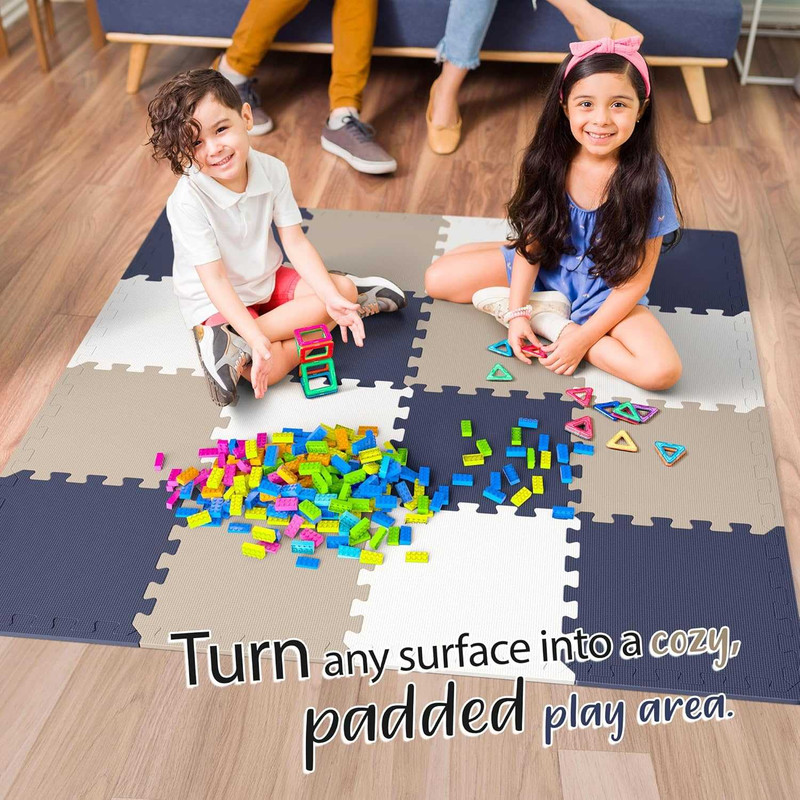
- 16 tiles make a 4 by 4 square, about 16 square feet. That is a good size for a tummy time and crawling zone beside the couch or in a nursery.
- 32 tiles make a 4 by 8 rectangle, or close to a 6 by 5 layout with a few tiles to spare. That covers a larger playroom corner or room for a baby and an older sibling to play together.
Check the product page for the exact tile measurements before you plan a layout, and leave a small border of open floor if the mat will sit between furniture pieces.
Step by Step: Foam Play Mat Setup
- Choose the spot. Pick a flat area away from stairs, doorways that swing open, space heaters, fireplaces and radiators. Keep it clear of cords, blind strings and furniture that could tip.
- Clean the floor. Vacuum or sweep and let a mopped floor dry fully. Grit under foam tiles can cause bumps and wear.
- Unpack and air out the tiles. New foam can have a light smell from packaging. Lay the tiles out in a ventilated room for a day before your baby plays on them.
- Start in a corner. Place the first tile against a wall or along the edge of the area, then connect tiles row by row. Press each joint down firmly so the teeth lock together completely.
- Check the seams. Run your hand across the mat. Any raised joint means a tile is not fully locked. Lift and reconnect it.
- Finish the edges. If your set includes edge strips, attach them so the outside is smooth and straight. Without them, keep the toothed edge along a wall where possible.
- Add the play zone. Set out a few age-appropriate toys and a basket or storage bin nearby so cleanup takes seconds.
Foam Play Mat Safety Tips
- Always supervise. A play mat is for awake, supervised play. It is not a sleep surface for babies.
- Watch for chewing. Teething babies love to gnaw on edges. Check the mat often for bite marks or loose pieces of foam and replace damaged tiles right away, since small pieces can be a choking hazard.
- Keep it away from heat. Do not place foam tiles near fireplaces, space heaters or other heat sources.
- Prevent slipping. On very smooth floors, make sure the mat does not slide when an adult steps on it. Placing it against a wall or under a rug gripper can help.
- Use it for play only. Foam tiles soften falls but do not replace baby gates, stair gates or furniture anchors.
How to Clean a Foam Play Mat
- Wipe up spills and spit-up promptly with a damp cloth.
- For a weekly clean, wipe the surface with warm water and a few drops of mild dish soap, then wipe again with plain water.
- Every month or so, take the mat apart and clean the tile edges and the floor underneath, where crumbs collect.
- Let tiles air dry completely before reconnecting them. Avoid harsh chemicals, bleach and soaking, which can wear down the foam.
Storing and Reusing Foam Tiles
When your toddler outgrows the play area, foam tiles stay useful. Stack them flat in a large storage bin to keep them clean and free of dents, and reuse them later for a craft corner, a kids' exercise area or a soft spot in front of a toy shelf. Avoid storing heavy items on top of the stack, which can leave permanent impressions.
Frequently Asked Questions
When can a baby start using a foam play mat
Many parents start using a foam play mat for supervised tummy time in the early months and keep it through the crawling and toddler stages. Always supervise play and never use the mat as a sleep surface.
Can foam play mats go on carpet
Yes, but tiles lock together most securely on a flat, firm floor. On thick carpet, press each joint firmly and check the seams more often, since the tiles can shift.
How do I get rid of a new foam mat smell
Lay the tiles out in a well-ventilated room for a day or two, wipe them with mild soapy water and let them dry fully before use.
How often should I replace foam tiles
Replace any tile that has bite marks, tears, crumbling edges or joints that no longer lock. Because the tiles interlock, you can swap out a single damaged tile without replacing the whole mat.
Create a Safe Play Space
A well-planned foam play mat gives your little one a soft, clean place to roll, crawl and play, and gives you peace of mind. Pick the color and tile count that fits your room with our EVA foam play mat, and explore more mats, storage and household essentials in our Home and Garden collection.
Recent Posts
-
Foam Play Mat Setup Guide for Babies and Toddlers
Once a baby starts rolling, scooting and crawling, the floor becomes the main play area, and hard fl …Oct 24, 2026 -
Folding Table as a Desk: Home Office Setup Guide
Not every home has room for a permanent desk, and not every work-from-home setup needs one. Using a …Oct 24, 2026 -
Duct Tape vs Packing Tape: Which to Use and When
You are halfway through packing a stack of boxes and the packing tape runs out, but there is a roll …Oct 24, 2026
