How to Fix a Wobbly Folding Table: Causes and Quick Fixes
Few things are more annoying at a holiday dinner, craft fair or game night than a wobbly folding table. Drinks slosh, puzzle pieces slide and guests start propping napkins under the legs. The good news is that a wobbly folding table is usually caused by one of a handful of simple problems, and most of them take minutes to fix with basic tools or no tools at all. This guide walks through how to find the cause of the wobble, how to fix it, and how to keep your table steady for years of use.
Whether you own a small card-size table or a long 6 or 8 foot event table, the same checks apply. Work through them in order, starting with the easiest.

Why Folding Tables Wobble
A folding table is built to collapse, so it has more moving joints than a regular dining table. Every hinge, latch and leg bracket is a place where a little play can creep in. The most common causes are:
- Legs not fully locked. The leg braces or lock rings are only partly engaged, so the leg can swing slightly.
- An uneven floor or ground. Patios, garage slabs, older wood floors and lawns are rarely perfectly flat.
- Loose hardware. Bolts, screws or rivets at the leg brackets loosen over time from repeated folding and transport.
- Missing or worn foot caps. One leg ends up slightly shorter than the others when a cap cracks or falls off.
- A center hinge not latched. On fold-in-half tables, the middle hinge has a latch or slide lock that must be closed for the top to stay rigid.
- Bent legs or frame. Dropping a table, standing on it or overloading it can bend a leg or brace.
How to Fix a Wobbly Folding Table Step by Step
Use this order so you rule out the quick fixes before reaching for tools.
- Reset the legs. Fold the legs back in and open them again slowly until each brace snaps or slides fully into its locked position. If your table has sliding lock rings on the braces, push each ring all the way over the joint. A leg that is locked only partway is the number one cause of wobble.
- Check the center hinge. On a fold-in-half table, look under the middle of the top. Make sure the center latch or lock is fully engaged. Open and close it once to confirm it moves freely.
- Test on a different spot. Move the table a few feet and press down on each corner. If the wobble disappears, the floor is the problem, not the table. Skip to the leveling tips below.
- Inspect the feet. Turn the table on its side and check that every leg has its foot cap and that none are cracked or worn thin. Replace any missing cap with a matching size from a hardware store so all four legs are the same length again.
- Tighten the hardware. Look at where the legs attach to the frame and where the braces connect. If there are bolts or screws, snug them with a screwdriver or wrench. Tighten until firm, but do not overtighten, especially where hardware passes into plastic, or you can strip the threads or crack the mount. Rivets cannot be tightened; if a riveted joint is loose enough to cause real movement, the table may need that part repaired or replaced.
- Clean the hinges. Dirt, sand and dried spills in hinge joints can stop braces from seating fully. Wipe the joints clean and let them dry, then open and close the legs a few times.
- Look for bends. Sight down each leg and brace. A bent leg makes one corner sit high or low. Mild bends sometimes improve when the leg is fully locked, but a badly bent or cracked leg is a safety issue and the table should be retired from heavy use.
Leveling a Folding Table on Uneven Floors and Ground
If the table is sound but the surface is not, leveling is the answer. Indoors, a folded piece of cardboard or a small furniture shim under the short leg works well for a one-time event. Place the shim fully under the foot, not at an angle, so it cannot slide out.
Outdoors, look for the flattest area before setting up. On a lawn, press each leg firmly into the grass so it seats evenly, and avoid slopes and soft spots. On patios and driveways, turn or slide the table a little until all four feet touch, since pavers and slabs often have small dips and joints. For long tables used side by side, set the first table level and then match the others to it.

Respect the Weight Capacity
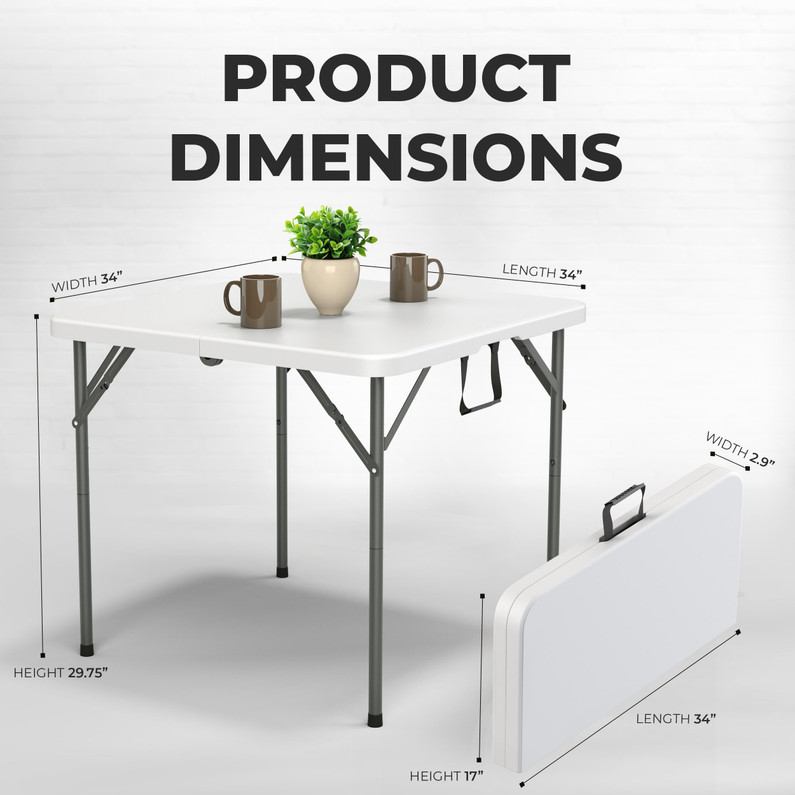
A table that is loaded past its rating can flex, wobble and eventually bend. Both the Plastic Folding Table and the 6 Foot Plastic Folding Table use a high density plastic top on a metal frame that the listing rates to support up to 300 lbs. Spread heavy items such as drink coolers, slow cookers and boxes of merchandise across the top instead of piling them in one spot, and keep the heaviest items closer to the legs rather than in the middle of the span.
Safety note: never sit, stand or kneel on a folding table, and never use one as a step stool or ladder. If a table rocks noticeably even after the checks above, take it out of service until it is repaired.
How to Keep a Folding Table From Getting Wobbly Again
- Lock every leg every time. Make it a habit to push each brace or ring fully closed and press on all four corners before anything goes on the table.
- Fold and carry it correctly. Fold-in-half tables like the ones above have built-in handles. Use them instead of dragging the table by one end, which twists the frame.
- Store it flat or upright, not under weight. Stacking heavy boxes on a folded table can bend the legs. Lean it against a wall or store it in a closet or car trunk where nothing sits on it.
- Check hardware a few times a year. A quick look before the busy holiday and event season catches loose bolts before they cause trouble.
- Keep it clean. Wipe the top and frame with a damp cloth after use, and let it dry before folding so grit and moisture do not collect in the joints.
Frequently Asked Questions
Why does my folding table wobble even on a flat floor?
Usually one leg is not fully locked, the center hinge latch is open, or a foot cap is missing. Reset each leg, check the center latch and inspect the feet before tightening any hardware.
Can I tighten a plastic folding table?
If the legs attach with bolts or screws, yes. Snug them firmly but do not overtighten into plastic. Riveted joints cannot be tightened at home, so a badly loose rivet usually means repair or replacement.
How do I level a folding table outdoors?
Pick the flattest spot, press each leg firmly into the ground, and use a flat shim under a short leg on hard surfaces. Avoid slopes and soft or muddy ground.
How much weight can a plastic folding table hold?
It depends on the model, so always check the listing. The Easy Deal USA plastic folding tables shown here list a metal frame that supports up to 300 lbs. Spread the load evenly across the top.
Shop Steady Folding Tables
If your old table is past saving, the Plastic Folding Table comes in several sizes in black or white, and the 6 Foot Plastic Folding Table is a classic choice for buffets and events. Both set up without tools and fold in half for storage. Browse the full folding tables collection at Easy Deal USA to find the right size for your next gathering.
Recent Posts
-
Folding Tables Versus Workbenches for Real Work
A garage project can change quickly: one day you are assembling shelves, and the next you need the f …Nov 15, 2026 -
Aluminum Versus Steel Ladders for Work and Home
A ladder that is awkward to carry often gets left in the garage. A ladder that is too light-duty for …Nov 14, 2026 -
Office Supply Cart Guide for Smarter Workspaces
A supply closet may hold plenty of inventory, but it does not help much when envelopes, labels, pape …Nov 13, 2026