Which Shelf Brackets Fit Your Wall and Load?
A shelf can look perfectly level on installation day and still sag, pull away from the wall, or feel unstable once it is loaded. The shelf board gets most of the attention, but the support system does the real work. Which shelf brackets you need depends on four practical details: the wall material, shelf depth, total weight, and how you plan to use the space.
A small display shelf for lightweight household items needs a different setup than a garage shelf holding paint cans, tools, or storage bins. Choosing the right bracket before you drill saves time, protects the wall, and helps your shelves stay useful for years.
Start With the Wall, Not the Shelf
The wall determines what kind of mounting hardware and bracket setup will work safely. A strong steel bracket cannot compensate for a weak attachment point.
For wood studs, brackets can be fastened directly into the studs with appropriate screws. This is often the preferred choice for shelves that will hold heavier items, especially in garages, workshops, utility rooms, pantries, and business storage areas. Stud placement may also determine where brackets need to go, so it is smart to locate studs before selecting the shelf length and final layout.
Drywall can support light-duty shelving when the correct anchors are used and the bracket manufacturer's installation guidance is followed. However, drywall anchors have limits. A shelf loaded with books, tools, dishes, or bulk supplies should not rely on thin drywall alone when studs are available.
Masonry walls, including concrete and brick, require anchors and fasteners made for that surface. These walls can provide a secure mounting location, but installation usually takes more planning because the proper drill bit, anchor type, and screw size matter. If your wall has an unusual finish, visible cracks, or uncertain construction, keep the planned shelf load conservative until you confirm a suitable mounting method.
Match Bracket Size to Shelf Depth
The horizontal arm of a shelf bracket should support most of the shelf depth without extending past the front edge. A useful general guideline is to choose a bracket arm that reaches about two-thirds to three-quarters of the shelf depth.
For example, an 8-inch to 10-inch bracket is often a practical range for a 12-inch-deep shelf. A shallow shelf may only need a short bracket, while a 16-inch or 20-inch-deep utility shelf needs a longer arm designed for that depth and intended load.
A bracket that is too short can leave the front of the shelf poorly supported. Over time, that extra leverage can cause the board to flex or make the shelf feel unsteady when weight is placed near the edge. An overly long bracket may be visible below the shelf or interfere with nearby storage, doors, or work areas.
Also check the vertical leg of the bracket. Taller vertical legs usually offer more mounting points, which can be useful for larger shelves and heavier loads. The bracket must sit flat against the wall, and the shelf should rest fully on the horizontal arm.
Which Shelf Brackets Work for Common Jobs?
The right style is usually easier to narrow down once you know where the shelf will go and what it needs to hold.
Standard L-Shaped Brackets
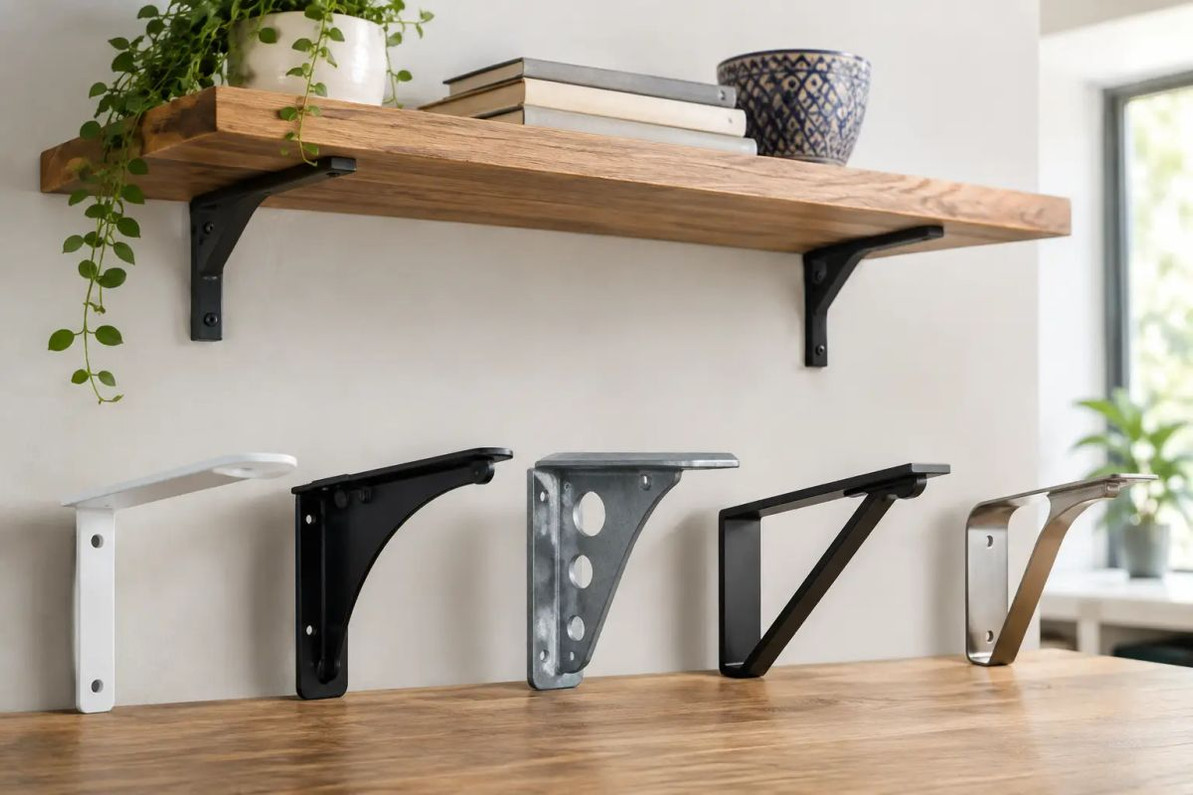
Standard L-shaped brackets are a straightforward choice for lightweight to medium-duty shelves. They work well for closets, pantries, laundry rooms, home offices, and simple wall organization. Their open design makes them easy to install and inspect, and they are available in many sizes and finishes.
Heavy-Duty Gusseted Brackets
Heavy-duty brackets often include a diagonal support piece, sometimes called a gusset or brace, between the wall leg and shelf arm. That added structure helps manage higher loads and is a practical choice for garages, workshops, stockrooms, and utility shelving.
These brackets are useful when storing dense items such as hardware boxes, tools, bulk cleaning supplies, paper goods, or packaged inventory. They are more visible than hidden-support options, but they offer a functional, dependable look that suits work areas.
Floating Shelf Brackets
Floating brackets hide inside the shelf board, creating a clean look with no visible support underneath. They are popular in living rooms, kitchens, entryways, and offices where appearance matters.
The trade-off is installation. Floating shelves need a shelf board designed for the hardware, accurate drilling, and a secure mounting surface. They are best for lighter decorative loads unless the product specifications, wall construction, and installation method clearly support more weight.
Decorative Brackets
Decorative brackets combine support with a visible design element. They can work well in kitchens, bathrooms, retail displays, and home spaces where the shelf is part of the room's appearance. Do not assume a decorative bracket is intended for heavy storage just because it is made of metal. Check its dimensions, mounting holes, and listed capacity before using it for anything substantial.
Calculate the Real Shelf Load
Shelf capacity is not just the weight of the items you can see. It includes the shelf board, brackets, screws, anchors, and wall material. The usable capacity of the complete setup is only as strong as its weakest component.
Start by thinking about what will actually be stored there. A few framed photos weigh very little. Books, ceramic dishes, canned goods, power tools, printer paper, and boxed inventory can become heavy quickly. Storage loads also change over time. A shelf installed for a few bins may eventually become the place where extra supplies collect.
Read bracket specifications carefully. Some ratings apply to a pair of brackets, while others apply to one bracket. A capacity may also assume that brackets are mounted into solid wood or another specified surface. It does not necessarily apply when the same bracket is installed into drywall with anchors.
Weight distribution matters too. Items pushed toward the front edge place more stress on the bracket and wall connection than items placed near the wall. If a shelf will hold a consistently heavy load, use a shelf board that resists sagging and add brackets as needed rather than relying on a wide unsupported span.
Use Enough Brackets for the Shelf Length
A short shelf may need only two brackets, but longer shelves typically need more support along the span. Many shelving projects use brackets every 16 to 24 inches, though the right spacing depends on the shelf material, bracket design, wall attachment points, and stored weight.
Particleboard and thinner boards usually need closer support than solid wood or thick plywood. Heavy items also call for more frequent brackets. When wall studs are available, placing brackets at stud locations is often more valuable than forcing perfectly even spacing.
Plan bracket placement before buying the shelf board if possible. This lets you choose a shelf length that works with stud locations, doors, windows, outlets, and nearby equipment. In a garage or warehouse setting, a layout based on practical storage needs is usually better than one based only on appearance.
Choose a Material and Finish That Suit the Space
Steel brackets are a common choice because they provide strong support in a relatively slim profile. Powder-coated or painted finishes can give steel brackets a clean appearance and help them hold up in normal indoor environments.
For laundry rooms, utility areas, or other locations with humidity, look for a finish suitable for the conditions. If brackets will be exposed to moisture, avoid assuming that any painted metal is automatically rust-resistant. Product details should identify the intended use and finish.
Color and shape still matter. White brackets can blend into light walls, black brackets can create a clean utility or industrial look, and decorative finishes can complement visible shelving in living spaces or retail areas. Just make support, fit, and mounting compatibility the first priorities.
Check These Details Before Installation
Before installing, confirm the bracket size, number of brackets, shelf depth, and intended load. Make sure your fasteners are appropriate for the wall surface and match the bracket mounting holes. If hardware is included, verify that it is suitable for your specific wall rather than assuming one screw type works everywhere.
Install the first bracket carefully using a level, then use it as a reference point for the remaining brackets. A shelf that is only slightly out of level can make items slide, look uneven, and put unnecessary stress on the installation. After the shelf is attached, test it gradually with lighter items before placing the full expected load on it.
When shopping for shelf brackets, compare dimensions, construction, finish, package quantity, and stated load guidance instead of choosing by appearance alone. Easy Deal USA focuses on practical storage and organization solutions, so these basic details can help you select parts that fit the job without paying for features you do not need.
The best shelf bracket is rarely the fanciest one. It is the one that fits the shelf, attaches properly to the wall, and supports the items you need close at hand.
Recent Posts
-
How to Organize Toys With Clear Storage Bins
Toy clutter tends to peak right before the holidays, when birthday gifts from the year are still sca …Oct 23, 2026 -
Folding Chairs for Church Halls and Community Centers
Church halls, fellowship rooms and community centers ask more of their seating than almost any home. …Oct 23, 2026 -
Restaurant Bus Cart Guide: Using a Utility Cart for Bussing
Every busy dining room hits the same wall at some point in a shift: dirty plates stack up, servers m …Oct 23, 2026