How to Pack a Heavy Box for Shipping Without Blowouts
A heavy box fails in predictable ways. The bottom seam splits when someone lifts it, a corner crushes when it is stacked under other parcels, or the contents shift and punch through the side. If you ship books, tools, auto parts, kitchenware or bulk inventory, learning how to pack a heavy box for shipping is the difference between a happy customer and a damage claim. The good news is that most failures come down to three things you control: the box, the cushioning and the tape.
This guide walks through a step-by-step method for packing heavy boxes, explains when to switch to wider tape, and shows how stretch film can bundle multi-box shipments so nothing gets separated in transit.
Why Heavy Boxes Fail in Transit
Parcel networks are rough on cartons. Boxes slide down chutes, ride conveyors, get stacked several high in trucks and are handled many times between your door and the customer. A heavy box adds its own stress on top of that:
- The bottom seam carries the full load every time the box is lifted. Folded flaps alone will not hold it.
- Dense items act like a hammer. If a heavy item can move even an inch inside the box, it builds momentum with every bump.
- Weak or reused boxes lose stacking strength. Corrugated board that has been wet, crushed or punctured cannot support what it once could.
- Thin tape strips peel at the edges when the flaps are under constant outward pressure from an overfilled box.
How to Pack a Heavy Box for Shipping: Step by Step
- Choose a sturdy box sized for the item. Use a new or like-new corrugated box with no soft corners, tears or water damage. Leave room for about two inches of cushioning on every side, but not so much empty space that the contents can shift. Check the box maker's certificate on the bottom flap if there is one; it often lists the box's weight limit.
- Tape the bottom before you load anything. Close the bottom flaps and apply a strip along the center seam, then a strip across each edge seam to form an H. Let each strip run a few inches down the sides so it grips the box wall, not just the flap.
- Reinforce the bottom on heavy loads. Add a second strip along the center seam and consider one more strip crossing it. This is where wider tape earns its keep (more on that below).
- Add a cushion layer on the bottom. Crumpled kraft paper, foam or air cushions keep the heavy item off the bottom panel so a drop does not transfer straight through the floor of the box.
- Place the heaviest item in the center. Keep weight low and centered. If you are packing several items, put the heaviest on the bottom and lighter items on top, with a layer of cushioning between them.
- Fill every void. Pack cushioning into the gaps until nothing moves when you shake the closed box. Movement inside the box is a common cause of damage in heavy shipments.
- Do not overfill. The top flaps should close flat without bulging. A domed top pulls tape loose and weakens the box when other parcels are stacked on it.
- Seal the top with the same H pattern. Press each strip down firmly with your hand. Packing tape adhesive is pressure sensitive, so firm contact gives a stronger bond.
- Label clearly and mark it heavy. Place the shipping label on the largest flat surface, keep it away from seams, and add a heavy package marking so handlers know to lift with care. Check your carrier's weight and size limits before you ship.
2 Inch or 3 Inch Tape for Heavy Boxes
Standard 2 inch carton sealing tape is fine for everyday parcels and fits the most common tape guns. For heavy boxes, extra-wide 3 inch tape covers more of the seam and grabs more of each flap, which helps resist the outward pressure of a dense load.
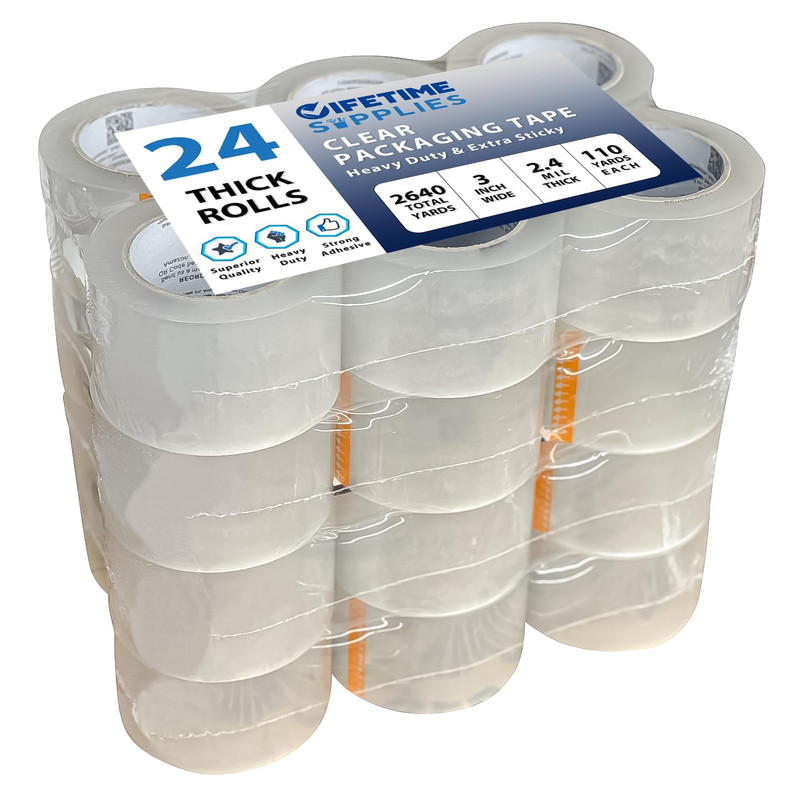
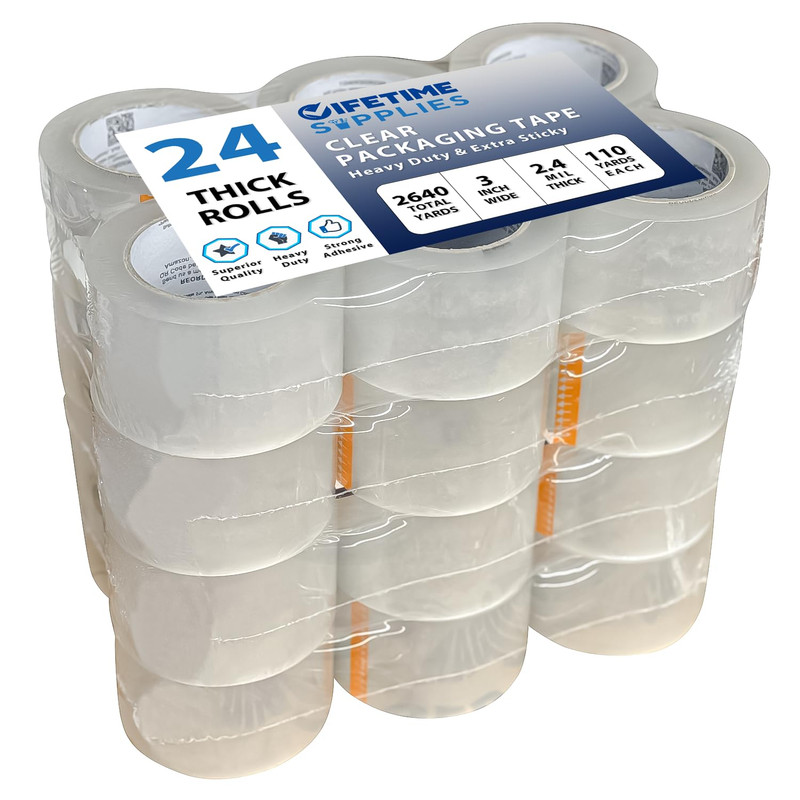
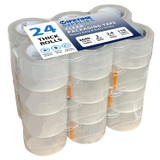
- Use 3 inch tape for book boxes, tool boxes, parts shipments, kitchenware and anything that will sit at the bottom of a stack. The 24 Rolls 3 inch Extra-Wide Shipping Packing Moving Tape is 2.4 mil thick with 110 yards per roll and comes in clear or brown, according to the product page. You will need a tape gun sized for 3 inch rolls.
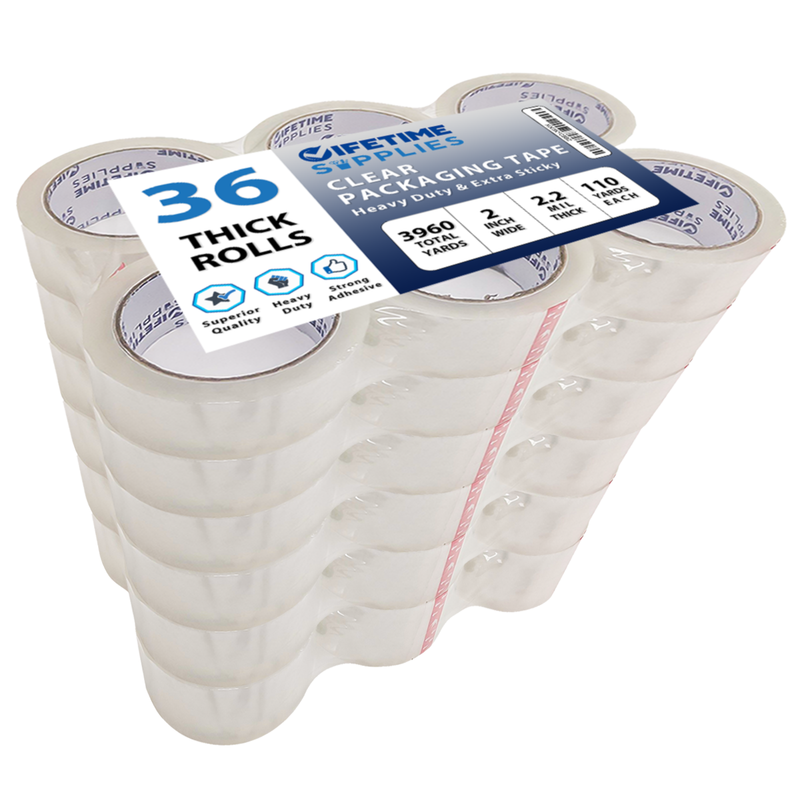
- Use 2 inch tape for lighter boxes and as your general-purpose roll. The 36 Rolls Carton Sealing Packing Tape is 2 inches wide, comes in clear or brown, and is offered in 110 yard and 65 yard roll lengths. Its product page notes that it is pressure sensitive and meets USPS, UPS, FedEx and DHL requirements.
Split the Weight or Bundle the Boxes
Sometimes the smartest way to ship something heavy is not one giant box. Two medium boxes are easier for handlers to lift, less likely to be dropped and less likely to burst. When you split an order, number the boxes (1 of 2, 2 of 2) and put a packing list in each.
For freight shipments or a set of boxes going to one address on a pallet, stretch film holds the stack together as one unit. The 15 inch x 900 FT 80 Gauge Pallet Wrap Film is a clear hand wrap made for use with hand-held dispensers and is offered in 1, 2 or 4 roll options.

Tips for Wrapping a Stack of Boxes
- Stack the heaviest boxes on the bottom and keep the edges of the stack square.
- Tuck the film end under a box or twist it into a rope and wrap it around the base to anchor it.
- Wrap the bottom several times first, including the pallet if you use one, then work upward, overlapping each pass.
- Finish with a few passes at the top and press the tail of the film flat so it does not snag.
- Put a label on the top and on at least one side of the wrapped load.
Heavy Box Packing Checklist
- Sturdy box with no damage, sized with room for cushioning
- Bottom taped in an H pattern and reinforced
- Cushion layer on the bottom, heaviest item centered
- All voids filled so nothing moves when shaken
- Top closes flat and is sealed in an H pattern
- Label on a flat panel, heavy marking added, carrier limits checked
Safety note: Lift heavy boxes with your legs, not your back, keep the load close to your body and ask for help or use a hand truck for anything that feels awkward.
Frequently Asked Questions
How much tape should I use on a heavy box?
Use the H-tape method on the top and bottom, then add at least one extra strip along the bottom center seam. For very dense loads, wider 3 inch tape adds coverage without extra passes.
Can I reuse a box to ship something heavy?
Only if the box is in excellent condition. Any crushed corners, punctures, water damage or soft spots mean it has lost strength. For heavy shipments, a new box is the safer choice.
Is clear or brown tape better for heavy boxes?
The color does not change the hold. Clear tape lets you tape over printed markings, while brown tape blends in with corrugated boxes. Pick the thickness and width for the load and the color you prefer.
What is the best way to stop items from shifting inside the box?
Fill every gap with cushioning until the closed box does not rattle or shift when you tip it side to side. Separate multiple heavy items with a layer of cushioning so they cannot knock into each other.
Get Your Heavy Shipments There in One Piece
A strong box, snug cushioning and well-applied tape stop most heavy box failures before they start. Stock up on 3 inch extra-wide packing tape for your heaviest cartons, keep 2 inch carton sealing tape on hand for everyday parcels, bundle multi-box orders with stretch film, and browse all of our shipping supplies at Easy Deal USA.
Recent Posts
-
Frigidaire Fridge Door Shelf Rail Broken: Replace 240534901
If the door shelf rail on your Frigidaire refrigerator has cracked, snapped off or keeps popping loo …Nov 21, 2026 -
Storage Totes for Contractors: Truck and Jobsite Guide
Every contractor knows the cost of a disorganized truck. You drive to the job, then spend twenty min …Nov 21, 2026 -
How to Pack a Heavy Box for Shipping Without Blowouts
A heavy box fails in predictable ways. The bottom seam splits when someone lifts it, a corner crushe …Nov 21, 2026