
Which Closet Organizer Fits Your Space Best?
A closet can look crowded even when it is not full. Usually, the problem is that the available space is being used in only one direction: a single rod across the top with shoes, bags, folded items, and seasonal clothing competing for the floor. Deciding which closet organizer to buy starts with the items you need to store, not with the closet’s appearance.
The right organizer creates usable zones for hanging clothes, folded items, shoes, accessories, linens, or supplies. It should also fit the room, the wall construction, and your comfort level with installation. A small reach-in closet needs a different approach than a walk-in closet, a rental bedroom, a utility closet, or a stockroom storage area.
Which Closet Organizer Is Right for Your Storage Needs?
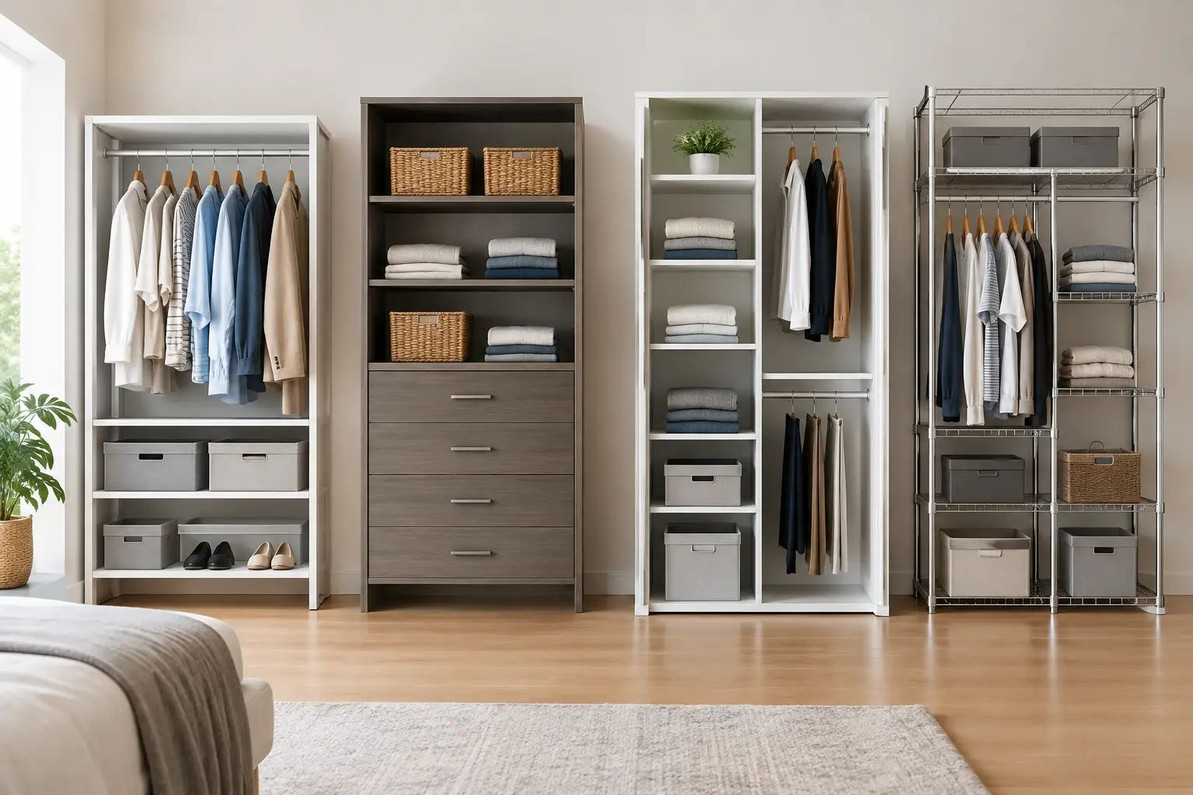
Most closet organizers fall into four practical categories: hanging organizers, freestanding units, wall-mounted systems, and modular closet systems. None is automatically better. The best choice depends on what you store and whether you need a temporary or long-term solution.
A hanging organizer attaches to an existing closet rod. It is a useful option when you need shelves quickly for sweaters, jeans, handbags, or children’s clothing. Because it does not require drilling, it works well for renters and for closets where you only need to improve a small section. The trade-off is capacity. A fabric hanging organizer adds vertical shelves, but it still depends on the strength of the existing rod and usually will not support heavy bins or bulky items.
A freestanding organizer sits on the closet floor and may include shelves, drawers, rods, or cubbies. This style can be practical in a larger closet, bedroom, laundry room, or garage workspace. It is also easier to take with you when moving. Measure carefully, though. A freestanding unit can block access to an existing rod or make a narrow closet feel tighter if it is too deep.
Wall-mounted organizers use brackets, rails, shelves, and rods anchored to the wall. They make better use of height and can be configured around clothing, shoes, and storage bins. This is often the strongest option for households that need to store more weight or want a cleaner built-in appearance. Installation takes more planning, especially if you need to locate wall studs or use appropriate anchors.
Modular systems combine adjustable shelves, rods, drawers, and accessory sections. They are the most flexible choice for changing storage needs, such as a child’s room that later becomes a guest room or a small business storage area that needs space for supplies. They can cost more than a basic hanging solution, but the ability to reconfigure the layout can provide better long-term value.
Start With What You Need to Store
Before comparing materials, colors, or add-on pieces, take inventory. Long dresses, coats, shirts, folded laundry, shoes, handbags, and storage bins each require a different amount of room. An organizer designed around short-hanging shirts may leave nowhere for dresses or winter coats. Likewise, too many open shelves can create untidy stacks if most of your items are small accessories.
If your closet holds mostly hanging clothing, prioritize rods. A double-hang arrangement is especially efficient for shirts, blouses, skirts, and folded pants. Place one rod higher and one lower, while leaving a separate full-height section for long garments. This can nearly double hanging capacity in a standard reach-in closet without increasing its footprint.
If folded clothing is the issue, choose shelves that are not too wide. Very wide shelves encourage tall, unstable stacks that are difficult to keep organized. Several narrower shelf sections make it easier to separate categories such as T-shirts, jeans, towels, and bedding. Bins can help contain socks, accessories, craft materials, or cleaning supplies, but confirm the shelf depth before ordering them.
Shoes need a plan as well. Flat shelves, angled racks, cubbies, or clear storage boxes can all work. For everyday pairs, open access is convenient. For seasonal shoes, enclosed boxes keep dust off and make stacking easier. Avoid placing heavy shoe storage directly under long hanging garments if it makes those clothes drag or bunch.
Measure the Closet Before You Shop
A few measurements prevent most organizer problems. Measure the closet width from wall to wall, the depth from the back wall to the inside edge of the door opening, and the height from floor to ceiling. Also account for baseboards, outlet covers, vents, door trim, and any existing shelf or rod you plan to keep.
For a reach-in closet, depth matters as much as width. A deep shelving unit may physically fit but leave too little room to hang standard clothing comfortably. If clothes are on hangers, the organizer needs enough clearance so doors can close and garments do not press against the front edge.
Check the door style before choosing a layout. Sliding doors limit access to only part of the closet at a time, so frequently used sections should be placed where they remain easy to reach. Hinged doors provide wider access but may conflict with a unit that extends too far forward. A curtain or open closet has fewer access restrictions, but visual neatness becomes more important.
For wall-mounted systems, identify where studs are located. Heavy shelving, loaded bins, and multiple rods should be supported according to the manufacturer’s installation instructions. Do not assume drywall alone can hold the same load as a system fastened into solid framing. If you are organizing a rental, review your lease requirements before drilling.
Choose Capacity and Materials for Real Use
Closet organizers are often judged by appearance, but load capacity and construction are more important. Lightweight fabric organizers are convenient for folded clothes and smaller items. Wire shelving provides airflow and visibility, making it useful for linens, pantry-style storage, and utility closets. Solid shelves can give small items a more stable surface and may create a more finished look.
Consider how the organizer will be used six months from now. A shelf that holds a few sweaters today may later carry storage bins, books, or extra bedding. A shoe rack in an entry closet may end up holding cleaning products or pet supplies. Choose components with practical capacity for the likely load, not only the items currently in the closet.
Adjustability is another useful feature. Movable shelves let you change the spacing as storage needs shift. Adjustable rods allow room for seasonal clothing or growing children’s wardrobes. Drawers and pull-out bins can make lower sections easier to use, especially when you do not want to kneel to search through stacked containers.
Match Installation Level to Your Space
The simplest organizers install in minutes and use an existing rod, over-the-door hooks, or a freestanding frame. These are good choices when you need a fast improvement, have limited tools, or expect to move soon. They are also useful for supplementing an existing closet rather than rebuilding it.
A wall-mounted or modular organizer requires more time but can solve bigger storage problems. It is worth considering when the closet is shared, when floor space is limited, or when you want a layout tailored to specific items. Plan the project before purchasing parts. Sketch the closet wall, mark rod heights, and decide where shelves, drawers, and bins will go.
Do not overlook reach. High shelves are excellent for luggage, holiday decorations, and off-season items, but they are less practical for clothing used every day. Keep frequently used items between waist and shoulder height whenever possible. Use a stable step stool for occasional access to higher storage instead of overloading low areas simply because upper space is inconvenient.
Common Closet Organizer Mistakes to Avoid
The most common mistake is buying an organizer without measuring the closet and the items going into it. The second is treating every inch as storage space. A packed closet can become less functional if there is no room to see, remove, and return items.
Another issue is building around one category only. For example, adding many shoe shelves may seem helpful until there is no place for long coats or laundry baskets. Leave a little flexible space for changing needs. An empty shelf or adjustable section is not wasted space when it prevents the rest of the closet from becoming cluttered.
Also consider the floor. If the closet floor is used for a hamper, boots, or a vacuum, a full floor-to-ceiling organizer may not be the best fit. A wall-mounted system that leaves some open space below can make cleaning easier and create room for larger items.
A good closet organizer should make daily routines faster, not add another storage system to manage. Choose the layout that gives your most-used items an obvious home, leaves enough clearance to access them, and fits the level of installation your space can support. A few well-planned shelves and rods often do more for a closet than a larger unit that does not match the way you actually store things.
Recent Posts
-
How to Organize Toys With Clear Storage Bins
Toy clutter tends to peak right before the holidays, when birthday gifts from the year are still sca …Oct 23, 2026 -
Folding Chairs for Church Halls and Community Centers
Church halls, fellowship rooms and community centers ask more of their seating than almost any home. …Oct 23, 2026 -
Restaurant Bus Cart Guide: Using a Utility Cart for Bussing
Every busy dining room hits the same wall at some point in a shift: dirty plates stack up, servers m …Oct 23, 2026
