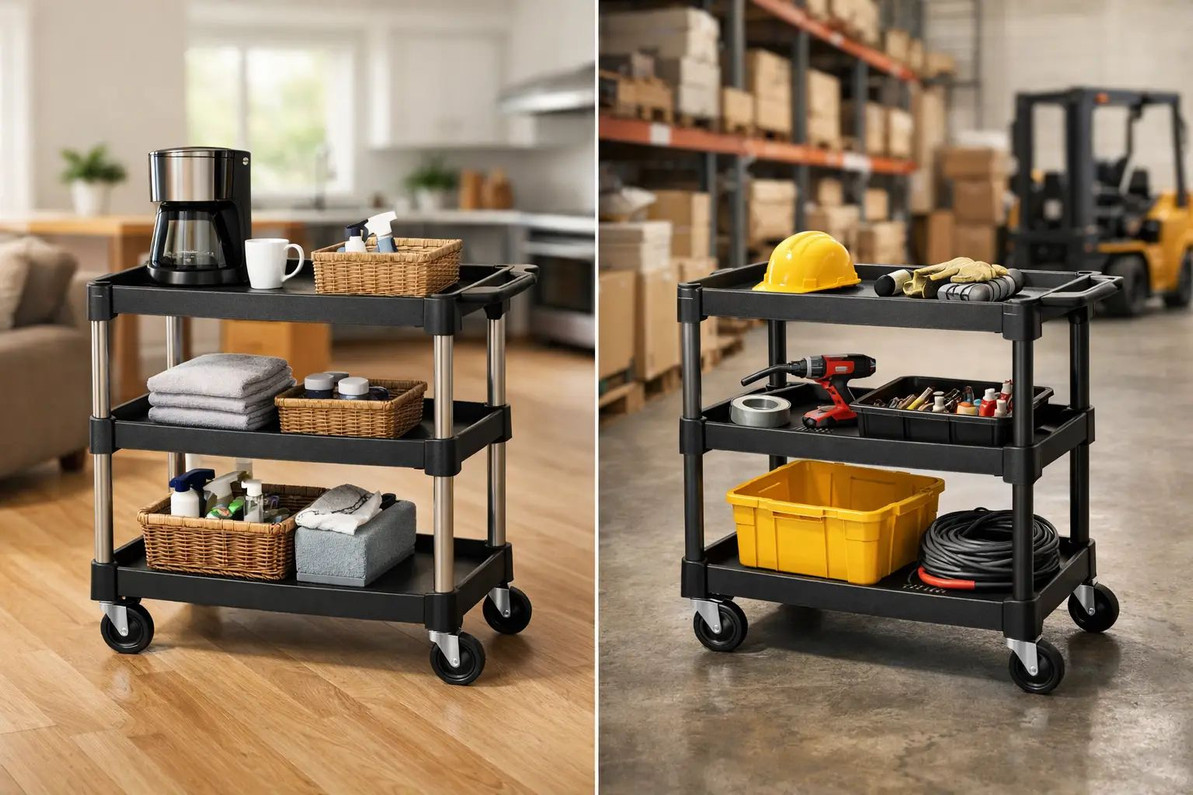
Utility Cart Review for Home and Warehouse Work
A utility cart can save dozens of unnecessary trips across a garage, stockroom, office, classroom, or maintenance area. But the wrong cart becomes one more item in the way: too small for the load, hard to steer, or built with shelves that do not fit the work. This utility cart review focuses on the details that affect daily use, so you can choose a cart that moves supplies reliably instead of creating another problem to manage.
Start With the Job, Not the Cart Style
The best utility cart depends less on appearance and more on what you need to move. A homeowner may need a compact rolling cart for cleaning products, tools, and garden supplies. A small business may need a multi-shelf cart for restocking merchandise or moving shipping materials. In a warehouse or workshop, capacity, wheel performance, and shelf durability usually matter most.
Before comparing products, think through the typical load. Are you moving loose boxes, storage bins, power tools, food-service supplies, or maintenance parts? Will the cart travel over smooth indoor floors, concrete, thresholds, or uneven outdoor surfaces? A cart that works well for lightweight office supplies may not be the right choice for cartons of inventory or heavy equipment.
Also consider how often it will be used. For occasional household projects, a simple two- or three-shelf cart can be a practical, affordable solution. For daily workplace use, it often makes sense to prioritize stronger construction, higher capacity, and casters designed for frequent movement.
Utility Cart Review: The Features That Matter Most
Product descriptions often highlight the number of shelves or the overall size, but a few basic specifications tell you much more about whether a cart fits the job.
Weight Capacity
Capacity is the first number to check, but read it carefully. Some carts list a total distributed weight capacity, meaning the weight should be spread across the shelves. Loading one shelf heavily while leaving the others empty can affect balance, steering, and shelf performance.
Choose a cart with enough room above your expected load rather than buying at the exact limit. If you normally move 100 pounds of supplies, a cart rated only for 100 pounds leaves little margin for a heavier box or an extra bin. For business use, that extra capacity can help the cart stay useful as needs change.
Shelf Size and Shelf Spacing
A cart can have an impressive capacity and still be inconvenient if its shelves are too shallow or too close together. Measure the bins, boxes, or equipment you plan to carry. Pay attention to usable shelf dimensions, not only the cart's overall footprint.
Shelf spacing matters when you move taller items such as spray bottles, printer paper cartons, small appliances, or tool cases. Open-sided designs make it easier to load oversized items, while raised shelf edges help keep smaller supplies from sliding off during turns. Neither style is universally better. Open shelves improve access, while deeper trays provide better containment for loose parts and cleaning supplies.
Material and Construction
Plastic utility carts are popular because they are lightweight, easy to clean, and resistant to rust. They are a sensible choice for janitorial rooms, offices, classrooms, laundry areas, and many home tasks. Molded plastic shelves can also reduce rattling when carrying bottles, containers, or small tools.
Steel carts typically offer a more rigid feel and can be a strong option for garages, maintenance departments, stockrooms, and workshops. Powder-coated finishes help protect the surface during normal use, but scratches should be addressed before they become a source of corrosion. Wire shelves can prevent dust buildup and make spills easier to spot, although small loose items may need bins or liners.
Aluminum carts are generally lighter than steel and may suit applications where corrosion resistance and lower cart weight are priorities. The right material comes down to the environment, load, and the items being transported.
Casters and Maneuverability
A utility cart is only as useful as its wheels. Small hard casters tend to work best on smooth, clean indoor floors. Larger wheels usually handle cracks, thresholds, and rougher surfaces with less effort. Swivel casters improve turning in tight aisles, while fixed casters can help a cart track straighter over longer distances.
Brakes are worth considering when the cart will be parked on a slope, used around active work areas, or loaded and unloaded frequently. They are not a substitute for safe loading, but they can make routine tasks more controlled.
Pay attention to the cart's turning space as well. A large cart may carry more, but it may not fit comfortably between worktables, shelving, or doorways. For apartments, utility closets, and narrow stock areas, a slim cart can be more useful than a wide, high-capacity model.
Two Shelves, Three Shelves, or More?
Two-shelf carts are often the easiest to load and are a good fit for bulky boxes, equipment, and larger storage totes. With fewer shelves, there is more vertical clearance and less need to bend or reach around a top tier.
Three-shelf utility carts are a practical middle ground for most home and workplace tasks. They allow users to separate supplies by type: cleaning products on one level, paper goods on another, and tools or replacement parts on the third. This layout helps reduce time spent sorting through mixed loads.
Carts with more shelves provide additional organization but are best suited to smaller, lighter items. They can be useful for parts, mailroom supplies, craft materials, packing supplies, or mobile workstations. The trade-off is reduced shelf height and a greater chance of overloading the upper levels with items that should be stored lower.
Handle Design and Safe Loading
A comfortable handle seems minor until you push a full cart repeatedly. Look for a handle height that allows you to steer without hunching over, especially in commercial settings where several people may use the same equipment. Rounded or molded handles can be easier on the hands than sharp metal edges.
When loading a cart, place heavier items on the lowest shelf whenever possible. Keep the load centered and avoid stacking tall, unstable boxes where they can block your view or shift during movement. Even a cart with a high capacity can become difficult to control if the weight is top-heavy.
Do not use a utility cart as a ladder, step stool, or platform for standing. Shelves and casters are designed to carry materials, not support a person. For reaching tasks, use a properly designed step stool or ladder instead.
When a Utility Cart Is Not the Best Choice
A utility cart is designed for organized, repeated movement of supplies. It is not always the best material-handling option. If you need to move one large, heavy carton or appliance-sized item, a platform cart or hand truck may provide a larger, more stable surface. If you need to transport long lumber, bulky equipment, or oversized warehouse loads, a dedicated platform cart may be more efficient.
Likewise, a small rolling organizer may be better for tight household spaces where a full-size cart would take up too much room. Choosing the right equipment category can prevent wasted space and reduce the temptation to overload a cart beyond its intended use.
Quick Checks Before You Buy
For a confident purchase, compare the cart's listed dimensions with your doorway width, storage location, and work aisle. Confirm the total capacity and whether it is distributed across shelves. Check the shelf dimensions against your most common bins or cartons, and consider the floor surface when choosing wheel size and caster type.
It also helps to think about assembly. Some carts arrive ready to use, while others require basic assembly. For a business purchasing several carts, consistent dimensions and simple assembly can make setup and future replacement easier. Customers ordering for a warehouse, property maintenance team, or growing operation may also benefit from choosing matching carts for a more organized workflow.
A dependable utility cart does not need unnecessary features. It needs the right shelf layout, enough capacity for the real load, wheels that suit the floor, and a footprint that fits the space. At Easy Deal USA, practical choices like these help turn a cart from a simple purchase into equipment that makes everyday work easier.
Recent Posts
-
Foam Play Mat Setup Guide for Babies and Toddlers
Once a baby starts rolling, scooting and crawling, the floor becomes the main play area, and hard fl …Oct 24, 2026 -
Folding Table as a Desk: Home Office Setup Guide
Not every home has room for a permanent desk, and not every work-from-home setup needs one. Using a …Oct 24, 2026 -
Duct Tape vs Packing Tape: Which to Use and When
You are halfway through packing a stack of boxes and the packing tape runs out, but there is a roll …Oct 24, 2026