How to Store Old Photos and Documents in Plastic Bins
Shoeboxes of old prints, a folder of birth certificates, kids' report cards, tax records you have to keep for years: most homes have a pile of paper and photos that matters a lot and gets stored badly. Cardboard boxes soak up humidity, invite pests and crush easily when something heavy lands on top. Learning how to store old photos and documents in plastic bins is one of the simplest ways to protect them, as long as you prepare the contents and pick the right spot for the bins.
This guide walks through what to do before anything goes into a bin, how to pack photos and papers so they stay flat and readable, and where to keep the bins so heat and moisture never get a chance to do damage.
Why Plastic Bins Beat Cardboard for Photos and Documents
Cardboard is cheap, but it is a poor long-term home for paper keepsakes. It absorbs moisture from the air, it softens and collapses when stacked, and it gives insects and rodents something to chew. A lidded plastic bin solves most of those problems at once:
- A closed barrier. A lid that latches or seals keeps out dust, crawling insects and the occasional spill.
- Stacking strength. Rigid walls hold their shape, so the bin on the bottom does not crush the photos inside.
- Visibility. Clear bins let you spot the right box without opening every one, which means less handling of fragile prints.
- Easy moves. Handles and a solid base make bins easier to carry out of the way during a flood scare, a renovation or a move.
One important point: the bin is the outer shell. Photos and papers should still sit inside folders, envelopes or sleeves made for storage, because the bin protects the group while the inner layer protects each item.
Step-by-Step: How to Store Old Photos and Documents in Plastic Bins
1. Sort before you pack
Go through everything once and split it into three groups: keep, digitize and shred. Keep originals that are legally important (birth and marriage certificates, deeds, titles, passports) and photos with real sentimental value. Recycle duplicates and shred anything with personal data you no longer need. A smaller collection is easier to protect and far easier to find things in later.
2. Remove things that cause damage over time
Take out rubber bands, paper clips, staples and sticky notes. Rubber bands dry out and stick to prints, and metal fasteners can rust and stain paper. Pull photos out of old self-stick "magnetic" albums if they come away easily; if they do not, leave them and store the whole album flat rather than forcing them.
3. Use an inner layer for every group
- Photos: stand them upright in photo storage boxes or envelopes, or keep them in sleeves sold as archival or photo-safe. Avoid soft vinyl sleeves with a strong plastic smell.
- Documents: file them in acid-free folders, one folder per person or topic, and keep papers flat and unfolded where you can.
- Negatives and slides: keep them in their own sleeves or small boxes, separate from prints.
4. Make sure everything is dry
Never seal damp items in a closed bin. If photos or papers came out of a basement or garage, let them air out indoors for a few days first. A sealed bin keeps moisture out, but it also keeps moisture in. Many people add a few silica gel packets to each bin as extra insurance; replace them when they are saturated.
5. Pack the bin so nothing bends
Place heavier folders and albums on the bottom and lighter photo boxes on top. Fill gaps with more folders or a folded towel so items cannot slide and curl. Do not overfill: if you have to press the lid down, use a second bin.

6. Label the outside and keep an index
Write the contents and date range on each bin, for example "Family photos 1970 to 1989" or "House documents". Keep a simple list on your phone or computer of what is in each bin. When you need a single certificate in a hurry, you will open one bin instead of six.
Choosing the Right Storage Bins for Photos and Papers
Look for these features when you pick bins for paper keepsakes:
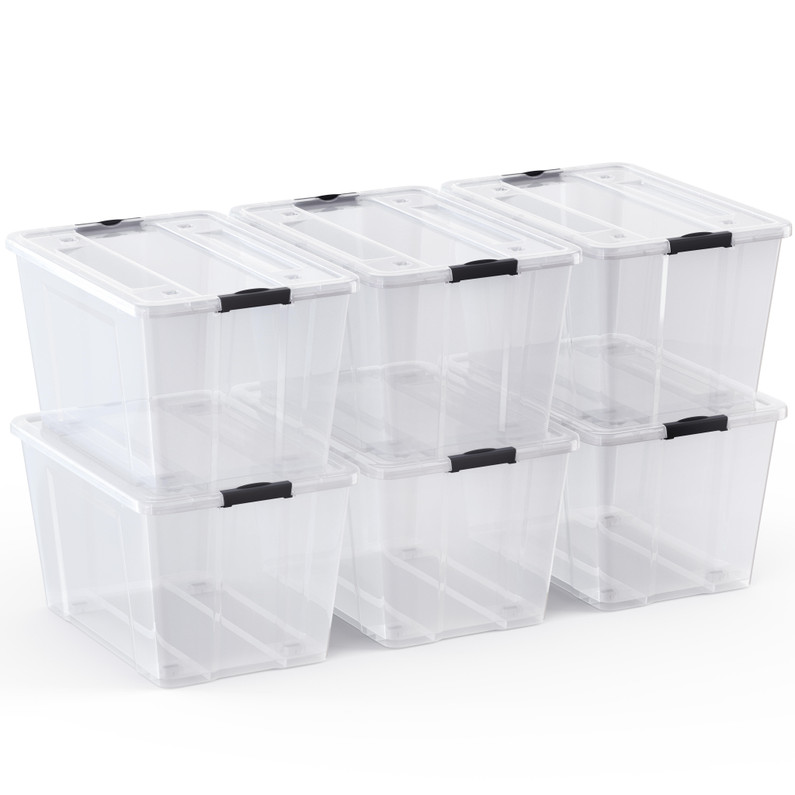
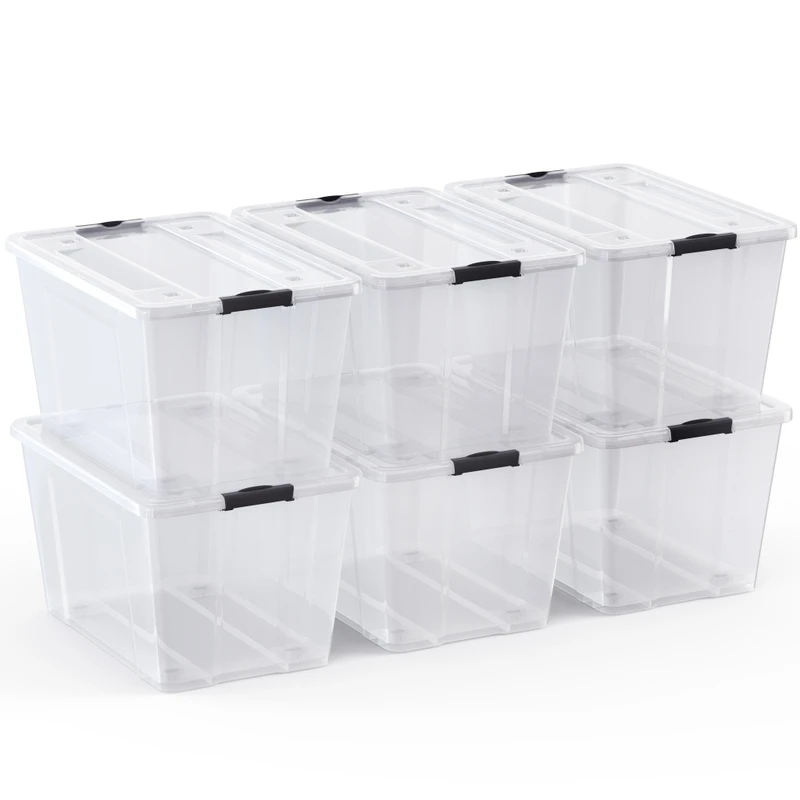
- A secure lid. The 54 Quart Gasket Box 6 Pack has a latching lid that the product page says helps protect contents from dust and moisture. Each bin measures 22 1/4 inches long, 15 inches wide and 13 inches high on the outside, which leaves room for several rows of folders or photo boxes.
- Clear walls. Being able to see contents cuts down on opening and handling. Both bins shown here are clear.
- Built-in compartments for small items. The 17 QT Plastic Storage Bins with 6 Detachable Inserts come as a set of two with six removable organizers, snap latches and built-in handles. The inserts work well for loose snapshots sorted by year, negatives, old letters, medals or small keepsakes that would get lost in a big tote.
- The right size for the load. Paper is heavy. A huge bin full of documents can be hard to lift, so split large collections across several bins rather than packing one to the brim.
Before you buy, compare the listed outside dimensions with your shelf space and with the folders or albums you plan to store. Inside dimensions are always a little smaller than the outside numbers.
Where to Keep the Bins
Location matters as much as the container. Photos and paper last longest in a spot that stays cool, dry, dark and steady through the year.
- Best: an interior closet, under a bed or a shelf in a room you heat and cool along with the rest of the house.
- Use with care: a finished basement. Keep bins off the floor on shelving and away from walls, water heaters and washing machines.
- Avoid: attics, garages and sheds. Big temperature swings speed up fading and curling, and garages can get damp.
Keep bins out of direct sunlight, even clear ones, since light fades photos over time. Check them once or twice a year for any sign of moisture, odor or pests.
A Note on Stacking and Lifting
Bins full of paper get heavy quickly. Stack the heaviest bins at the bottom, keep stacks to a height you can reach without straining, and lift with your legs rather than your back. If a bin feels too heavy to lift comfortably, move some folders into another bin.
Frequently Asked Questions
Is it safe to store photos in plastic bins?
Yes, as long as the photos are dry and protected by an inner layer such as photo boxes, envelopes or photo-safe sleeves. The bin protects against dust, pests, crushing and water, while the inner layer keeps prints from rubbing or sticking together.
Should I store important documents in a basement?
Only if there is no better option. If you must, use bins with secure lids, keep them on shelves off the floor and away from water sources, and check them regularly. An interior closet on a main floor is a safer choice.
How do I keep moisture out of a storage bin?
Start with completely dry contents, choose a bin with a latching or sealing lid, add silica gel packets if you like, and store the bin in a room with stable temperature and humidity.
Should I digitize photos before storing them?
It is a smart backup. Scanning your most important photos and documents means you still have copies if the originals are ever damaged. Store the originals in bins and keep the digital copies in at least two places.
Protect Your Family Records Today
A few hours of sorting and the right containers can protect decades of memories. Pick up the 54 Quart Gasket Box 6 Pack for folders and albums, add the 17 QT bins with removable inserts for loose prints and small keepsakes, and browse the full range of home storage bins at Easy Deal USA.
Recent Posts
-
Meal Prep Container Sizes: 24 vs 28 vs 32 oz Guide
Picking meal prep containers sounds simple until you are standing in the kitchen with a pot of chili …Oct 30, 2026 -
Packing Tape Not Sticking in Cold Weather: How to Fix It
When the weather turns cold, a lot of shippers and movers run into the same frustrating problem: pac …Oct 30, 2026 -
How to Get a Musty Smell Out of Plastic Storage Bins
You open a tote that has been sitting in the basement or garage all summer and get hit with a stale, …Oct 30, 2026