
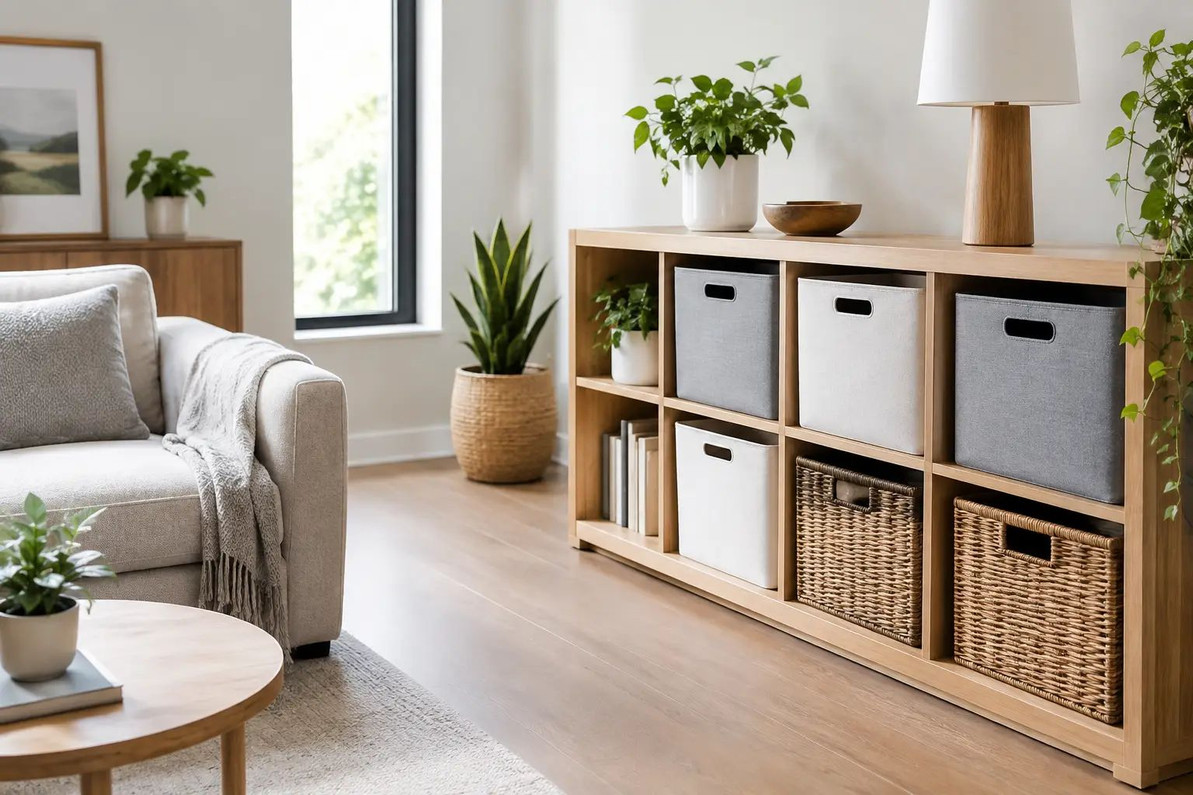
Storage Trends That Make Everyday Space Work
A crowded garage is rarely just a garage problem. The same thing happens in a supply closet, stockroom, laundry area, workshop, or small shipping station: items accumulate because they are useful, but there is no clear place to put them. The most practical storage trends are responding to that everyday reality with systems that are easier to see, move, expand, and maintain.
For homeowners, renters, and business operators, the goal is not to make every shelf look like a showroom. It is to reduce wasted space, protect supplies, speed up routine tasks, and make it easier to find what is needed. That often means choosing a few durable, well-sized storage products over buying a large assortment of containers that do not work together.
Storage Trends Moving Beyond One-Size-Fits-All
Fixed storage still has a place, especially for heavy items and long-term organization. But more customers are looking for setups that can change as their needs change. A storage area that holds seasonal decorations in November may need to hold packing materials in December or tools for a repair project in spring.
Modular storage supports that flexibility. Matching bins, stackable totes, adjustable shelving, and rolling carts can be rearranged without rebuilding the entire space. This is particularly useful in apartments, garages, utility rooms, small warehouses, and back-of-house business areas where every square foot has more than one job.
The trade-off is that modular systems require a little planning. Before buying, measure the available width, depth, and height, including clearance for doors, drawers, and walkways. A bin may fit on a shelf but still be inconvenient if there is no room to pull it out. For carts, check turning space and whether thresholds, ramps, or uneven floors will affect movement.
Clear storage earns its place
Clear plastic bins remain popular because they remove guesswork. Being able to see extension cords, cleaning cloths, labels, hardware, or holiday items saves time and reduces duplicate purchases. They work best for supplies that are used regularly or stored in several categories.
Clear containers are not always the right answer. Light-sensitive items, visual clutter, and customer-facing spaces may call for solid-color bins or enclosed cabinets. A practical middle ground is using opaque bins with large labels on the front and one additional label on the lid. The system matters more than the container color.
Vertical storage is becoming more purposeful
Using wall height is not a new idea, but current storage planning is more focused on access. The highest shelves should hold lightweight, infrequently used items. Frequently used supplies should stay between knee and shoulder height, where they can be reached without bending, climbing, or unloading several other boxes.
In a workshop or maintenance area, vertical shelving can separate bulky items from small parts. In a pantry or janitorial closet, it can prevent paper goods and cleaning supplies from taking over the floor. For warehouse and shipping work, vertical organization can keep cartons, labels, tape, and packing materials closer to the station where they are used.
Do not treat every shelf as if it has the same capacity. Review the manufacturer’s stated weight capacity for shelving, carts, dollies, and storage containers. Put heavier items low, distribute weight evenly, and avoid overhanging loads that can make a unit difficult to use or move.
Storage Trends for Homes and Everyday Maintenance
At home, storage is increasingly being planned around routines rather than rooms. Instead of one oversized “miscellaneous” closet, customers are creating small zones for the activities they repeat: laundry, pet supplies, cleaning, mail, school items, basic tools, and seasonal gear.
A rolling utility cart is a good example. It can hold cleaning supplies in a laundry room, then move to a bathroom or kitchen when it is time to clean. In a home office, the same idea can organize shipping supplies, printer paper, and small packages. The best cart depends on what it will carry. Consider shelf dimensions, number of tiers, wheel type, handle design, and stated weight capacity before choosing one.
Under-bed storage and closet bins can help in smaller homes, but only if they are matched to the items being stored. Low-profile containers are better for linens, off-season clothing, and gift wrap than for tall, irregular items. Avoid filling every hidden space with things that have not been used in years. Storage should make useful items easier to access, not postpone decisions about what to keep.
For landlords and property managers, standardized storage supplies can simplify turnover work. Keeping a labeled set of replacement appliance parts, maintenance basics, hardware, cleaning supplies, and protective packaging in one controlled location can reduce last-minute supply runs. A consistent labeling system also makes it easier for different team members to locate the same items.
Small Businesses Need Faster, Clearer Storage
Small businesses often outgrow their storage habits before they outgrow their space. A few shelves and cardboard boxes may work at first, but they become inefficient when inventory, shipping supplies, returns, and equipment share the same area.
The useful shift is toward defined work zones. Receiving, active inventory, packing, outgoing orders, returns, and maintenance supplies do not need separate rooms, but they should have separate homes. Even a compact setup can work better when each task has a designated surface or shelf.
For e-commerce sellers, packing materials should be stored according to use frequency and package size. Keep the most common box sizes, tape, labels, mailers, and cushioning materials close to the packing table. Less common supplies can go on higher or lower shelves. This reduces repeated walking and helps make order fulfillment more consistent during busy periods.
Mobile material-handling equipment is another practical part of the trend. Platform carts, hand trucks, and dollies are useful when supplies need to move between receiving, storage, and shipping areas. The right choice depends on the load. Platform carts are helpful for larger, stable loads. Dollies and hand trucks can be better for upright boxes or appliances when used according to their intended design and capacity.
Do not buy a cart based on appearance alone. Compare deck dimensions, load capacity, wheel style, folded or assembled size, and handle configuration. A larger platform may carry more, but it can be a poor fit in narrow aisles. Similarly, a compact folding cart may store easily but may not be intended for heavier warehouse loads.
Labels Are a Storage Tool, Not an Afterthought
One of the strongest storage trends is also one of the least expensive: better labeling. Labels turn containers, shelves, and cartons into a system that other people can understand without asking questions.
For home use, plain-language labels such as “Batteries,” “Light Bulbs,” “Paint Supplies,” or “Winter Gloves” are usually enough. For a business, add details that support replenishment and order accuracy, such as item type, size, SKU, location, or date received. Shipping labels and durable packaging labels are especially useful when cartons move between work areas or stay in storage for a longer period.
Keep labels readable from the direction people approach the shelf. A label on the top of a tote is fine when it is stored low, but it is not helpful on a high shelf. If containers are stacked, label the front-facing side as well.
How to Choose Storage Products That Last
The best buying decision starts with the problem, not the product. Ask what is being stored, how often it is accessed, how much it weighs, and whether it needs to move. Then measure the space and identify any limits such as narrow doors, stairs, shelving height, moisture, or uneven flooring.
Material matters. Plastic bins are useful for many household supplies and can be easy to clean. Metal shelving is often a practical choice for garages, stockrooms, and utility areas where strength and open visibility are priorities. Folding tables can create temporary packing, sorting, or project space, while folding chairs can support flexible work areas without taking up permanent room.
It also helps to choose products that work together. Containers sized for the same shelf depth are easier to arrange. Carts that fit beneath a worktable can clear floor space. Packaging supplies placed near the shipping area are more useful than bulk supplies stored across the building.
Easy Deal USA focuses on practical products for the spaces where work and home life overlap, from storage and organization to carts, dollies, folding furniture, and shipping supplies. The value is not in buying more equipment than necessary. It is in choosing dependable pieces that solve a specific access, capacity, or organization problem.
A better storage setup should feel easier a month after it is installed, not just on the day it is organized. Start with the area that causes the most daily frustration, give every frequently used item a reachable home, and leave enough open space for the next task that comes through the door.
Recent Posts
-
Frigidaire Fridge Door Shelf Rail Broken: Replace 240534901
If the door shelf rail on your Frigidaire refrigerator has cracked, snapped off or keeps popping loo …Nov 21, 2026 -
Storage Totes for Contractors: Truck and Jobsite Guide
Every contractor knows the cost of a disorganized truck. You drive to the job, then spend twenty min …Nov 21, 2026 -
How to Pack a Heavy Box for Shipping Without Blowouts
A heavy box fails in predictable ways. The bottom seam splits when someone lifts it, a corner crushe …Nov 21, 2026
