
Storage Shelf Buying Guide for Every Space
A shelf that looks right can still be the wrong shelf when the first heavy tote, case of supplies, or box of tools goes on it. This storage shelf buying guide focuses on the details that affect everyday use: available space, real load weight, material, shelf layout, and the type of items you need to reach quickly.
For a pantry, laundry room, office supply area, garage, workshop, or stockroom, the best choice is usually not the biggest unit. It is the unit that fits the space, supports the load, and makes the contents easier to manage.
Start With What the Shelf Needs to Hold
Before comparing finishes or shelf counts, make a quick inventory of what will live on the unit. Storage shelves for paper towels and seasonal decor face a very different job than shelves for power tools, bulk shipping supplies, paint cans, or inventory cartons.
Consider both the total load and the weight concentrated on one shelf. A shelving unit may have a stated overall capacity, but each individual shelf also has a limit. Heavy items should not all be placed on one level simply because there is open space there. Spread the load across the unit, and keep the heaviest items on the lower shelves to improve stability and make lifting safer.
It also helps to measure a representative item, not just the room. For example, standard storage totes may fit within a shelf's overall depth but leave too little room to grab the handles. Boxed inventory may need enough clearance above each shelf for labels to remain visible. If you store a mix of item sizes, adjustable shelves are often worth the added flexibility.
Measure the Space - Including the Working Space
Measure width, depth, and height where the shelf will stand. Then account for what happens around it. A shelf beside a parked vehicle, a swinging utility-room door, or a rolling cart route needs clear working room, not merely a tight physical fit.
Depth is commonly overlooked. Deep shelving offers more storage volume, but items at the back can disappear behind items at the front. That works well for reserve stock or seasonal supplies. For frequently used cleaning products, small parts, files, or shipping materials, a shallower shelf often keeps everything more visible and accessible.
Height matters in two ways. First, verify that the assembled unit will clear low ceilings, pipes, garage door tracks, or wall-mounted equipment. Second, think about reach. A very tall shelf can use vertical space efficiently, but the upper levels may be practical only for lightweight, occasional-use items. Keep daily supplies between knee and shoulder height whenever possible.
Leave Room for Bins, Labels, and Access
Shelves become more useful when they are part of an organized system. Clear bins, labeled cartons, and open-front containers can make a basic unit easier to use, especially in a workshop, maintenance closet, or small business stockroom.
Plan for the container dimensions before buying. A shelf with four levels is not automatically better than one with three if the spacing is too tight for your bins. Adjustable shelf positions give you more options when inventory, household needs, or storage containers change over time.
Choose a Material That Fits the Environment
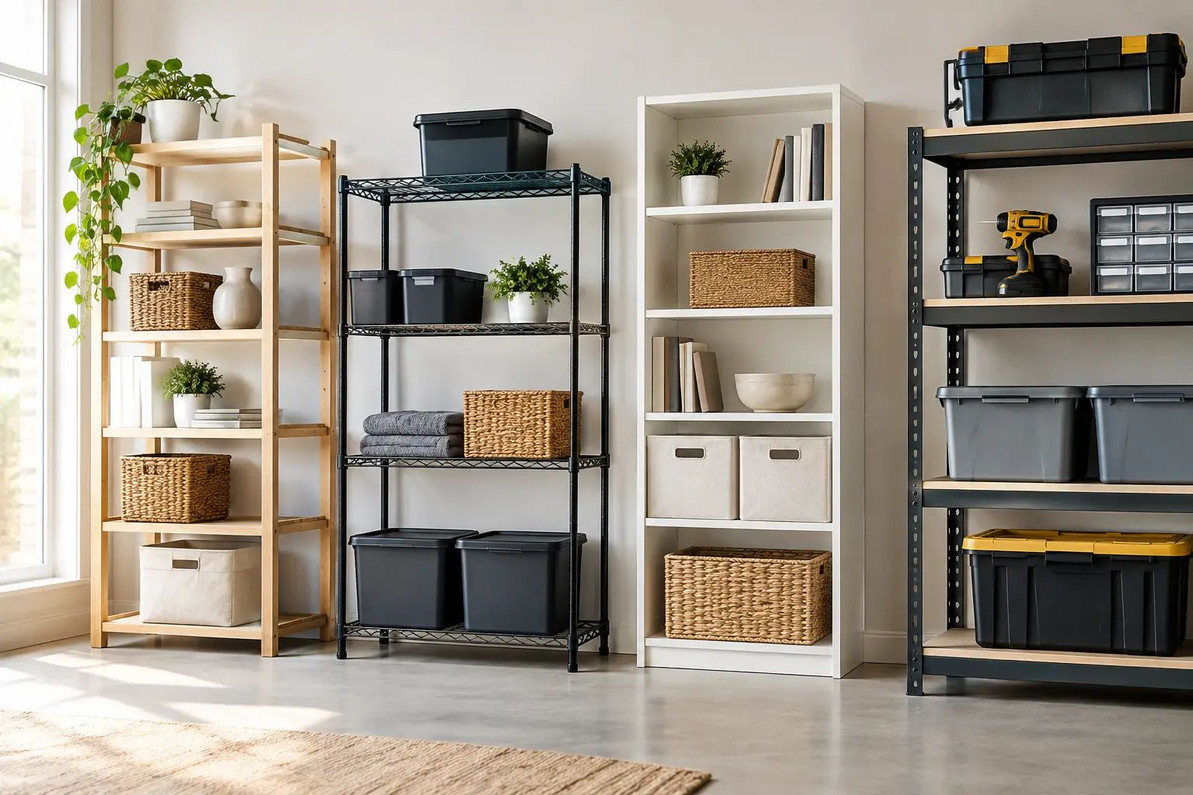
Steel wire shelving is a common choice for garages, storage rooms, commercial backrooms, and utility areas. Its open design helps with visibility and allows dust and debris to fall through instead of collecting on a solid surface. It is also a practical option when you need adjustable shelf heights and straightforward assembly.
The trade-off is that small loose items can tip or fall through the gaps. Bins, shelf liners, or solid containers solve that problem. Wire shelves may also leave marks on delicate boxes over long periods, so use a flat liner if presentation matters.
Solid metal shelving provides a more continuous surface for boxes, tools, small parts, and packaged goods. It can be easier to wipe clean and may better support items that do not sit evenly on wire. Look closely at the shelf construction and stated capacity rather than assuming every metal shelf is designed for the same load.
Wood or laminate storage units can suit closets, offices, living areas, and light household organization where appearance matters as much as utility. They are generally a less practical choice for damp garages, demanding workshop storage, or heavy bulk supplies unless the product is specifically designed for those conditions.
Plastic shelving can be useful for lightweight household storage and areas where moisture is a concern. However, it is typically not the first choice for heavy tools, dense inventory, or large quantities of canned goods. Match the material to the environment and the load instead of choosing solely by price.
Read Weight Capacity the Right Way
Weight capacity is one of the most useful specifications on a product listing, but it needs context. Check whether the stated number is per shelf or for the complete unit. Also consider whether the capacity assumes an evenly distributed load. A concentrated stack of dense boxes in the center may not perform the same way as evenly placed containers.
Estimate your load honestly. A few empty cartons weigh very little. The same cartons filled with hardware, books, bottled products, or packaging materials can add up quickly. If you are furnishing a warehouse aisle, shop supply area, or e-commerce packing station, allow room for growth rather than buying to meet only this month's inventory.
For especially heavy or tall units, placement and assembly matter just as much as capacity. Use the shelving only on a level surface, follow the included assembly instructions, and consider securing the unit when appropriate for the location and product design. Never climb on shelving or use a shelf as a ladder substitute.
Pick the Shelf Style for How You Work
Freestanding shelving is the most flexible option for garages, basements, stockrooms, and work areas. It can be positioned along a wall, arranged in rows, or used to create zones for supplies, inventory, and tools. It is a good starting point when you need meaningful storage volume without permanent built-ins.
Wall-mounted shelves free up floor space and can work well above a workbench, laundry appliances, or a packing table. They are useful for lighter, frequently accessed supplies, provided the wall and mounting method are suitable for the intended load. Measure carefully so the shelves do not interfere with doors, equipment, or seated work areas.
Heavy-duty utility shelving is better suited to dense items, bulk storage, and active workspaces. It often offers wider spans, stronger frames, and higher weight ratings, but it can take up more room and may look more industrial than a shelf intended for a closet or living space.
Mobile shelving or carts can be useful when supplies need to move between work areas. For example, a small business may keep labels, mailers, tape, and packing supplies on a rolling unit near the shipping station. Mobility adds convenience, but a rolling solution is not a replacement for a stable, high-capacity storage shelf when storing heavy inventory.
Check the Details That Affect Daily Use
A product listing should make it easy to confirm dimensions, number of shelves, shelf adjustability, material, and stated capacity. Pay attention to whether tools are required for assembly and whether the package includes the components needed to complete the unit. For multi-unit projects, confirm that the dimensions are consistent before planning a layout.
Shelf feet and leveling features can make a difference on garage or basement floors that are not perfectly even. Protective feet may also help reduce scuffs on finished floors. If the shelf will sit in a customer-facing area, an office, or a clean utility space, consider the finish and how easy it will be to keep the unit looking orderly.
Do not overlook the path from delivery to the final location. A large shelving unit may fit perfectly in a basement storage room but be difficult to carry through a narrow stairway, hallway, or doorway. Check packaged dimensions when access is limited.
A Practical Storage Shelf Buying Guide for Common Spaces
For a garage or workshop, prioritize sturdy construction, adjustable levels, and enough depth for tools, totes, and project materials. Keep chemicals, sharp tools, and heavy items organized according to their product instructions and out of reach where needed.
For a pantry or household storage closet, choose a depth that keeps food, paper goods, and cleaning supplies visible. More shallow shelves often prevent forgotten items from collecting in the back.
For a small business stockroom, focus on clear labeling, consistent bin sizes, and weight capacity that supports real inventory. A slightly larger unit with adjustable shelves can reduce clutter as product quantities change.
For a shipping or packing area, set up shelves around the order workflow. Place frequently used boxes, mailers, labels, and tape within easy reach, while reserve supplies can sit higher or farther back. This simple arrangement can save time on every order.
The right shelf makes storage easier to maintain, not just easier to set up. Choose the size and capacity that fit your actual items, leave room for access, and build a layout that lets you find what you need without moving half the room first.
Recent Posts
-

Foam Play Mat Setup Guide for Babies and Toddlers
Once a baby starts rolling, scooting and crawling, the floor becomes the main play area, and hard fl …Oct 24, 2026 -
Folding Table as a Desk: Home Office Setup Guide
Not every home has room for a permanent desk, and not every work-from-home setup needs one. Using a …Oct 24, 2026 -
Duct Tape vs Packing Tape: Which to Use and When
You are halfway through packing a stack of boxes and the packing tape runs out, but there is a roll …Oct 24, 2026