
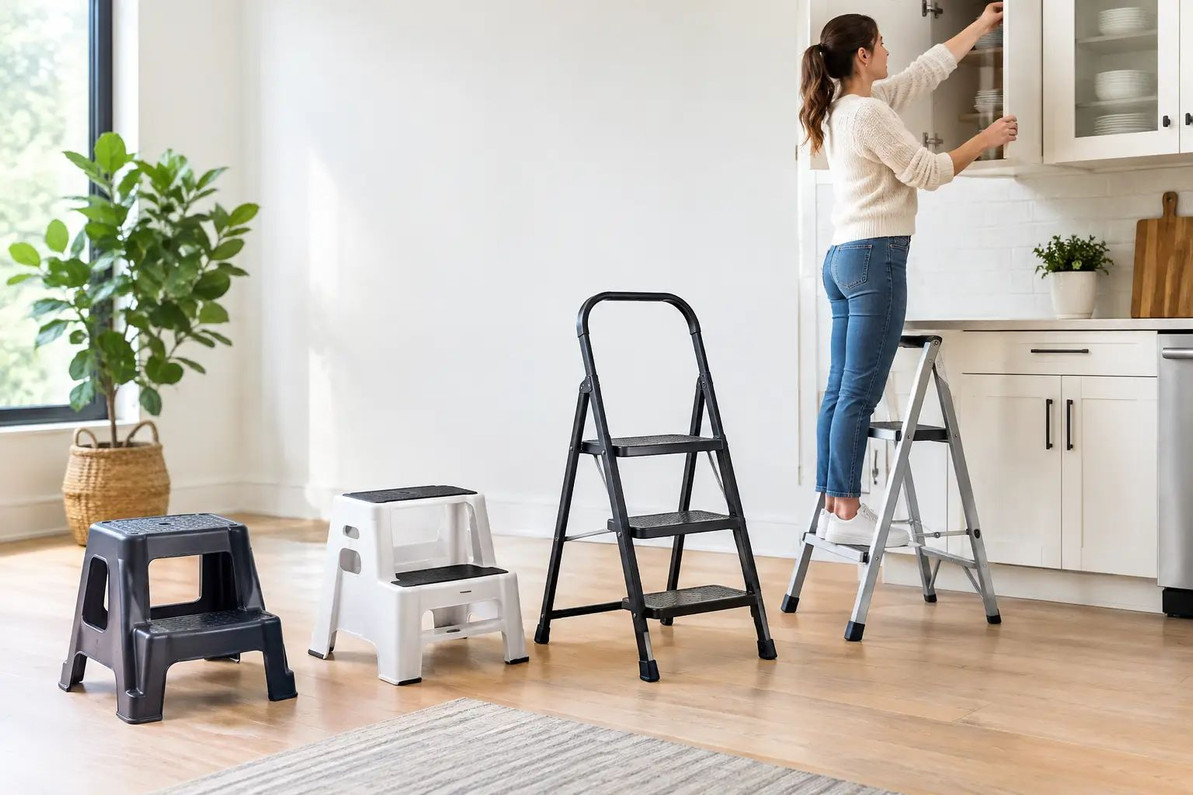
Step Stool Reviews: Find the Right Height
A step stool is one of those items that gets noticed only when it is missing. Reaching a top kitchen shelf, changing a ceiling-mounted filter, stocking a supply closet, or pulling cartons from a low warehouse rack can all become awkward without the right height underfoot. Useful step stool reviews look beyond appearance and price to answer a practical question: will this stool fit the task, the space, and the person using it?
For a homeowner, a compact folding stool may be enough for everyday cabinet access. For a property manager or maintenance crew, a wider two-step model may save time across repeated tasks. The best choice depends less on finding a single “best” product and more on matching the design to how it will actually be used.
What Good Step Stool Reviews Should Tell You
A product description can list dimensions and weight capacity, but reviews often reveal how those details work in real settings. Look for comments that explain where the stool was used, whether it felt stable on the floor type involved, and how easily it stored afterward. A short review saying “works great” is encouraging, but it does not tell you much about fit or function.
The most helpful feedback usually addresses the basics: working height, platform size, folding action, footing, and long-term condition. If several buyers mention that a stool is easy to carry but narrow underfoot, that may be a benefit for tight apartments and a drawback for repeated work. Context matters.
Be cautious with reviews that discuss only delivery or packaging. Fast shipping is valuable, but it does not answer whether the product is right for your home, shop, or facility. Focus on feedback from users whose needs resemble your own.
Separate Working Height From Stool Height
A 16-inch stool does not add only 16 inches to your reach in every situation. Your height, arm reach, footwear, and the need to keep both feet securely placed all affect usable reach. For light tasks such as reaching a cereal shelf, one step may be enough. For cleaning upper cabinets or accessing a higher storage area, a two-step design can provide a more comfortable working position.
Avoid choosing a taller stool simply because it offers more height. Taller models can take more room to store and may be less convenient for quick, frequent use. Choose the lowest height that lets you complete the task without stretching or standing on an unsuitable surface.
Compare Step Stool Designs Before You Buy
Most step stools fall into a few practical categories. Each works well in the right setting, and each involves trade-offs.
Folding One-Step Stools
A folding one-step stool is often the easiest option for kitchens, bathrooms, closets, RVs, and small offices. It can slide beside an appliance, hang in a utility area, or store behind a door. These stools are useful when the added height needed is modest and portability matters.
Before ordering, check the open footprint as well as the folded dimensions. A stool can be compact in storage but still need enough clear floor space to open and use properly. Also check whether the folding mechanism is designed to stay open securely during use and whether it is easy to operate with one hand.
Two-Step Folding Stools
Two-step models are a common choice for pantry shelves, laundry rooms, stockrooms, and maintenance work. The second step provides more reach without requiring a full ladder for many lower-height tasks. A handgrip or top handle can be convenient for carrying, but it should not be treated as a substitute for selecting the right equipment for higher work.
Pay close attention to the depth and width of both steps. A larger standing surface can feel more comfortable during tasks that take several minutes, such as organizing inventory or wiping down high shelving. The trade-off is a larger folded profile and more weight to move around.
Wide Platform Step Stools
Wide platform models prioritize a stable standing area and can be a better fit for repetitive household or workplace tasks. They are especially useful when users need to turn slightly, hold lightweight supplies, or work with both hands. Wider feet and a broader base can also be helpful on hard, level floors.
These models generally need more storage room. For a small apartment, that may be a deal-breaker. For a janitorial closet, garage, workshop, or back room, the extra platform space may be worth it.
Lightweight Plastic Utility Stools
Plastic step stools are common for quick, low-height tasks. They are easy to move, simple to clean, and often fit under a sink or in a closet. Their practical value depends heavily on the stated capacity, tread texture, base design, and intended use.
They are not all interchangeable. A small utility stool that works well for sitting briefly or reaching a low shelf may not be the right choice for regular commercial use. Read the product specifications and use the stool only as intended.
The Specifications That Matter Most
When comparing products, start with measurable details rather than relying on photos. Product images can make a stool appear larger or smaller than it will feel in person.
Weight capacity should be treated as a firm buying requirement, not a rough estimate. Consider the user's body weight plus clothing, tools, or items carried while using the stool. Do not assume that a higher listed capacity automatically makes one model better. It may add weight and bulk that are unnecessary for a simple household task.
Next, review the overall dimensions, step dimensions, and folded size. Measure the storage location before purchasing, especially for narrow closets, utility rooms, vehicles, and supply cabinets. For business buyers ordering several units, folded dimensions affect how efficiently the stools can be stored between jobs.
Tread design deserves equal attention. Textured, ribbed, or grip-focused step surfaces can provide more secure footing than a smooth surface, particularly when shoes may bring in dust or moisture. Feet or end caps should sit evenly on a clean, level floor. A stool should never be used on boxes, furniture, loose mats, or uneven ground to gain extra height.
Material affects both handling and intended use. Steel construction may suit frequent use and provide a solid feel, while plastic can be lighter and easier to carry. The right material depends on where the stool will live, how often it will move, and whether corrosion resistance, cleaning convenience, or reduced carrying weight is the priority.
How to Read Step Stool Reviews Without Getting Misled
Start by sorting reviews mentally into use cases. A buyer disappointed that a compact stool is not tall enough may have selected the wrong height, not received a poor product. Likewise, someone who finds a wide platform too bulky may be comparing it against a lightweight kitchen stool rather than a work-focused model.
Look for patterns across several reviews. One complaint about a difficult folding mechanism could be an individual issue. Repeated comments about pinched fingers, a narrow top step, or a stool that takes up more space than expected deserve closer attention. Reviews that include details about user height, task type, storage location, and floor surface are often the most useful.
Photos can help verify scale, but use them carefully. Camera angles and surroundings can distort size. Product dimensions remain the more reliable reference. If a review mentions a defect or damage, check whether it appears isolated or repeated, then consider the retailer's return process before placing an order.
Match the Stool to the Job
For quick household access, prioritize compact storage, simple opening, and a tread surface that feels secure. For a garage or workshop, a wider platform and durable construction may be more useful than the smallest folded size. For property maintenance, choose a design that is easy to carry from unit to unit while providing enough standing room for routine tasks.
Warehouse and retail back-room users should consider frequency. A stool used once a month to retrieve a light item has different needs from one used throughout every shift. If workers must access higher shelves regularly, review whether a larger step ladder or purpose-built access equipment is more appropriate than a small stool.
For shared environments, simple operation matters. A folding stool that is intuitive to open, close, and store is more likely to be used correctly. Keeping it in a designated location also helps prevent people from improvising with chairs, cartons, or other unstable substitutes.
A Practical Check Before Ordering
Before you choose, measure the highest point you need to reach and the area where the stool will be stored. Then compare the product's open height, step size, capacity, and folded dimensions against those measurements. This takes only a few minutes and can prevent the most common disappointment: receiving a stool that is well made but wrong for the job.
At Easy Deal USA, practical product details such as capacity, dimensions, and intended use make it easier to compare step stools for home, maintenance, storage, and workplace needs. The right stool should be easy to keep nearby, straightforward to use, and sized for the tasks you do most often. When in doubt, choose based on the work area and daily routine, not just the lowest price or the tallest option.
Recent Posts
-
How to Organize Toys With Clear Storage Bins
Toy clutter tends to peak right before the holidays, when birthday gifts from the year are still sca …Oct 23, 2026 -
Folding Chairs for Church Halls and Community Centers
Church halls, fellowship rooms and community centers ask more of their seating than almost any home. …Oct 23, 2026 -
Restaurant Bus Cart Guide: Using a Utility Cart for Bussing
Every busy dining room hits the same wall at some point in a shift: dirty plates stack up, servers m …Oct 23, 2026
