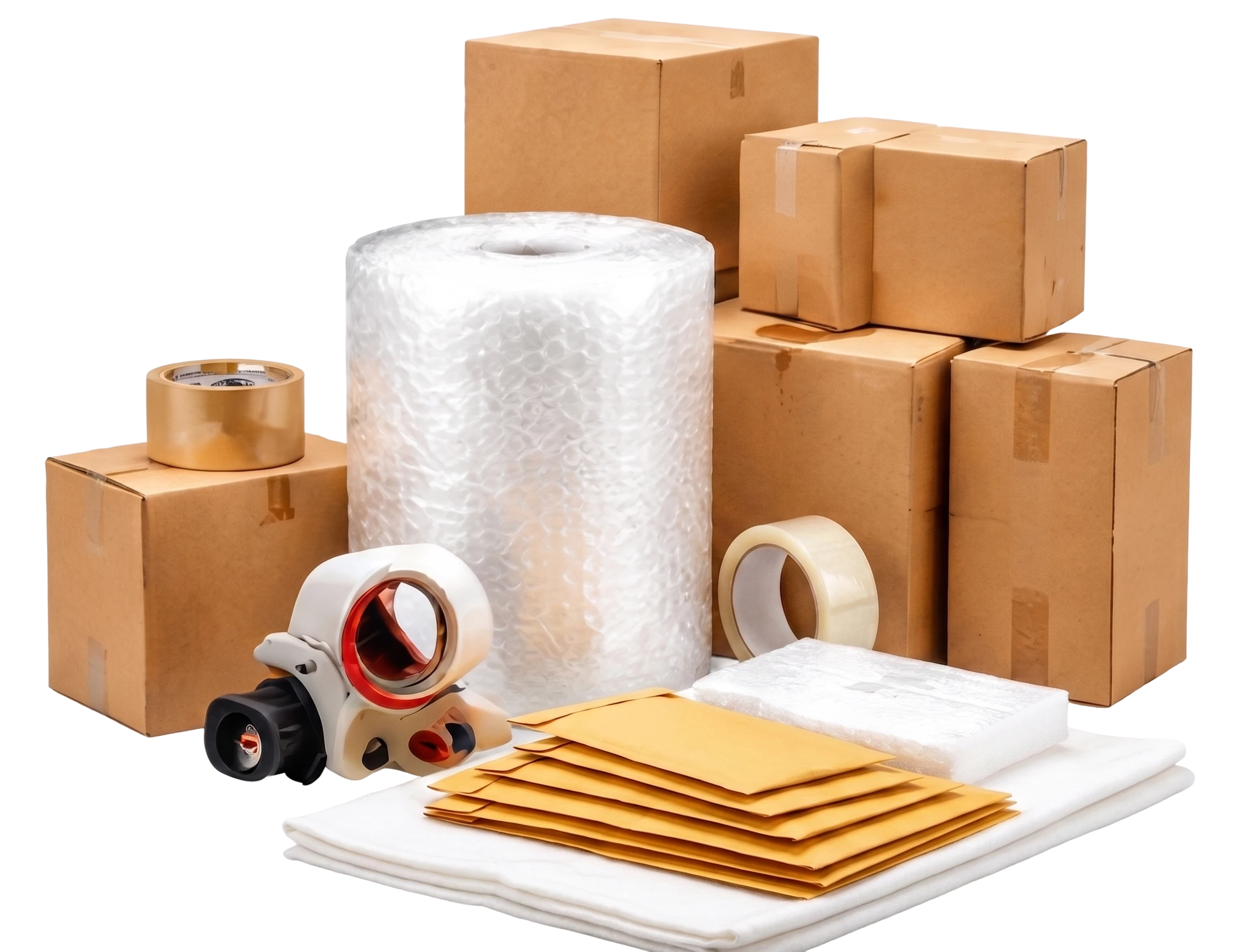

8 Small Business Packing Examples That Work
A shipment can be neatly packed and still cost too much to send, arrive damaged, or frustrate the customer opening it. The most useful small business packing examples solve all three problems at once: they protect the item, fit the shipping method, and keep the packing process repeatable as order volume grows.
For many sellers, the right approach is not the fanciest box or the most packaging material. It is a consistent setup with the right mailers, cartons, cushioning, labels, and work surface for the products being shipped. Use the examples below as starting points, then adjust based on your product size, fragility, order value, and carrier requirements.
1. Apparel packed in a poly mailer
A T-shirt, sweatshirt, pair of leggings, or other soft item usually does not need a box. Fold the item to a consistent size, place it in a clear inner bag if moisture or presentation is a concern, then use a durable poly mailer sized close to the folded product.
This is one of the most cost-conscious small business packing examples because mailers are lightweight and take up less storage space than cartons. Choose a mailer that leaves enough room to seal without crushing the garment or creating a loose package that catches during handling. A shipping label should lie flat on the largest smooth area.
A box can still be the better choice for premium apparel, gift orders, items with rigid accessories, or shipments where a branded unboxing experience matters. For everyday clothing orders, however, extra box space often adds material cost without adding meaningful protection.
2. Glass jars or candles in a snug corrugated box
Fragile products need protection on every side, not just a layer of bubble cushioning around the item. For a candle jar or similar glass container, start by wrapping the product so the top, bottom, and sides are covered. Place it in a corrugated box that is only moderately larger than the wrapped item, then fill empty spaces with packing paper or other suitable cushioning.
The key test is simple: close the carton and gently move it. The product should not shift, rattle, or touch the box walls. If it moves, add void fill or move to a better-fitting box. Too much empty space increases the amount of cushioning required and can raise shipping charges.
For multiple glass items, wrap each one separately and use dividers or enough cushioning to prevent contact. Do not rely on a fragile label as the main protection. Proper packing is what prevents most breakage.
3. Small hardware parts in a bag, then a padded mailer
Replacement screws, brackets, fittings, appliance parts, and other small non-fragile items can be easy to lose inside an oversized package. A practical method is to place parts in a resealable bag first, especially when an order includes several pieces, then pack the bag in a padded mailer or small box.
The inner bag keeps components together and helps customers confirm what they received. It also prevents sharp or loose hardware from damaging an outer mailer. If a part has corners, edges, or enough weight to puncture a padded mailer, use a small corrugated carton instead.
Add a simple packing slip or product label when part numbers matter. Clear identification reduces confusion for customers comparing a replacement part with their original item.
4. A boxed tool or appliance part with corner protection
Some products arrive in their own retail box but still need protection for shipping. A boxed hand tool, appliance replacement part, or household item may have vulnerable corners, thin product packaging, or internal pieces that can shift.
Use an outer shipping carton with enough room for cushioning on all sides. Paper fill can work well for light-to-medium items, while more protective materials may be needed for delicate components. Avoid using a shipping box that is barely larger than the retail carton if there is no room for impact protection.
This approach also helps keep retail packaging clean and presentable. That matters when the product is intended as a gift or when the customer expects a new, shelf-ready item.
5. Multi-item household orders in one right-sized carton
A customer may order storage bins, labels, household essentials, and a small replacement part in the same checkout. Packing each item separately can be wasteful, but placing everything in one large box without planning can lead to damage.
Start with the heaviest, most stable item on the bottom. Place lighter goods on top and use packing paper to fill gaps and separate items that could rub, dent, or crack. Small parts should be bagged and placed where they will not disappear into the void fill. If one item is fragile, create a protected zone around it rather than placing it directly against heavier products.
Right-sizing matters here. A carton should hold the order securely without forcing you to add unnecessary filler. Keeping a practical range of box sizes at the packing station makes this easier than trying to make one carton work for every order.
6. Subscription or repeat-order packing with a standard packout
Businesses shipping the same product combination every week should avoid deciding how to pack each order from scratch. For example, a recurring supply order might always include two refill packs, a label roll, and a small accessory. Build a standard packout with one box size, a set amount of cushioning, and a consistent placement order.
Document the process with a photo or short instruction sheet at the packing table. New staff can follow the same method, and experienced staff can work faster without sacrificing accuracy. This is especially useful once packing is handled by more than one person.
The trade-off is flexibility. A standard box that works for 80 percent of orders may be too large for a smaller version of the bundle. Keep a second option available instead of overpacking every order to fit one system.
7. Bulk orders on a cart-assisted packing station
When shipping several cartons at a time, the packing setup affects both speed and accuracy. A utility cart or rolling cart can hold boxes, tape, labels, packing paper, and completed orders so staff are not walking back and forth for supplies. A platform cart can help move larger cartons or staged orders to a pickup area.
For a small warehouse, maintenance shop, or online seller working from a garage, create separate areas for incoming products, packing materials, packed orders, and returns. Even a compact setup benefits from clear flow. Inventory should move in one direction, from shelf to packing table to shipping pickup, rather than crossing paths with returns or unprocessed stock.
Use a checklist for bulk orders with several line items. Count the pieces before sealing the carton, then apply the label after the order is verified. This simple sequence can prevent a costly reshipment.
8. Oversized but lightweight goods in a reinforced carton
Large, lightweight items create a different challenge. They may not weigh much, but their dimensions can make shipping expensive and their large flat surfaces can crush or bend. Folding tables, storage products, or similar items may need reinforced corners, a stronger outer carton, or additional internal support depending on the product shape.
Avoid filling a large carton with heavy material just to eliminate open space. Instead, use packaging that supports the product where it needs it most, such as corners, edges, and areas prone to flexing. If an item ships in a manufacturer carton, inspect the condition before sending it to a customer. A torn or compressed box can lead to damage claims even if the product initially appears fine.
Build a packing process you can repeat
The best packing materials are the ones that match your regular order mix and can be stored, reached, and replenished without slowing down fulfillment. Keep frequently used mailers, cartons, shipping labels, tape, and void fill within arm's reach. Less common sizes can be stored nearby but out of the main work area.
Review damaged shipments and customer complaints regularly. If the same type of product arrives broken, crushed, or missing pieces, revise the packout rather than treating each incident as a one-time mistake. A small change in box size, inner bagging, cushioning, or label placement can improve both customer experience and operating costs.
Easy Deal USA offers practical shipping supplies, storage solutions, carts, and workplace essentials that can help organize a more efficient packing area. Start with one product type, test the process on a few orders, and keep the version that protects the item without adding unnecessary materials.
Recent Posts
-
How to Organize Toys With Clear Storage Bins
Toy clutter tends to peak right before the holidays, when birthday gifts from the year are still sca …Oct 23, 2026 -
Folding Chairs for Church Halls and Community Centers
Church halls, fellowship rooms and community centers ask more of their seating than almost any home. …Oct 23, 2026 -
Restaurant Bus Cart Guide: Using a Utility Cart for Bussing
Every busy dining room hits the same wall at some point in a shift: dirty plates stack up, servers m …Oct 23, 2026