
Small Business Packaging Guide for Smarter Shipping
A damaged order can cost more than a replacement product. It can mean a refund, reshipping expense, lost packing time, and a customer who thinks twice before ordering again. This small business packaging guide focuses on practical choices that protect what you sell without adding unnecessary material, weight, or cost.
For most small sellers, the right packaging system is not the most elaborate one. It is the one your team can repeat accurately: the right box or mailer, enough cushioning for the item, a secure seal, and a clear shipping label. Start there, then adjust as your order volume and product mix grow.
Start With the Product, Not the Box
Packaging decisions should begin with the item’s size, weight, shape, and breakability. A lightweight T-shirt, a boxed appliance replacement part, and a metal tool do not need the same shipping setup. Using one box size for every order may seem faster, but oversized cartons raise shipping costs and leave more room for items to move.
Measure the item after any retail packaging is included. Then consider whether it can bend, scratch, leak, crush, or shift during transport. This helps you choose between a mailer, a small carton, or a sturdier corrugated box.
Soft, durable items often ship well in poly mailers or padded mailers. Small parts and products with edges usually need a box, even if they are not fragile. Products with glass, ceramics, delicate plastic components, or multiple loose pieces need more internal protection and a carton with enough space for cushioning on every side.
Choose the smallest practical package
A package should fit the product closely without squeezing it. For boxed products, leave room for cushioning around the item, especially at the corners. For non-breakable goods, a close-fitting mailer or carton keeps the shipment compact and reduces the amount of fill needed.
Smaller packaging generally uses less material and may reduce dimensional shipping charges. But undersizing creates its own problems. A box that bulges, splits at the seam, or leaves no room for protection is not a cost-saving choice.
Pick Packaging Materials for the Job
You do not need every type of shipping supply in your packing area. A manageable selection of common box sizes, mailers, tape, void fill, and labels will cover many daily orders. The goal is to match the material to the risk.
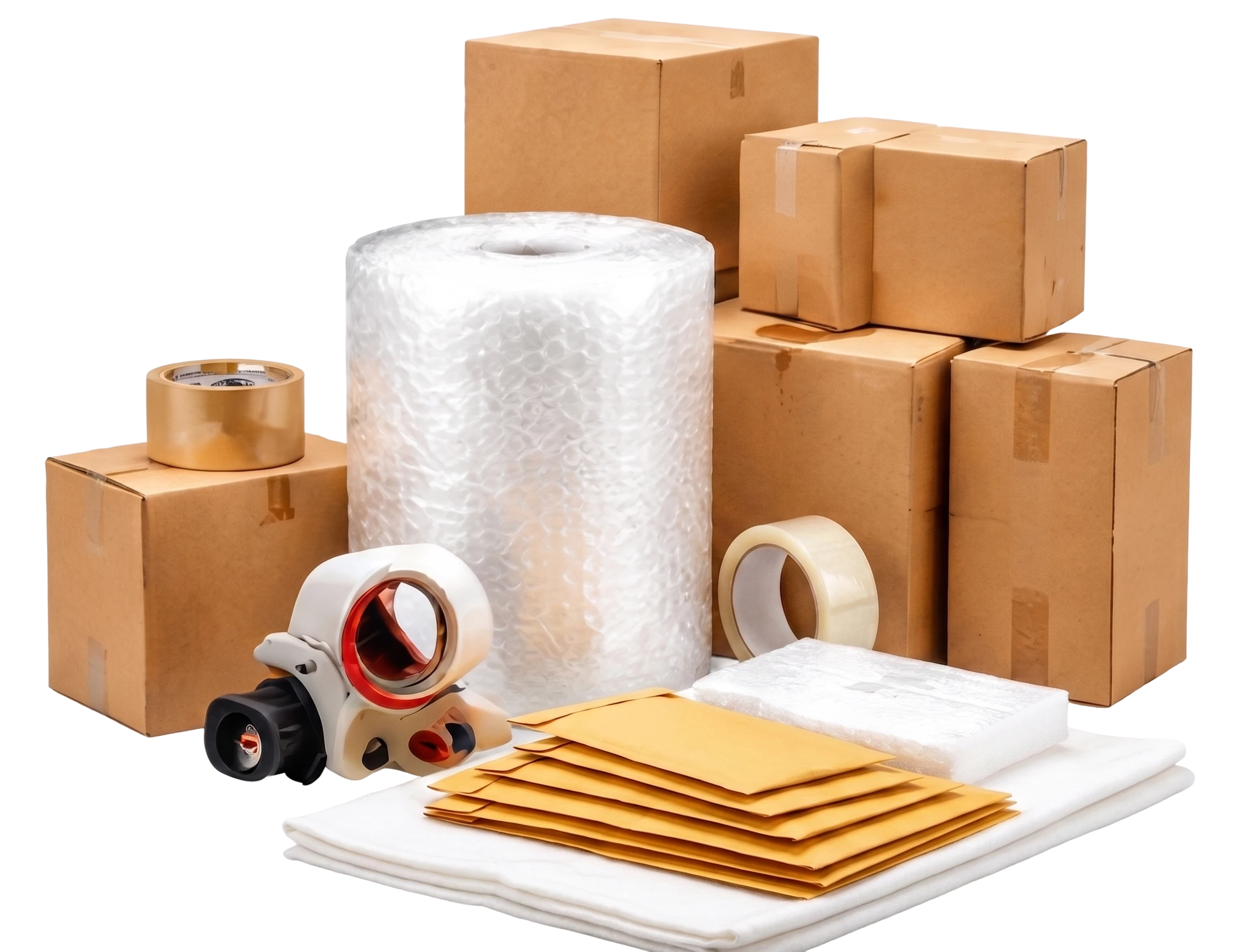
Corrugated shipping boxes are a dependable choice for heavier products, items with corners, and products that need cushioning. They stack better than mailers and offer more protection from pressure during handling. Keep a few sizes on hand rather than relying on one large carton. For many businesses, small, medium, and larger cartons cover the majority of orders.
Padded mailers are useful for lightweight items that need scratch protection but do not require a rigid box. Poly mailers work well for non-fragile soft goods and products already protected by durable retail packaging. They take up less storage space, which matters in home offices, workshops, and compact stockrooms.
Void fill prevents movement inside a box. Crumpled packing paper, air pillows, foam sheets, or bubble cushioning can all work, depending on the item. Paper is often a simple option for filling empty space and wrapping sturdy products. Bubble cushioning offers more shock protection for delicate items. The material matters, but placement matters more: protect the bottom, sides, top, and corners when an item can break.
Use a Simple Pack Test Before Buying in Bulk
Before committing to a new carton or mailer size, pack one order exactly as you would send it. Lift and gently shake the package. If the product moves freely, add fill or use a better-fitting container. Check whether the box remains square and whether the flaps close without force.
For fragile products, a basic drop test can reveal weak points. Pack a sample item and make a short, controlled drop onto a firm surface from a low height. This is not a replacement for carrier testing, but it can show whether corners need more protection or whether the item shifts inside the package.
Also review the packed weight and outside dimensions. A box may be inexpensive to buy but costly to ship if it adds unnecessary size. This is especially relevant for light products that take up a lot of space, such as bulky household items or bundled orders.
Seal Packages for Normal Handling
Tape is a small supply with a big effect on delivery condition. Use packaging tape designed for cartons, and apply enough length to cover the center seam with overlap onto both sides. For heavier boxes, reinforce the seams and consider an H-pattern seal: one strip down the middle seam and one strip across each edge.
Avoid using masking tape, painter’s tape, string, or thin office tape for shipping cartons. They may not hold through changes in temperature, friction, or repeated handling. A clean, dry box surface also helps tape bond properly.
If a box is reused, remove or fully cover old shipping labels and barcodes. A sturdy reused carton can be practical for some shipments, but skip boxes that are crushed, torn, damp, heavily creased, or weakened at the corners. Savings disappear quickly if the package fails in transit.
Labels Should Be Clear and Protected
A shipping label needs a smooth, flat surface where scanners can read it easily. Place it on the largest flat side of the package, not over a seam, corner, opening, or heavy wrinkle. Keep the barcode uncovered and free of tape glare when possible.
Thermal shipping labels are convenient for businesses that send orders regularly because they print clearly and do not require ink. Standard label sheets can work well for lower volume, provided they adhere firmly. If you print on plain paper, attach it securely in a clear shipping pouch or cover it carefully without obscuring the barcode.
Shipping labels, return-address labels, and product identification labels serve different jobs. Keep your workflow organized by using the shipping label for carrier information and packing slips or small internal labels for order details. This reduces picking errors when several similar products are packed at once.
Build a Repeatable Packing Station
A well-organized packing station helps a small operation move faster without rushing. Keep your most-used box sizes, mailers, tape, labels, and fill within easy reach. Store less common supplies nearby but out of the main work area. A utility cart can be useful for moving cartons, packing material, or finished orders between storage shelves and a shipping table.
Set up your space in the order work happens: pick the item, verify it, select the package, add protection, seal it, label it, and stage it for carrier pickup. This simple flow reduces backtracking and makes it easier for another employee or family member to help during busy periods.
For growing sellers, create a short packing reference for your most common products. It can note the preferred package size, amount of cushioning, packed weight, and any special handling steps. A repeatable reference saves time and keeps customer experience more consistent.
Control Costs Without Cutting Protection
Packaging cost is more than the price of a box. Include tape, fill, labels, labor, storage space, shipping weight, and the cost of damage or returns. The least expensive package on the shelf is not always the lowest-cost option after all those factors are considered.
Buy regularly used supplies in practical quantities, especially labels, tape, and common carton sizes. Bulk ordering can lower per-unit cost, but only if you have clean, dry storage space and a steady use rate. Overstocking a specialty box size can tie up cash and crowd your work area.
Standardizing a limited range of supplies usually makes sense for small businesses. Still, keep exceptions for products that are unusually heavy, fragile, oversized, or irregularly shaped. Those orders deserve a packaging method built around their actual needs.
Common Packaging Mistakes to Avoid
The most common problem is empty space in a large box. When an item can slide from side to side, the package is more likely to be damaged even if the carton itself looks strong. The next frequent issue is weak sealing, particularly on heavy shipments or reused cartons.
Another mistake is treating “fragile” markings as protection. Handling labels can provide useful information, but they do not replace proper cushioning and a suitable box. Pack as though the package may be stacked, turned, and carried with other shipments.
Finally, do not wait for a damage complaint to review your process. If customers mention crushed cartons, loose items, missing parts, or hard-to-read labels, treat that feedback as a useful packing check. Small improvements are easier to make before a busy season or sales event.
A practical packaging setup does not have to be complicated. Choose materials that fit your products, keep a few dependable supplies stocked, and make each packing step easy to repeat. When your next order leaves the table secure, clearly labeled, and sized appropriately, you have done the part customers notice most when the box arrives.
Recent Posts
-
Frigidaire Fridge Door Shelf Rail Broken: Replace 240534901
If the door shelf rail on your Frigidaire refrigerator has cracked, snapped off or keeps popping loo …Nov 21, 2026 -
Storage Totes for Contractors: Truck and Jobsite Guide
Every contractor knows the cost of a disorganized truck. You drive to the job, then spend twenty min …Nov 21, 2026 -
How to Pack a Heavy Box for Shipping Without Blowouts
A heavy box fails in predictable ways. The bottom seam splits when someone lifts it, a corner crushe …Nov 21, 2026