
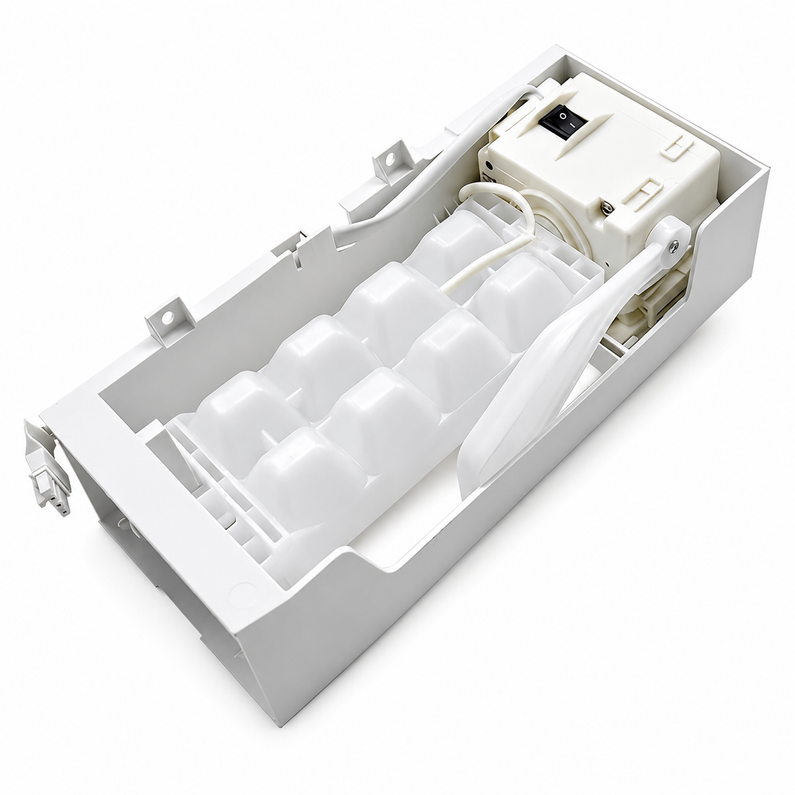
Refrigerator Ice Maker Not Making Ice: Causes and Fix
You open the freezer and the ice bin is empty again. A refrigerator ice maker not making ice is one of the most common kitchen complaints, and the good news is that most causes can be found in under an hour with no special tools. The problem is usually one of five things: the ice maker is switched off, the freezer is too warm, water is not reaching the mold, the water inlet valve has failed, or the ice maker assembly itself has worn out.
This guide walks you through each cause in the order a technician would check them, from free fixes to part replacement, so you only buy a part when you are sure you need it.
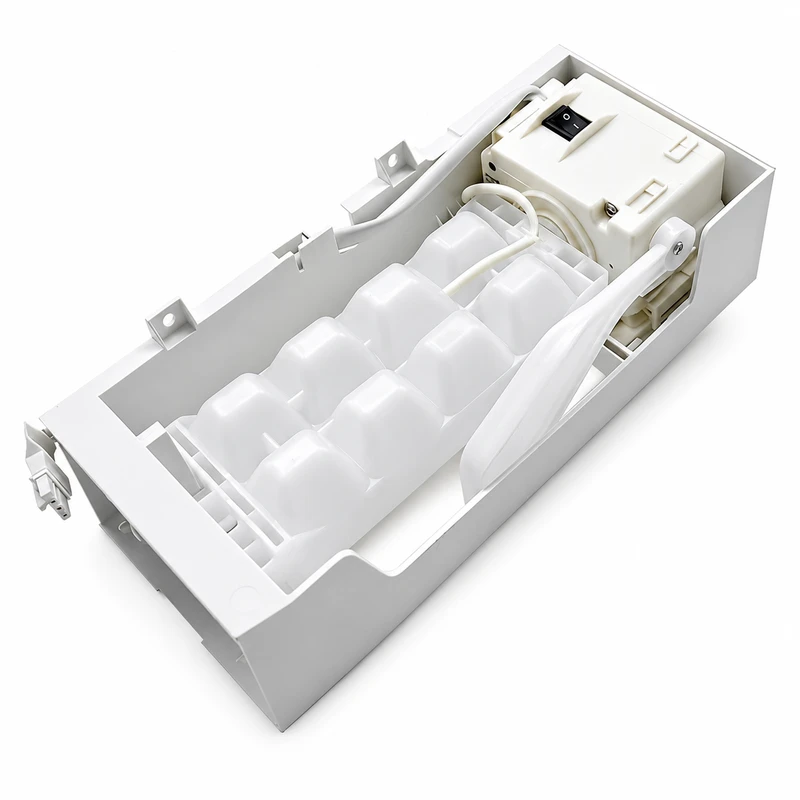
Safety First
An ice maker is connected to both household electricity and a water line. Before you remove any panel, unplug the refrigerator or switch off its circuit breaker, and close the water supply valve that feeds the fridge. Keep towels nearby for drips, and never pull on the water line while it is under pressure. If you are not comfortable working around wiring or plumbing, call a qualified appliance technician.
Why Your Refrigerator Ice Maker Is Not Making Ice
1. The ice maker is turned off or the shutoff arm is up
Most ice makers have an on and off switch, a control on the display panel, or a wire shutoff arm (also called a bail arm) that stops production when the bin is full. If the arm got bumped into the up position or a frozen clump is holding it there, the ice maker thinks the bin is full. Lower the arm, clear any jammed cubes, and confirm the switch or menu setting is on.
2. The freezer is too warm
Ice makers will not cycle until the mold reaches a low enough temperature. Most manufacturers recommend keeping the freezer at or near 0 degrees F. If your freezer is running warmer, check that the door seals close fully, that vents inside the freezer are not blocked by food, and that the condenser coils are not packed with dust. Fix the temperature problem first, because a new ice maker will not help a warm freezer.
3. A clogged water filter or low water pressure
A filter that is overdue for replacement can restrict flow so much that the mold only partly fills, giving you small, hollow or no cubes at all. If you have a filter, replace it, or install the bypass plug if your model came with one, and test again. Also make sure the household supply valve behind the fridge is fully open.
4. A frozen fill tube or kinked water line
If water trickles slowly into the fill tube, it can freeze and block the path to the mold. Look at the tube where it enters the ice maker; a plug of ice means you need to thaw it with a hair dryer on low or a cup of warm water poured carefully over the tube. Then check the supply line behind the fridge for kinks, especially if the refrigerator was recently moved.
5. A failed water inlet valve
The water inlet valve opens on a signal from the ice maker to let water flow. If the line pressure is good, the filter is fresh and the tube is clear, but no water reaches the mold during a fill cycle, the inlet valve may have failed. A technician tests it with a multimeter for continuity; a valve with no continuity needs replacing.
6. A worn-out ice maker assembly
If water fills the mold and the freezer is cold, but cubes never eject, or the ejector arms stall partway, the ice maker module or its motor has likely failed. On most modern refrigerators the ice maker is sold as a complete assembly, which is a simple swap.
How to Replace a Refrigerator Ice Maker Assembly
- Find your model number. It is on a label inside the fresh food or freezer compartment. Write down the part number printed on your old ice maker as well.
- Match the part. Compare your numbers with the replacement part numbers listed on the product page. If you are unsure, send your full model number to the store before ordering.
- Disconnect power and water. Unplug the refrigerator and close the water supply valve.
- Empty the bin and remove the old unit. Remove the ice bin, then remove the mounting screws holding the ice maker to the freezer wall.
- Unplug the wiring harness. Pull the connector straight out by the plug, not by the wires.
- Install the new ice maker. Connect the harness, line up the fill cup with the fill tube, and fasten the mounting screws.
- Restore power and water. Turn the water back on, plug in the fridge, and switch the ice maker on.
- Be patient. A new ice maker needs time to chill before it cycles. Discard the first few batches of ice, since they can contain air or debris from the line.
Which Ice Maker Fits My Refrigerator
For Whirlpool and KitchenAid refrigerators, the W11455232 Ice Maker Replacement lists replacement part numbers W11455232, W11397137, W11397055, AP6990738 and 4962306. Its product page lists Whirlpool WRQA59CNKZ models and KitchenAid KRQC506MPS00 and KRQC506MPS01 as compatible, and notes that the list is partial, so always verify your model number before ordering.
For Frigidaire and Electrolux refrigerators, the Frigidaire and Electrolux Ice Maker 243297609 243297606 has 10 ice molds and comes with a 6-pin wiring harness. Its product page notes the new unit needs 6 to 12 hours of operation before it produces ice normally. Match the part number on your old ice maker to the numbers listed on that page before you buy.

Frequently Asked Questions
How long does a new ice maker take to make ice
Expect several hours. The freezer has to bring the new mold down to temperature before the first cycle. The Frigidaire and Electrolux ice maker sold here, for example, notes 6 to 12 hours before normal production. Throw away the first few batches.
Why is my ice maker making small or hollow cubes
Small or hollow cubes usually mean the mold is not filling completely. A clogged water filter, low household water pressure, a partly frozen fill tube or a weak inlet valve are the usual causes.
Can I reset my refrigerator ice maker
Many models have a reset or test button on the ice maker housing, and others reset when you turn the ice maker off and back on or unplug the fridge for a minute. Check your owner manual for your model's procedure, and do not hold test buttons longer than directed.
Is it worth replacing the ice maker or should I call a technician
If the freezer is cold and water reaches the mold but cubes never eject, the assembly is a common DIY replacement that takes basic tools. If the freezer itself is warm, or you suspect a sealed system or control board issue, a technician is the better choice.
Get Your Ice Back
Start with the free checks: switch, shutoff arm, freezer temperature, filter and fill tube. If those all pass and the unit still will not cycle, a replacement ice maker assembly is usually the fix. Browse the W11455232 Whirlpool ice maker, the Frigidaire ice maker, or our full appliance parts category, and contact us with your model number if you need help matching a part.
Recent Posts
-
How to Organize Toys With Clear Storage Bins
Toy clutter tends to peak right before the holidays, when birthday gifts from the year are still sca …Oct 23, 2026 -
Folding Chairs for Church Halls and Community Centers
Church halls, fellowship rooms and community centers ask more of their seating than almost any home. …Oct 23, 2026 -
Restaurant Bus Cart Guide: Using a Utility Cart for Bussing
Every busy dining room hits the same wall at some point in a shift: dirty plates stack up, servers m …Oct 23, 2026
