
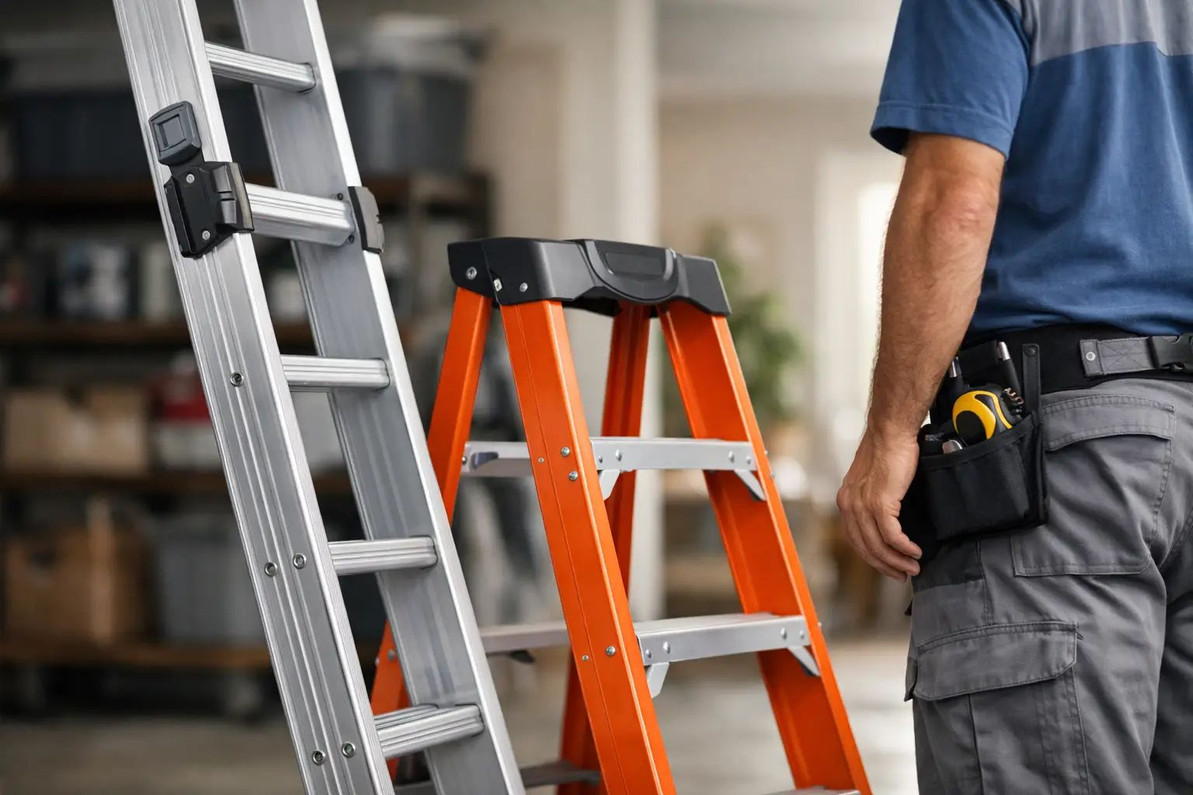
How Ladder Weight Limits Affect Safe Choices
A ladder can look sturdy and still be the wrong choice for the job. Ladder weight limits are not just a number for the person climbing - they affect whether the ladder can safely handle the person, clothing, tools, and materials being carried. Before buying a ladder or step stool, check its duty rating and compare it with the heaviest realistic load you expect to place on it.
For a quick household task, a compact step stool may be all you need. For repeated maintenance work, stocking shelves, painting, or carrying tools, choosing a higher-capacity ladder can provide a better margin for the way the ladder will actually be used.
What Ladder Weight Limits Actually Mean
A ladder's weight limit, often called its duty rating, is the maximum intended working load shown on the product label or in the manufacturer's instructions. It is not simply a measurement of body weight. The total includes the climber and anything they bring up the ladder, such as a tool belt, drill, paint tray, fasteners, or replacement part.
For example, a 190-pound person using a 200-pound-rated ladder may already be too close to the limit once they add work boots, a tool belt, and a few hand tools. That does not mean every small job requires the highest-rated ladder available. It does mean the rating should be selected for the full load, not just the number on a bathroom scale.
The stated capacity also does not make every setup safe. A ladder must be placed on a firm, level surface, opened or extended correctly, and used as intended. A higher duty rating cannot compensate for a damaged rail, worn feet, loose hardware, or unstable placement.
Common Ladder Duty Ratings
Many ladders use familiar duty-rating categories. Always rely on the label for the specific product, but these common ratings help shoppers compare options:
- Type III ladders are commonly rated for up to 200 pounds and are generally intended for light household use.
- Type II ladders are commonly rated for up to 225 pounds and can suit occasional jobs that involve modest tools or supplies.
- Type I ladders are commonly rated for up to 250 pounds and are often chosen for regular home maintenance and jobsite tasks.
- Type IA ladders are commonly rated for up to 300 pounds, while Type IAA ladders are commonly rated for up to 375 pounds for heavier-duty work.
The category alone should not be the final buying decision. Ladder style, height, material, and the work environment matter too. A 300-pound stepladder may be an excellent fit for indoor maintenance, while an extension ladder with an appropriate rating may be necessary for exterior access.
Add Up Your Real Working Load
A practical way to choose capacity is to estimate your heaviest normal use rather than your lightest one. Start with the heaviest person likely to use the ladder. Then add footwear, outerwear, tools, and materials that may be carried during the task.
Consider a property manager who weighs 215 pounds and uses a 12-pound tool belt while changing ceiling fixtures or handling small repairs. A 225-pound ladder would not be enough for that routine use. A 250-pound model is still a close call once tools or supplies are added. Moving up to a 300-pound duty rating may be the more sensible choice.
The same thinking applies in warehouses and small businesses. If several employees may use the same ladder, buy for the heaviest expected user and the equipment they need to carry. A shared ladder should not depend on everyone remembering a narrow weight restriction.
Choose Capacity Based on the Job
The right ladder is a balance of capacity, reach, portability, and storage space. Higher-rated ladders can be heavier and may cost more, but they are often worth considering when the ladder will see frequent use or be shared by multiple people.
Light household access
A folding step stool or light-duty stepladder can work well for reaching a closet shelf, changing a small indoor light bulb, or accessing kitchen storage. These tasks usually involve little extra gear. Even so, check the label before assuming a compact stool will support every user in the household.
Step stools are not interchangeable with full-size ladders. They provide limited height and are designed for specific standing positions. Avoid using a step stool for jobs that require leaning sideways, reaching overhead for long periods, or carrying bulky items.
Home maintenance and DIY work
For painting, cleaning gutters, replacing hardware, hanging fixtures, or working on taller shelving, a Type I or Type IA ladder may offer a more practical capacity range. These jobs tend to involve supplies, tools, and repeated climbing. The ladder should also be tall enough to let you work without standing on prohibited top steps or overreaching from the side.
Buying a taller ladder does not mean you should use it at every height. A ladder that is too tall for an indoor room can be difficult to set up safely. Measure the working height you need, then choose the ladder type and length that fit the space.
Commercial, warehouse, and maintenance use
Warehouse teams, facilities crews, contractors, and maintenance professionals often benefit from higher-capacity equipment because tools and repeated use are part of the job. A 300-pound or 375-pound duty rating can make sense when users carry tool bags, parts, scanners, or repair materials.
For picking, stocking, and organized storage areas, consider whether a stepladder, rolling ladder, platform ladder, or utility cart better matches the workflow. A ladder should not become a carrying device for large or awkward loads. If both hands are needed to control an item, use the right material-handling equipment instead of trying to transport it while climbing.
Capacity Is Only One Part of Ladder Safety
A ladder can be within its weight limit and still be used improperly. Before each use, inspect the rails, steps or rungs, spreaders, feet, fasteners, and locking mechanisms. Do not use a ladder with visible cracks, bent parts, missing hardware, loose steps, or damaged feet.
Set stepladders fully open with spreaders locked. Keep all ladder feet on a stable, level surface, and do not place a ladder on boxes, pallets, tables, carts, or other objects to gain height. For extension ladders, follow the product instructions for angle, overlap, support points, and secure placement.
Keep your body centered between the side rails. Reposition the ladder rather than leaning beyond a comfortable reach. Only one person should use a standard single-user ladder at a time unless the manufacturer specifically states otherwise. The ladder label and instructions always take priority over general guidance.
Material matters as well. Fiberglass ladders are commonly selected when electrical exposure may be a concern, while aluminum ladders are popular for their lighter weight and easy handling. No ladder material is a substitute for checking the product's intended use and following its warnings.
What to Check Before You Buy
Product specifications make comparison easier when you know which details affect daily use. First, confirm the duty rating. Next, check the ladder type, maximum reach or working height, folded dimensions, product weight, and whether it fits the area where it will be stored.
Also think about who will use it. A lightweight folding stool may be convenient for one person in a small apartment, but a landlord or maintenance team may need a more durable stepladder with a higher weight capacity. For online purchases, reviewing the listed capacity, dimensions, and package contents before ordering helps avoid a return caused by choosing the wrong size or style.
Do not choose a ladder based only on a sale price or the highest number on the label. A heavier-duty model can be a smart value when it fits the work, but an oversized ladder may be awkward in tight spaces and unnecessarily difficult to move. The best option is the one that gives you appropriate capacity, enough reach, and a stable setup for the tasks you do most often.
A few minutes spent comparing ladder weight limits can prevent a frustrating purchase and make routine work more manageable. Choose for the full working load, inspect the ladder before use, and keep the right tool nearby for the job at hand.
Recent Posts
-

Foam Play Mat Setup Guide for Babies and Toddlers
Once a baby starts rolling, scooting and crawling, the floor becomes the main play area, and hard fl …Oct 24, 2026 -

Folding Table as a Desk: Home Office Setup Guide
Not every home has room for a permanent desk, and not every work-from-home setup needs one. Using a …Oct 24, 2026 -
Duct Tape vs Packing Tape: Which to Use and When
You are halfway through packing a stack of boxes and the packing tape runs out, but there is a roll …Oct 24, 2026