How to Use Furniture Sliders Without Floor Damage
A sofa that needs to move six inches can turn into a scratched-floor problem in seconds. Knowing how to use furniture sliders correctly lets you reposition heavy pieces with less lifting, less strain, and far less risk of dragging a rough furniture leg across carpet or hard flooring.
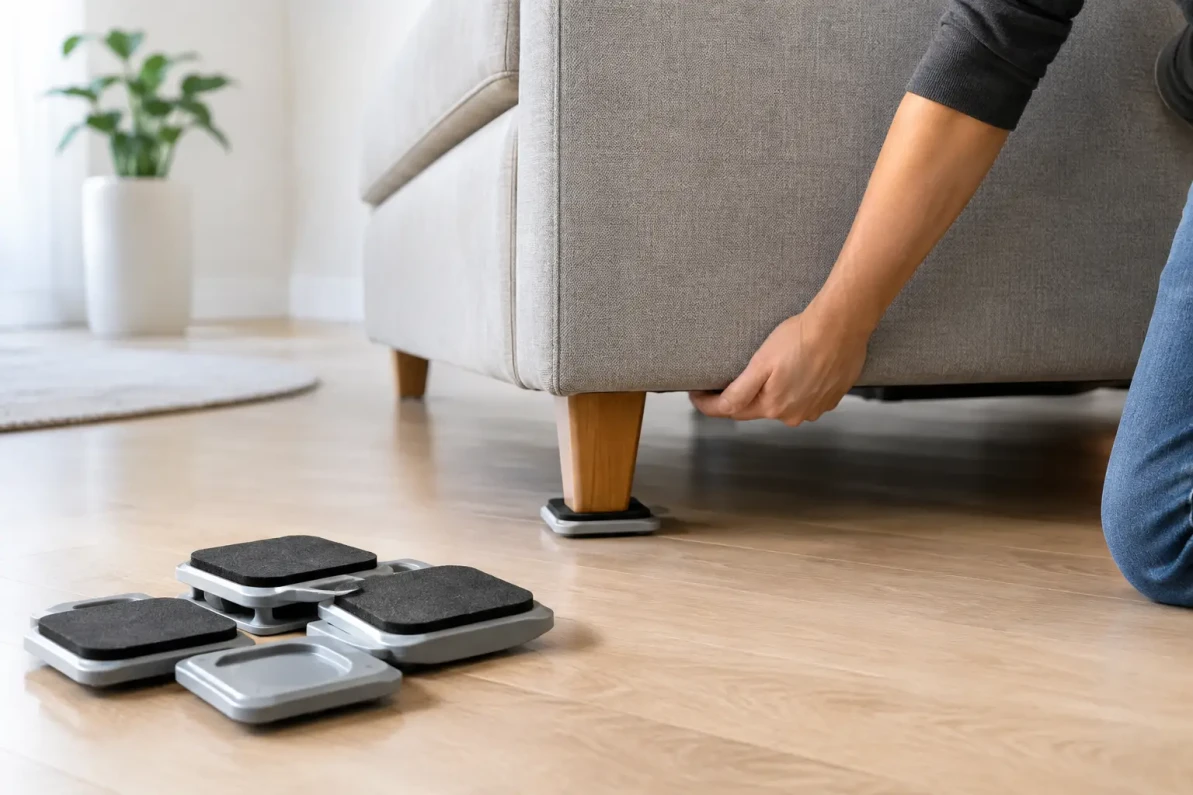
Furniture sliders are simple pads placed under furniture legs, corners, or base edges. Their smooth side reduces friction against the floor, while the grip side holds the furniture in place. They work well for rearranging a room, cleaning underneath appliances or seating, setting up a rental between tenants, or adjusting tables and storage units in a small business.
Choose the Right Furniture Sliders for Your Floor
The first rule is to match the slider to the surface, not just the furniture. A slider designed for carpet usually has a hard, smooth plastic bottom that glides over carpet fibers. A slider for hard floors usually has a soft felt bottom that protects surfaces such as hardwood, laminate, vinyl, and tile.
Using the wrong type can create problems. Hard plastic sliders may scratch or scuff some finished floors, especially if grit is trapped underneath. Felt sliders used on carpet may bunch up or grab the fibers instead of sliding. If you are moving furniture between carpeted and hard-floor rooms, use the appropriate slider for each surface rather than trying to make one style do both jobs.
Size matters as well. The slider should support the full foot or contact point of the furniture. A chair leg needs a small round pad, while a sectional sofa, dresser, cabinet, or appliance may need larger round or square sliders. For furniture with a wide flat base rather than individual feet, choose a size that supports the corners or use more than one slider along the edge.
Prepare the Room Before Moving Anything
Sliders reduce resistance, but they do not make a large piece of furniture weightless. Clear the travel path first. Remove rugs that may fold or bunch, pick up cords, move small tables, and check for toys, staples, grit, or other debris that could catch under a slider.
Vacuum or sweep the floor where the furniture will travel. This is particularly important on hardwood, laminate, vinyl, and tile. Even a small grain of sand caught under a felt pad can leave a mark when a heavy cabinet passes over it.
Measure the route if the furniture is moving through a doorway, around an island, or into a storage area. Sliders help with straight-line movement, but tight turns require more room and more control. If a piece will be moved only a short distance, mark its starting position with low-tack painter's tape so it is easier to return it to the same spot if needed.
How to Use Furniture Sliders Step by Step
Start by emptying the furniture when possible. Remove books from bookcases, dishes from cabinets, drawers from dressers, and loose items from rolling carts or storage units. This lowers the weight, improves balance, and reduces the chance that something shifts while you move it.
Next, slightly lift one corner or one side of the item just enough to slide a pad underneath. Do not try to lift a heavy dresser or sofa by yourself if it is too heavy to control. A second person can stabilize the piece while you place the sliders. For very heavy furniture, large appliances, awkward commercial fixtures, or tall cabinets, use appropriate moving equipment or get professional help rather than relying on sliders alone.
Place each slider with the gripping material against the furniture and the smooth or felt surface against the floor. Position it directly under every furniture foot, or under the main load-bearing corners of a flat base. Make sure the furniture is centered on the pads. A leg sitting halfway off a slider can slip off when the item begins to move.
Once all sliders are in place, push slowly from the strongest part of the furniture frame. On a sofa, push from the lower frame rather than a loose cushion. On a dresser or cabinet, push near the bottom rather than pulling a handle or drawer. Keep the furniture level and move it in small, controlled increments.
Avoid jerking, twisting, or pulling sharply. If the piece stops moving, do not force it. Check whether a slider has turned sideways, caught on a floor transition, or slipped out from beneath a leg. Reset the pads before continuing.
Moving Furniture Over Carpet
Hard plastic furniture sliders are often the best choice for carpet because they create a firm surface that glides over the pile. They are especially useful under sofas, beds, recliners, and heavy entertainment stands.
Thick carpet and thick carpet padding create more resistance than low-pile carpet. On a plush carpet, move the furniture a few inches at a time and keep the push steady. Large pieces may leave temporary impressions after they are moved. If the furniture will stay in its new location, remove the sliders after positioning it so the legs can settle normally.
Moving Furniture on Hardwood, Tile, Vinyl, or Laminate
For hard flooring, use clean felt-bottom sliders. Before placing them, inspect both the floor and the felt. Replace pads that are worn thin, torn, or embedded with grit. A clean pad is part of protecting the floor.
Move slowly near grout lines, thresholds, floor vents, and transitions between rooms. Furniture can catch at these points, causing a slider to shift. Lift slightly over a raised transition when necessary instead of dragging the item across it.
Common Mistakes That Can Damage Floors or Furniture
The biggest mistake is assuming every furniture slider is suitable for every surface. Plastic-bottom pads are useful on carpet, but they are not automatically safe for finished hard floors. Felt pads protect many hard surfaces, but they are not designed to glide efficiently across carpet.
Another common issue is placing sliders only under the front legs and then pulling the furniture. This can strain the frame, tip the item, or let the rear legs drag directly on the floor. Support all contact points whenever possible.
Be careful with furniture that has narrow metal legs, damaged feet, wheels, or uneven bases. A small leg can punch through a soft slider or slide off a pad that is too large and unstable. In these cases, use a slider that fits closely and inspect the furniture feet before moving it.
Do not leave sliders under furniture as a permanent fix unless the product is intended for long-term use on that floor type. Some pads are made mainly for temporary movement, while others are designed to remain under chairs, tables, and other regularly moved items. Leaving the wrong pad in place may affect stability or collect dirt over time.
When Sliders Are Not the Best Tool
Furniture sliders are ideal for controlled moves across a level indoor surface. They are less useful on uneven flooring, stairs, outdoor surfaces, wet areas, or steep slopes. They also cannot correct a piece of furniture that is structurally unstable.
For a refrigerator, washer, large commercial cabinet, stacked storage system, or loaded tool chest, assess the job before moving it. The weight may call for an appliance dolly, platform cart, hand truck, or another material-handling solution. Sliders can help with final positioning, but they should not replace the right equipment for a heavy move.
If you are moving a tall bookcase, cabinet, or shelving unit, empty it first and consider whether it needs to be secured after repositioning. Keeping the unit upright and stable matters more than saving a few minutes.
Keep Your Sliders Ready for the Next Move
After use, wipe off plastic sliders and remove dust from felt pads. Store them flat in a labeled box with other moving and maintenance supplies. Keeping several sizes on hand makes it easier to move a chair, desk, sofa, or storage cabinet without using makeshift cardboard or towels that can bunch, tear, or trap debris.
For homeowners, renters, property managers, and small businesses, a small set of correctly matched furniture sliders can make routine cleaning and room changes much easier. Take a minute to clear the path, place every pad securely, and move at a controlled pace. That preparation is what keeps a simple furniture move from becoming a floor repair.
Recent Posts
-
Frigidaire Fridge Door Shelf Rail Broken: Replace 240534901
If the door shelf rail on your Frigidaire refrigerator has cracked, snapped off or keeps popping loo …Nov 21, 2026 -

Storage Totes for Contractors: Truck and Jobsite Guide
Every contractor knows the cost of a disorganized truck. You drive to the job, then spend twenty min …Nov 21, 2026 -
How to Pack a Heavy Box for Shipping Without Blowouts
A heavy box fails in predictable ways. The bottom seam splits when someone lifts it, a corner crushe …Nov 21, 2026