How to Organize Under Sink Cabinets Without Wasting Space
The area under a kitchen or bathroom sink often becomes the household’s catch-all cabinet: half-used cleaners, loose sponges, trash bags, and items that were put there simply because there was nowhere else to put them. Learning how to organize under sink cabinets starts with working around the plumbing, not fighting it. A useful setup keeps everyday supplies visible, protects the cabinet from leaks, and leaves enough open space to reach shutoff valves if needed.
The best system is rarely a single large organizer. Under-sink storage works better when it is divided into small, removable zones that match what you actually keep there.
Start by Emptying and Measuring the Cabinet
Take everything out before buying bins, shelves, or pull-out organizers. Wipe the cabinet floor and inspect the area around pipes, drain connections, and the water supply lines. A sticky shelf liner or a shallow waterproof tray can help contain small drips and make future cleanup easier, but it should not block access to plumbing.
Next, measure the usable space. Record the cabinet’s interior width, depth, and height, then note where pipes come down and how much room they take up. Measure from the cabinet floor to the lowest point of the drainpipe, since that height often determines whether a shelf or drawer organizer will fit.
Do not assume both sides of the cabinet are identical. Pipes may be off-center, a garbage disposal may take up most of one side, and cabinet hinges can reduce clearance near the front. A few quick measurements help prevent buying a storage unit that looks right online but cannot slide into place.
Sort Supplies Before You Choose Organizers
Under-sink cabinets are most useful for supplies needed at that sink. If the cabinet is holding extra paper products, bulk packages, seasonal items, or seldom-used tools, move those elsewhere. A utility shelf, closet, laundry area, or storage cart is usually a better fit for overflow inventory.
For a kitchen sink, keep only the items you use for dishwashing, countertop cleanup, trash handling, and occasional drain maintenance. In a bathroom, the cabinet may hold toilet paper, cleaning cloths, everyday cleaners, and personal-care backups. Group similar items together before putting anything back.
This is also the time to discard empty bottles, dried-out sponges, duplicate sprays, and products you do not use. Fewer items make a modest cabinet much easier to manage. If you buy household essentials in multipacks, store one or two backups under the sink and keep the rest in a separate supply area.
How to Organize Under Sink Storage Around Pipes
The plumbing creates the main limitation, but it also suggests a simple layout. Use the open floor space around the pipes for low, stable bins. Use the cabinet doors for slim items. Reserve the front section for supplies you reach for several times a week.
Use bins to create removable zones
Open-top plastic bins are a practical choice because they contain bottles, catch small spills, and lift out for cleaning. Rather than stacking loose products behind one another, assign each bin a job. One bin might hold dishwashing supplies, another trash bags and gloves, and another bathroom cleaning products.
Choose bins with straight sides when possible. Sloped or heavily rounded containers can waste valuable cabinet width. Leave a small gap around pipes so bins can be removed without catching on fittings. Clear bins make contents easy to see, while solid bins can give the cabinet a cleaner look if you add simple labels.
Add a pull-out organizer only where it fits
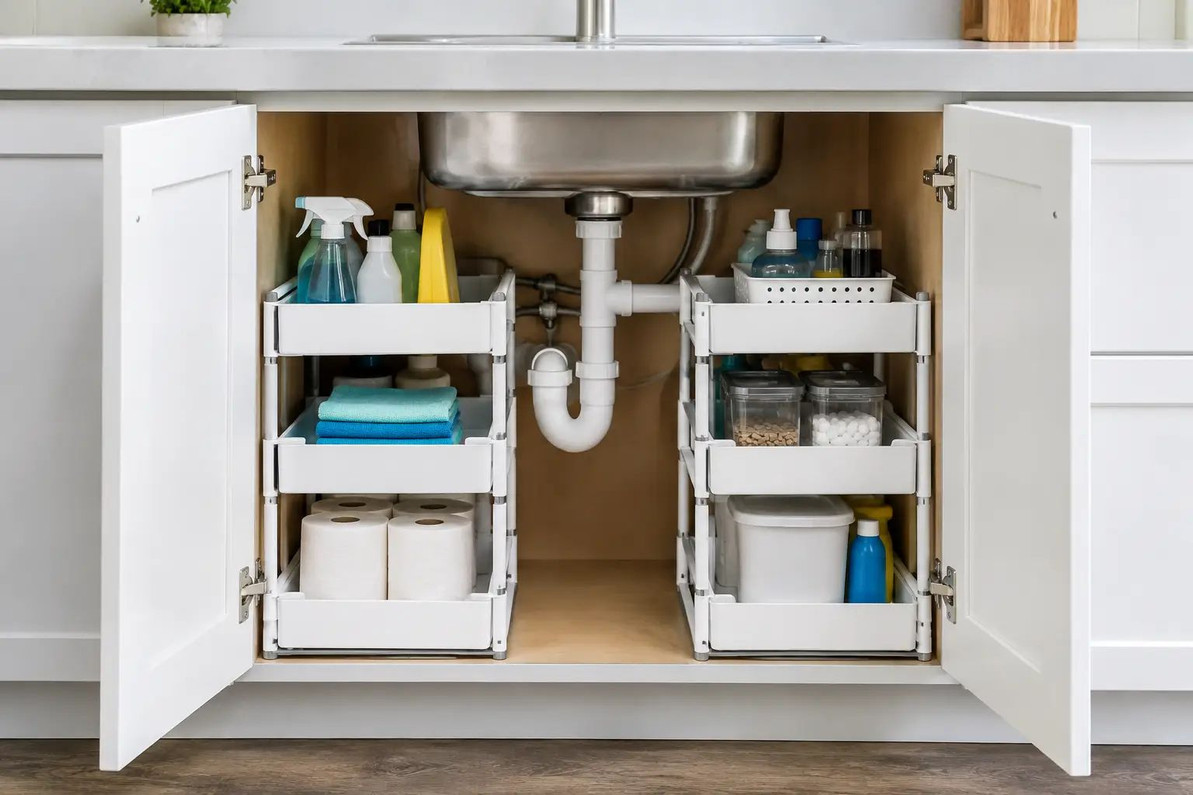
A pull-out under-sink organizer can make deep cabinets far more accessible, especially for renters, homeowners, and property managers maintaining several units. The key is selecting a low-profile design that clears the plumbing and does not interfere with cabinet doors.
Two-tier organizers are helpful when the lower drawer can hold taller bottles and the upper shelf stays below the drainpipe. They work best in cabinets with plumbing set toward the rear or one side. If pipes occupy the center, two narrow pull-out units, one on each side, may be more useful than a single wide organizer.
Check whether an organizer needs screws, adhesive, or no installation at all. A freestanding option is easier to remove for cleaning or when moving out of a rental. A secured unit may be better in a busy household or commercial restroom where drawers are opened frequently.
Use door space for light, narrow supplies
The inside of a cabinet door is useful for slim storage, provided nothing hits the plumbing or prevents the door from closing. An over-door basket can hold sponges, cleaning cloths, small brushes, or dishwasher tablets. Adhesive hooks may hold lightweight gloves or a small hand towel.
Avoid loading the door with large spray bottles or heavy containers. The repeated movement can loosen adhesive mounts, strain hinges, and create clutter that blocks access to the cabinet. Door storage should support the main system, not become another crowded catch-all.
Build a Practical Kitchen Sink Setup
Kitchen under-sink cabinets often need to handle moisture, tall cleaning bottles, and trash bags. Keep dish soap, dishwasher detergent, sponges, and surface cleaners near the front. If you use a refillable soap dispenser, store the refill bottle in a shallow bin so it stays upright and contained.
Trash bags are easier to use when stored in a dedicated dispenser or a small upright bin near the cabinet opening. Avoid placing them behind cleaner bottles, where a quick trash change turns into a search. If your cabinet includes a pull-out trash can, use any remaining side space for narrow bins rather than trying to force in a large shelf.
Garbage disposals require additional clearance. Keep items away from the disposal body, power cord, and drain connection. A simple bin on the open side of the cabinet is usually safer and more practical than a complicated organizer that crowds the equipment.
Set Up a Bathroom Under-Sink Cabinet That Stays Tidy
Bathroom cabinets are often smaller, so vertical space matters more. Use narrow containers for cleaning products and a separate bin for backup toiletries. Place the items used every day at the front and backups toward the back, but do not stack so high that you need to remove several products to reach one bottle.
A small turntable can work for short bottles in a wide cabinet, although it is less useful around large pipes or tall containers. Stackable drawers can hold floss, travel-size products, hair accessories, or small grooming supplies, but choose drawers that can be removed easily if a leak occurs.
For shared bathrooms, labels reduce confusion and help everyone return supplies to the right place. Labels do not need to be elaborate. “Cleaning,” “Backups,” and “Hair Care” are usually enough.
Prevent Leaks, Clutter, and Common Storage Mistakes
The biggest under-sink organizing mistake is filling every inch of available space. A packed cabinet makes it harder to spot a slow leak, reach a shutoff valve, or clean around the pipes. Keep a clear path to valves and connections, particularly in rental properties, offices, and multi-unit buildings where quick maintenance access matters.
Avoid storing absorbent cardboard boxes directly on the cabinet floor. Even a small leak can ruin the box and create a mess. Plastic bins, washable trays, and moisture-resistant shelf liners are better choices. Keep chemical cleaners in their original labeled containers, standing upright with caps secure, and follow each product’s storage directions.
It also helps to match the organizer to the cabinet’s real use. A two-tier drawer may be excellent for a bathroom with small supplies but frustrating under a kitchen sink filled with tall spray bottles. If you need fast access to a few items, open bins may beat a more elaborate system.
Maintain the System in Five Minutes
An organized cabinet stays useful only if it is easy to reset. Once a month, pull out the bins, wipe the cabinet floor, and check for moisture around pipes and valves. Put stray items back into their assigned zone, remove empty containers, and restock only what you need.
For households, rentals, and small business spaces, a simple under-sink setup is usually the one that lasts: durable bins, clear categories, and enough room to see what is happening behind the cabinet door. Start with the space you have, choose organizers that fit your measurements, and let everyday use determine what deserves the most accessible spot.
Recent Posts
-
Air Pillow Film Rolls: How to Choose the Right Refill
An air cushion machine is only as good as the film you feed it. Buy the wrong air pillow film rolls …Oct 25, 2026 -
How to Remove Pet Hair From Furniture and Clothes
If you share your home with a dog or cat, you already know the routine: you clean the couch, sit dow …Oct 25, 2026 -
Jigsaw Puzzle Table Setup With a Folding Table
Once a big jigsaw puzzle comes out of the box, it tends to take over the kitchen table for a week. E …Oct 25, 2026