How to Organize Cleaning Supplies at Home
A crowded sink cabinet is where cleaning routines go to slow down. You reach for glass cleaner, knock over a half-used bottle, and discover three nearly empty sprays behind it. Learning how to organize cleaning supplies is less about making a utility area look perfect and more about keeping the products you actually use within reach, protected from spills, and easy to restock.
The best setup depends on your space and how you clean. A renter may need a portable system that moves from bathroom to kitchen. A homeowner may have a laundry room or cleaning closet. For a small business, janitorial supplies may need a larger, clearly separated storage area. Start with the routine, then choose storage that supports it.
Start by Sorting What You Already Have
Before buying bins, carts, or shelf organizers, pull everything into one visible area. This includes products under sinks, in bathroom cabinets, on laundry shelves, in garages, and in the back of utility closets. It is common to find duplicates because the products were not visible when they were needed.
Separate supplies into practical groups: daily-use cleaners, bathroom products, kitchen cleaners, floor-care items, dusting supplies, laundry products, tools such as scrub brushes and sponges, and backup refills. Keep specialty products, such as stainless steel cleaner or grout cleaner, in their own group so they do not take up prime space.
Discard empty containers and worn-out sponges or brushes. Set aside products you do not use or that are no longer in good condition. Check labels before combining anything into a new container or transferring products. Original containers provide directions and warnings, so they are usually the simplest and safest choice for household cleaners.
Once you have sorted everything, take inventory. If you have four kinds of all-purpose spray, keep the one you prefer in your everyday area and place unopened extras in backstock. This immediately reduces cabinet clutter without requiring a complicated system.
How to Organize Cleaning Supplies by Frequency of Use
The most useful organizing rule is simple: store frequently used supplies at the easiest-to-reach height. Put daily cleaning products between knee and shoulder level. Reserve upper shelves, low cabinet corners, and less accessible storage for refills, seasonal items, and specialty cleaners.
For example, a kitchen cleaning zone may only need an all-purpose cleaner, dish soap, a scrub brush, microfiber cloths, and trash bags. Keeping every household product under the kitchen sink makes it crowded and inconvenient. Store the rest elsewhere, then replenish the kitchen zone as needed.
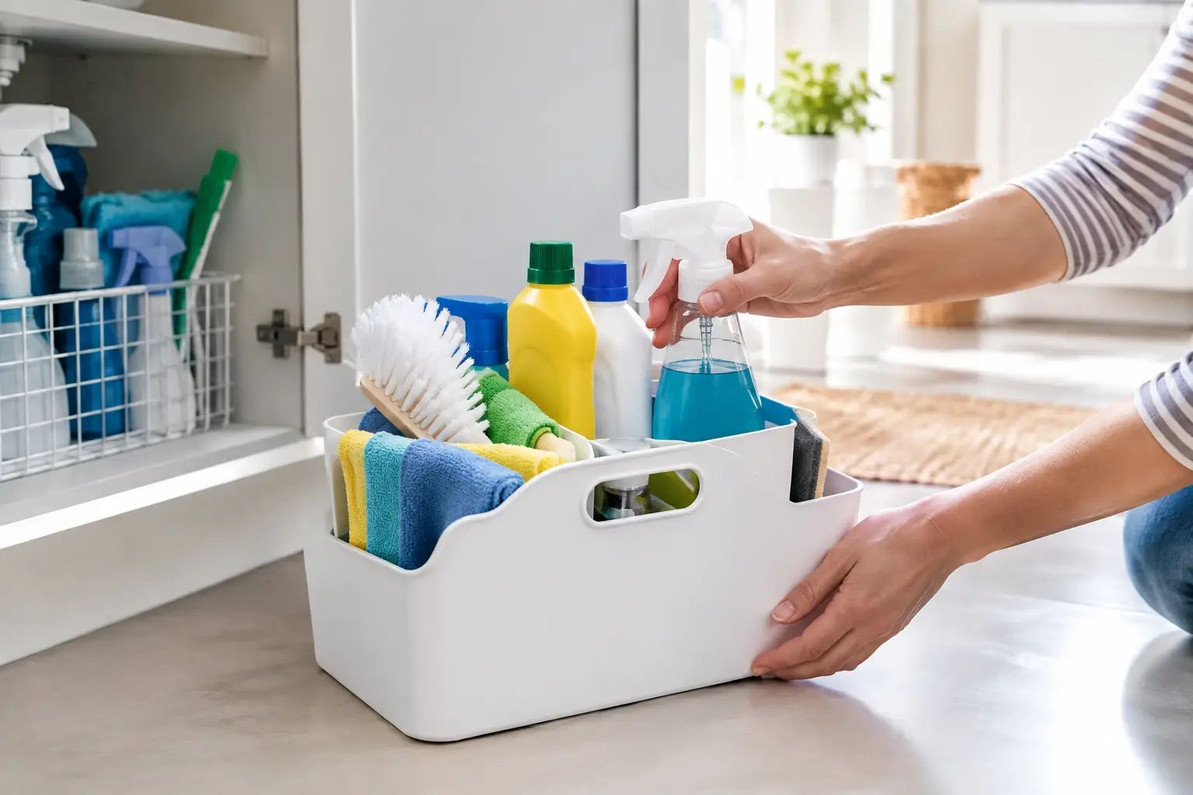
In bathrooms, limit storage to the products used for the sink, toilet, mirror, and shower. A small handled caddy works well when one person cleans several bathrooms, since it prevents repeated trips to a main supply closet. For larger homes, separate caddies by floor or bathroom type if that saves time.
Commercial spaces and property maintenance teams often benefit from the same idea on a larger scale. Keep commonly used products on a utility cart or in a designated room, while bulk refills stay in labeled backstock. That separation makes inventory easier to check and reduces the chance that a full case is opened when a single bottle would do.
Choose Storage That Fits the Location
Storage products should solve a specific access problem. Open bins make sense on a shelf where you need to see bottles quickly. Pull-out bins are better in a deep lower cabinet where items tend to disappear behind one another. A handled cleaning caddy is useful when supplies need to travel.
Under-sink storage requires careful measuring. Note the cabinet width, depth, and height, then account for plumbing pipes and garbage disposal components. A narrow bin or compact shelf organizer can create useful space around pipes, but an oversized organizer may make access worse instead of better.
A cleaning closet offers more flexibility. Use the floor for a sturdy bucket or larger items, such as a mop head replacement package or a compact vacuum accessory. Place bottles in bins on shelves and keep lightweight cloths on higher shelves. If the closet is narrow, vertical storage is usually more efficient than stacking supplies in front of each other.
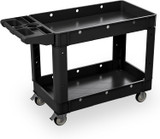
A rolling utility cart is a practical choice for homes with limited closet space, maintenance crews, or small offices. The top shelf can hold the products needed for the current task, while lower shelves hold cloths, brushes, liners, and backup bottles. Choose a cart size based on the routes it needs to travel. A wide cart may carry more, but it can be awkward in tight bathrooms, hallways, and apartment doorways.
Use Containers That Prevent Small Problems
Clear bins are helpful for seeing what is inside, but opaque bins can look cleaner when storing mismatched packages. Either option works when the label is clear. For most households, a simple label such as “Bathroom,” “Floors,” or “Refills” is more useful than a detailed inventory list.
Use shallow bins for sprays and small bottles so they can be pulled out without lifting every item in front. Taller containers are better for upright bottles, brushes, and rolls of trash bags. If leaking is a concern, use an easy-to-wipe bin with a solid bottom rather than a wire basket.
Microfiber cloths deserve their own small container or drawer section. Store clean cloths separately from used ones, and consider sorting by purpose if you use different cloths for glass, kitchen surfaces, and general dusting. This helps prevent a clean window cloth from getting mixed with a cloth used on a greasy stovetop.
Avoid overfilling containers. A bin should make products easier to remove, not become another place where bottles are packed too tightly. Leave enough room to see labels and take out one item at a time.
Keep Supplies Secure and Easy to Maintain
Cleaning supplies should be stored away from children and pets, and products should remain closed when not in use. A high shelf, latched cabinet, or secured utility closet may be appropriate depending on your household or workplace. Keep products away from food storage and avoid placing heavy bottles where they could fall when a cabinet is opened.
Do not store cleaners in direct heat or damp locations unless the product label allows it. A hot garage, an outdoor shed, or a humid area next to a shower may not be the best location for every product. The laundry room can work well, but only if shelves are stable and bottles are protected from leaks.
Give every category a refill point. When the active bottle is low, move a backup forward and add the item to your shopping list. This small habit prevents the common problem of buying more cleaner while unopened bottles are already hidden in another room.
For businesses, property managers, and busy households, labels can include quantity cues. A bin marked “Restock at 2” makes it easy to see when supplies are running low. This is especially helpful for paper goods, gloves, trash bags, and other items that are used more quickly than cleaning liquids.
Build a System You Can Reset Quickly
An organized supply area will not stay organized if it takes 20 minutes to put things away. The goal is a setup that can be reset after a cleaning session in a minute or two. Put the caddy back on its shelf, return cloths to the laundry, and place products in their labeled bin.
Review the area every few months, or sooner if your cleaning routine changes. Moving to a new home, adding a pet, managing a rental property, or taking on more workspaces may change what you need to keep on hand. A few practical bins, a compact cart, or better shelf spacing can make a bigger difference than adding more products.
A good cleaning-supply setup should make the next task feel easier before you even begin. When the right bottle, cloth, and tool are in one dependable place, keeping a home or work area in order becomes a routine instead of a search.
Recent Posts
-
How to Organize Toys With Clear Storage Bins
Toy clutter tends to peak right before the holidays, when birthday gifts from the year are still sca …Oct 23, 2026 -
Folding Chairs for Church Halls and Community Centers
Church halls, fellowship rooms and community centers ask more of their seating than almost any home. …Oct 23, 2026 -
Restaurant Bus Cart Guide: Using a Utility Cart for Bussing
Every busy dining room hits the same wall at some point in a shift: dirty plates stack up, servers m …Oct 23, 2026