
Garage Storage Planning Guide for Real Workspaces
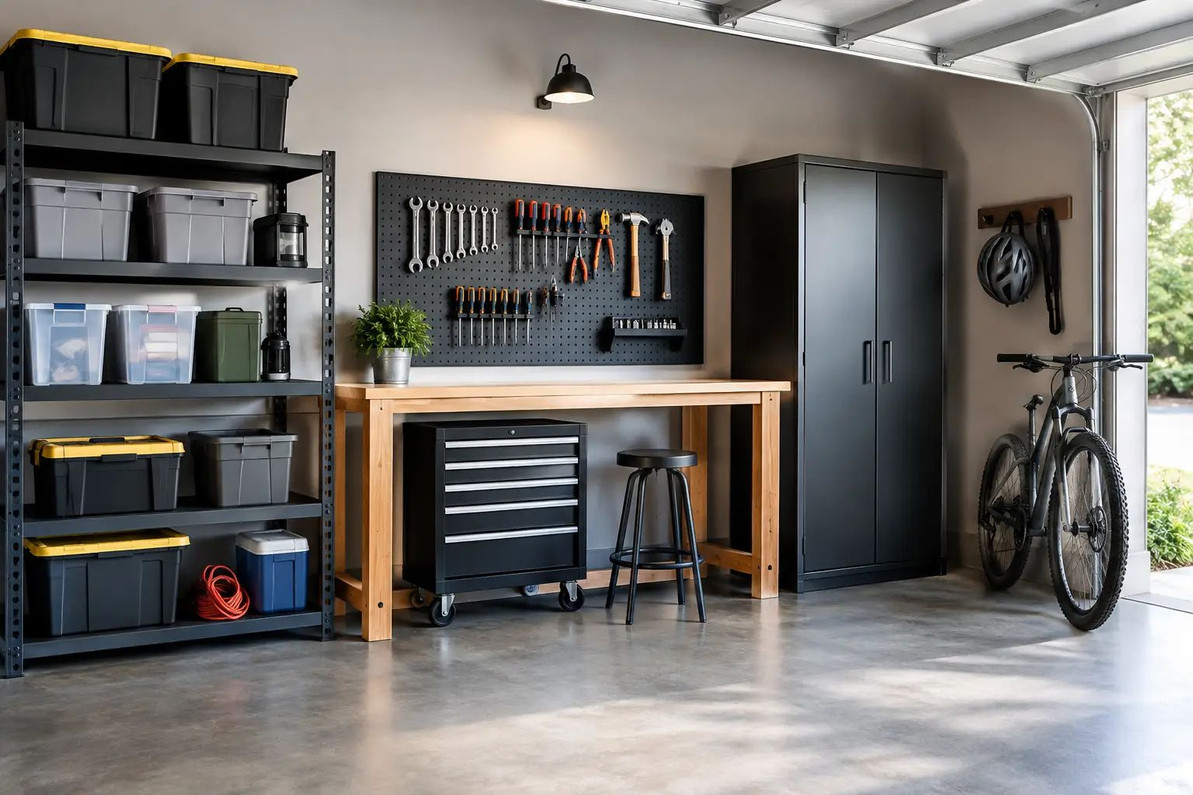
A garage can look full long before it is truly out of space. The usual problem is that floor space becomes the default storage area for everything from paint and tools to shipping boxes, seasonal décor, and yard equipment. This garage storage planning guide starts with a better approach: plan for what you use, how often you use it, and how much weight each storage area must safely hold.
The best garage setup is not necessarily the one with the most cabinets or shelves. It is the one that lets you park, work, find supplies quickly, and move bulky items without rearranging half the room.
Start Your Garage Storage Planning Guide With a Clear-Out
Before measuring for shelving or shopping for bins, pull out the items that are currently blocking the floor, workbench, and walkways. This step gives you a realistic view of the garage rather than a plan built around existing clutter.
Sort items into practical groups: keep, donate, recycle, discard, and relocate. Relocate means an item is useful but belongs somewhere else, such as kitchen supplies stored in the garage or hand tools that should stay with a vehicle or workshop.
As you sort, separate what is used weekly from what is used a few times a year. A cordless drill, extension cords, cleaning supplies, and frequently used tools should be easy to reach. Holiday decorations, archive boxes, and spare appliance parts can take higher or less convenient positions. This simple decision prevents a common mistake: giving premium shelf space to items that are rarely needed.
Measure the Space You Can Actually Use
A garage may have open walls, but not every open wall is suitable for storage. Doors, windows, electrical panels, water heaters, garage-door tracks, vehicles, and access paths all reduce usable space. Take measurements after clearing the floor so you can see the true footprint.
Measure wall width and ceiling height, then note obstructions. Also measure the depth available without interfering with parking or movement. Deep shelving can be useful for bulky bins, but a shelf that leaves only a narrow path beside a car will quickly become frustrating.
Leave room for the everyday functions of the garage. If you park a vehicle inside, open the doors and measure the clearance around them. If you use the garage as a workshop, identify a clear work zone near an outlet and allow enough room for a utility cart, step stool, or material-handling equipment to move through.
A useful rule is to keep a clear path from the main entry door to the vehicle and work area. Storage should support how the room functions, not turn it into an obstacle course.
Plan Zones Instead of Filling Every Wall
Divide the garage into zones based on activity. A parking zone needs open floor space. A tool and repair zone benefits from a work surface, organized storage, and nearby power access. A yard-care zone keeps outdoor equipment together, while a packing or small-business zone may need shelves for shipping supplies, labels, boxes, and inventory.
Zones do not need permanent walls. They simply give every category a home. For example, a property manager may keep maintenance supplies on one shelving unit, while a home-based seller may reserve another for cartons, mailers, and packing materials. This is more practical than mixing unrelated supplies in whichever bin has room.
Choose Storage by Load, Size, and Access
Garage storage products need to match the item, not just the available space. Lightweight seasonal decorations can go in stackable bins. Heavy tools, containers, and bulk supplies need shelving with an appropriate weight capacity and stable placement. Check the product dimensions and capacity before buying, especially when loading multiple shelves with dense items.
Freestanding shelving is a flexible choice for renters, changing storage needs, and garages where wall mounting is not practical. It can hold bins, supplies, and equipment while keeping items visible. Wall-mounted storage can free up floor space, but it requires suitable wall construction, correct installation, and careful attention to load limits.
For many garages, a combination works best. Use shelves for bins and bulk items, wall storage for lightweight hand tools and long-handled equipment, and a rolling utility cart for supplies that move between the workbench, driveway, and storage area.
Avoid buying every organizer in the same size. A row of identical small bins may look neat, but it wastes capacity when you need to store larger tools, cords, or parts. Use a mix of bin sizes, with larger containers for seasonal gear and smaller labeled containers for hardware, fasteners, and repair parts.
Keep Heavy Items Low and Daily Items Visible
Weight placement matters. Put the heaviest items on lower shelves where they are easier to lift and less likely to make a storage unit unstable. This includes toolboxes, bulk cleaning products, vehicle fluids, bags of hardware, and dense cartons.
Place frequently used items between knee and shoulder height whenever possible. This range is the easiest to access without bending deeply or climbing. Upper shelves are best for light, infrequently used items, but do not overload them just because they are out of the way.
A folding step stool can make high storage more practical, especially for lightweight bins. It should not be a reason to place heavy or awkward objects overhead. If an item requires two hands to manage, store it lower.
Build a Simple System for Tools and Supplies
Good storage is less about hiding everything and more about being able to identify it quickly. Clear bins help when the contents are easy to recognize. Opaque bins work well for visual clutter, but they need clear labels on the front and, ideally, on the lid.
Use plain labels that describe the contents and location, such as “Painting Supplies,” “Winter Car Care,” “Plumbing Parts,” or “Shipping Labels.” Avoid vague labels like “Miscellaneous.” A miscellaneous bin is usually a delayed decision, and it becomes hard to search when you need one specific item.
For small parts, organize by function rather than by whatever container is available. Keep picture-hanging hardware separate from plumbing fittings, electrical accessories, or furniture fasteners. If you maintain rental properties or manage a small workshop, consider assigning a dedicated bin or shelf section to common replacement parts so routine repairs do not require a full search.
Long-handled tools should be stored together so they do not lean into walkways. Cords and hoses should be coiled and secured rather than dropped into a bin where they tangle. These small changes save time every time you start a project.
Make Room for Moving, Loading, and Projects
A well-organized garage still needs open floor space. This is especially true for contractors, maintenance teams, and small businesses that load supplies, receive deliveries, or move cartons. A platform cart, hand truck, or utility cart is easier to use when there is a clear route from shelves to the vehicle.
Keep large, movable equipment near the garage door when possible. If a cart or dolly is used regularly, give it a designated parking spot rather than tucking it behind stacked boxes. The same applies to folding tables and chairs used for events, projects, or extra workspace. Store them vertically or along an accessible wall, not beneath a pile of seasonal items.
If your garage doubles as a workshop, protect a small open area in front of the workbench. Even a compact project area is more useful when tools, parts, and a rolling cart can be brought in and put away without moving stored belongings first.
Plan for Change, Not Just Today’s Inventory
Garage storage needs change with new tools, business inventory, children’s equipment, home projects, and seasonal purchases. A plan that fills every shelf to capacity leaves no room for those changes. Aim to keep some shelf and bin capacity open rather than treating every empty inch as a problem to solve.
Modular and movable storage is especially useful if you rent, expect to move, or use the garage for more than one purpose. Freestanding shelves, labeled bins, folding equipment, and utility carts can be rearranged as needs shift. Fixed cabinetry may look polished, but it can be less flexible and more expensive when your storage needs are still evolving.
Review the garage at the start of each season. Move current-use items forward, return off-season items to higher shelves, and remove supplies that are broken, empty, or no longer useful. A short reset is easier than another full-scale cleanout.
When selecting practical garage storage products, focus on dimensions, load capacity, material, mobility, and how each item fits your routine. Easy Deal USA offers storage and utility solutions for homes, workshops, and business spaces, but the right choice always starts with a measured space and a clear job for every shelf, cart, and container.
A garage that works well does not need to look like a showroom. It needs clear aisles, dependable storage, and a place for the items you reach for most. Start with one wall or one zone, make it useful, and let the rest of the garage follow that standard.
Recent Posts
-
Frigidaire Fridge Door Shelf Rail Broken: Replace 240534901
If the door shelf rail on your Frigidaire refrigerator has cracked, snapped off or keeps popping loo …Nov 21, 2026 -

Storage Totes for Contractors: Truck and Jobsite Guide
Every contractor knows the cost of a disorganized truck. You drive to the job, then spend twenty min …Nov 21, 2026 -
How to Pack a Heavy Box for Shipping Without Blowouts
A heavy box fails in predictable ways. The bottom seam splits when someone lifts it, a corner crushe …Nov 21, 2026