
Commercial Ladder Selection Guide for Worksites
A ladder that is too short encourages risky reaching. One that is too heavy or awkward to move may stay unused while employees improvise with chairs, pallets, or shelving. This commercial ladder selection guide helps businesses, property managers, warehouse teams, and contractors choose a practical ladder for the jobs they perform most often.
The right choice is rarely just the tallest model or the lowest price. Ladder height, duty rating, material, storage space, and the surface underfoot all affect whether a ladder works well for the task. Start with the job, then compare the specifications on the product label before ordering.
Start With the Work You Need to Reach
Think about the actual tasks, not just the highest shelf or ceiling in the building. A stockroom employee may need to retrieve cartons from racking several times a day. A maintenance worker may need access to light fixtures, vents, or door hardware. A contractor may need a portable ladder that can move quickly between indoor and outdoor tasks.
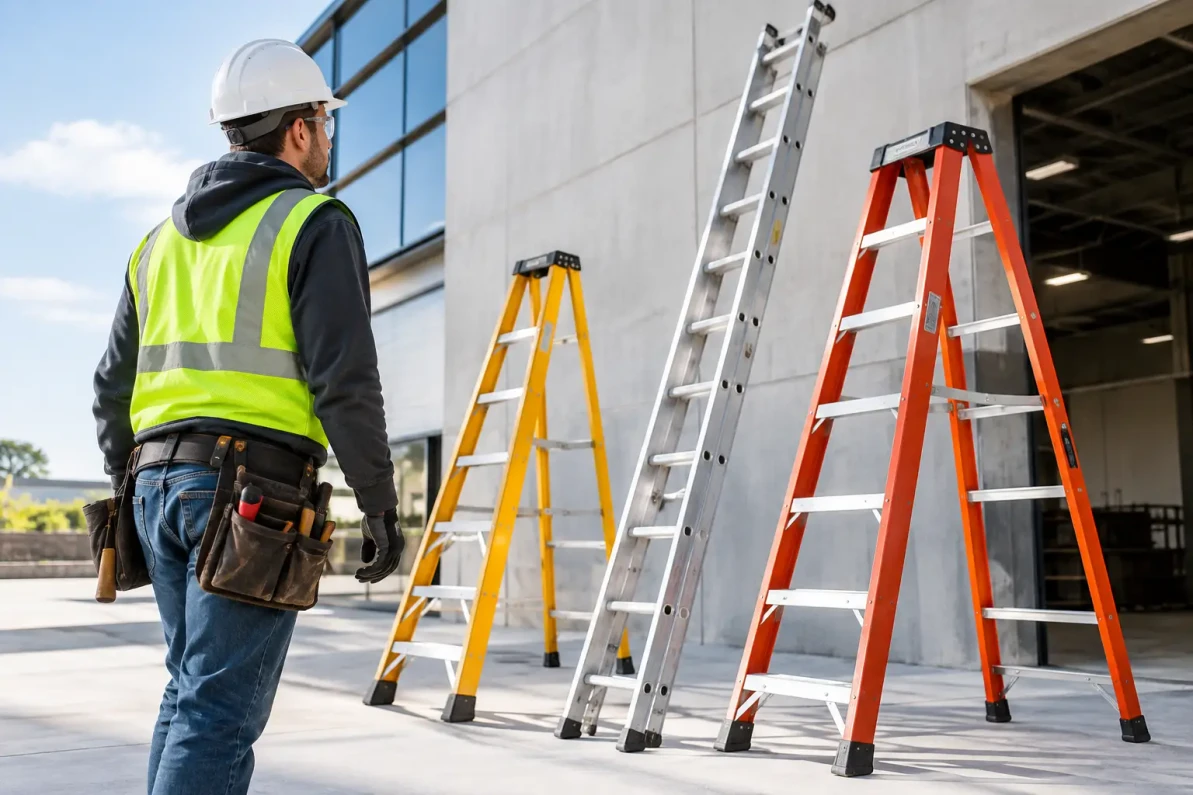
For routine indoor access, a step ladder is usually the most convenient option. It stands on its own, sets up quickly, and works well for stocking, cleaning, painting, and basic maintenance. Platform step ladders can be especially useful when a worker needs room to stand comfortably during a longer task or needs a place to set small tools.
An extension ladder makes more sense when the work area is above the reach of a standard step ladder, such as exterior walls, elevated rooflines, or high building access points. Because it must lean against a stable support, it requires more setup room and more attention to placement. For jobs that involve moving materials or working around tight aisles, a smaller step ladder may be the better day-to-day purchase even if an extension ladder is needed occasionally.
Choose Height Without Overreaching
Ladder height is one of the most misunderstood specifications. The stated ladder size is not the same as a worker's comfortable working height. A person should be able to work without standing on prohibited top steps, stretching sideways, or leaning far from the rails.
Measure from the floor to the point where hands and tools need to reach. Then consider the type of ladder and how it will be used. A step ladder needs to place the worker at a safe, comfortable standing level below the work area. An extension ladder needs enough length to maintain proper support and positioning, rather than being extended to its limit.
It is tempting to buy one tall ladder for every need. In practice, a mix of sizes is often more efficient. A compact step stool or short step ladder handles quick low-level tasks, while a taller step ladder covers stockroom and maintenance work. This reduces unnecessary lifting and makes it easier for workers to select the right equipment for each task.
Check the Space Around the Ladder
A ladder must fit the work area as well as reach the work area. Narrow warehouse aisles, office hallways, stair landings, and crowded maintenance rooms can limit which models are practical. Measure storage areas too. A folding ladder that cannot be stored securely may end up left in a walkway, where it creates a different problem.
For frequently used ladders, look at folded dimensions, carrying weight, and the location of locking hardware. Simple setup and compact storage can matter as much as maximum reach for a busy business.
Match the Duty Rating to People, Tools, and Materials
The duty rating tells you how much load a ladder is designed to handle. That load is not just the worker's body weight. It includes clothing, footwear, hand tools, tool belts, paint, parts, and anything else carried while climbing or working.
For commercial use, choosing a ladder with an appropriate duty rating provides a better margin for the real work being done. A light-duty ladder may be acceptable for occasional household tasks, but it may not be the right fit for a maintenance department, rental property team, or warehouse crew that uses it every day.
Check the manufacturer label and compare the rating with the heaviest realistic use case. If different employees will use the ladder, plan for the full range of users and equipment. Do not assume a higher rating solves every problem, however. A heavier ladder can be harder to transport, especially when one person needs to move it through a facility. The best commercial ladder balances capacity with manageable weight and the intended frequency of use.
Select the Right Ladder Material
Commercial ladders are commonly available in aluminum, fiberglass, and steel designs. Each material has a practical place.
Aluminum ladders are popular because they are relatively lightweight and easy to carry. They are often a sensible choice for general indoor work, stockrooms, painting, cleaning, and jobs where the ladder is moved repeatedly. They should not be used where there is a risk of contact with electrical sources.
Fiberglass ladders are commonly selected for work near electrical equipment because the material does not conduct electricity in the same way metal does. That does not make any ladder safe around live electrical hazards. Keep fiberglass rails clean and dry, inspect them for damage, and follow the manufacturer's instructions and your workplace procedures.
Steel ladders may be useful for certain industrial or stationary applications where weight and frequent relocation are less of a concern. They can be durable, but they are typically less convenient when crews need to carry equipment between rooms, vehicles, or job areas.
Material choice also depends on the environment. Consider moisture, dirt, chemical exposure, temperature changes, and whether the ladder will be stored indoors or outdoors. A ladder that suits a clean retail backroom may not be the best choice for a busy workshop or exterior maintenance route.
Look Beyond Height and Capacity
A good commercial ladder selection guide should include the details that affect daily use. Wide steps can provide more secure footing and greater comfort for tasks that take several minutes. A top tray or tool holder can keep small supplies close at hand, reducing unnecessary trips up and down. A platform model may improve comfort when work requires both hands for an extended period.
Feet are another key detail. Non-slip foot design helps keep the ladder stable on appropriate surfaces, but it does not replace proper setup. Inspect the feet regularly, especially on ladders used outdoors or moved across rough warehouse floors. Worn, missing, or contaminated feet should be addressed before the ladder returns to service.
For extension ladders, review the locking mechanism, rope system if included, rail construction, and storage requirements. For step ladders, check spreader bars, hinges, rivets, steps, and the top cap. A lower-priced ladder can be a good value when its size, rating, and features match the job. Buying the wrong style because it costs less usually creates more expense later.
Plan for Daily Handling and Storage
The ladder that gets used safely is usually the one employees can access, carry, set up, and put away without frustration. Consider who will use it and how often. A lightweight aluminum step ladder may be ideal for a property manager handling quick repairs across several units. A warehouse may benefit from multiple ladders placed near work zones rather than one large ladder stored at the far end of the building.
Create a clear storage location that keeps ladders dry, protected from vehicle traffic, and out of walkways. Avoid stacking heavy materials on top of them. For a business with several ladders, labeling by size or assigned area can save time and make inspections easier.
Regular visual checks are practical, not complicated. Look for bent rails, loose steps, damaged spreaders, missing feet, cracked fiberglass, corrosion, or labels that can no longer be read. Remove damaged ladders from use until they are repaired according to the manufacturer's guidance or replaced.
A Practical Buying Checklist
Before adding a commercial ladder to a cart, confirm these points:
- The ladder style fits the task: step ladder, platform ladder, extension ladder, or compact step stool.
- Its height allows comfortable access without standing on restricted steps or overreaching.
- The duty rating accounts for the user, clothing, tools, and materials carried.
- The material suits the work environment and potential electrical exposure.
- The folded size, weight, and storage needs work for your facility or vehicle.
- The ladder has useful features for the job, such as a platform, tool tray, wide steps, or stable feet.
- The manufacturer label and instructions are available and easy to follow.
Buy for the Job You Do Most Often
One versatile ladder can cover many tasks, but commercial buyers should avoid forcing a single model into every situation. A short step ladder for routine access and a taller ladder for occasional maintenance may be a more useful combination than one oversized option. For warehouses and multi-unit properties, buying several appropriately sized ladders can also reduce delays and discourage unsafe shortcuts.
Easy Deal USA focuses on practical equipment for workplaces, homes, workshops, and storage areas, so product details such as dimensions, capacity, and folded size should guide the purchase. Compare those details against your measurements and typical workload before ordering.
A well-chosen ladder should make ordinary work feel ordinary: easy to retrieve, stable to set up, comfortable to use, and simple to store when the task is finished.
Recent Posts
-
Frigidaire Fridge Door Shelf Rail Broken: Replace 240534901
If the door shelf rail on your Frigidaire refrigerator has cracked, snapped off or keeps popping loo …Nov 21, 2026 -

Storage Totes for Contractors: Truck and Jobsite Guide
Every contractor knows the cost of a disorganized truck. You drive to the job, then spend twenty min …Nov 21, 2026 -
How to Pack a Heavy Box for Shipping Without Blowouts
A heavy box fails in predictable ways. The bottom seam splits when someone lifts it, a corner crushe …Nov 21, 2026
