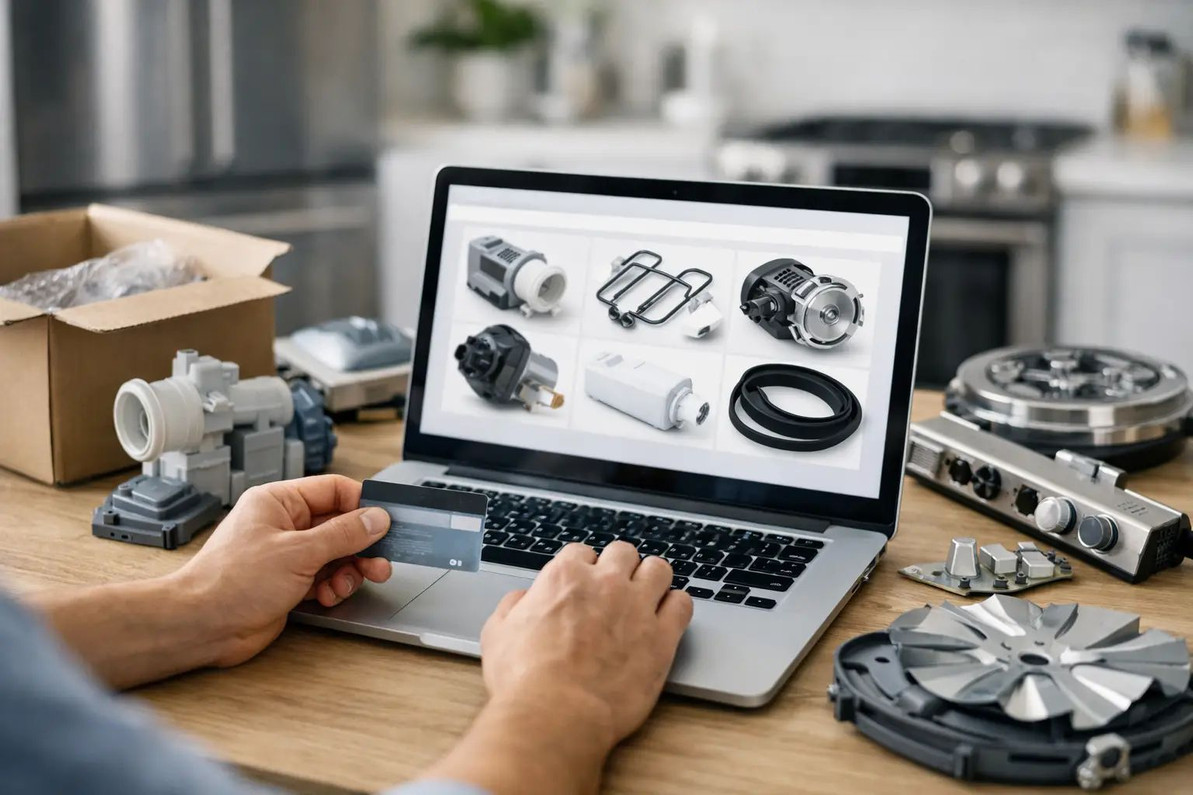
How to Buy Appliance Parts Online With Confidence
A refrigerator that stops cooling, a dryer that squeals, or a dishwasher that will not drain can disrupt the whole week. Buying appliance parts online can be a fast, cost-effective fix, but only when the replacement is matched to the appliance correctly. A part that looks nearly identical may have a different connector, mounting point, voltage rating, or fitment range.
The good news is that most ordering mistakes are preventable. Start with the appliance model number, compare the part details carefully, and choose a seller that makes compatibility information clear before you place the order.
What to Check Before Buying Appliance Parts Online
The model number is the most useful detail you can have. It identifies the specific version of your washer, dryer, refrigerator, range, microwave, or dishwasher. Brand names alone are not enough. Many appliance makers use similar-looking components across product lines, but the parts may not be interchangeable.
Look for the model number on the appliance rating plate or product label. On refrigerators, it is often inside the fresh-food compartment or near a door frame. Washers and dryers commonly place it around the door opening, lid, rear panel, or control area. For dishwashers, check the inside edge of the door. Ranges and ovens may have it behind the drawer, on the oven frame, or under the cooktop.
Write down the full model number exactly as shown, including letters, numbers, and hyphens. If the part itself has a number printed or stamped on it, record that too. That original part number can help confirm a replacement, especially for filters, switches, heating elements, belts, igniters, valves, and control components.
A clear photo is worth keeping. Photograph the label, the old part from more than one angle, its wiring connections, and any mounting hardware before removal. These details make it easier to compare the replacement listing and reconnect the component during installation.
Verify Fit, Not Just Appearance
A replacement part needs to match more than the general shape of the failed component. Check the listing for compatible model numbers, original equipment part numbers, dimensions, connector type, mounting locations, and package contents. If a listing says it replaces several part numbers, confirm that your model is included in the stated compatibility range.
This matters with common wear parts. A dryer belt can have a small difference in length or rib count. A refrigerator water filter can use a different locking design. A dishwasher rack wheel may look correct but use a different axle diameter. Even a simple burner knob can have a different shaft opening and turn direction.
Compatible replacement parts can be a practical value choice when they are designed to meet the required fit and function for your appliance. They are often less expensive than branded original parts and can solve routine repair needs effectively. The trade-off is that fitment details need extra attention. For a highly specialized electronic board, a gas-related component, or a part with a model-specific programming requirement, the original part number and technical specifications become even more important.
At Easy Deal USA, compatibility-focused replacement listings help shoppers compare parts for major appliance brands, including LG, Whirlpool, Maytag, GE, Frigidaire, and more. Still, the final check should always come back to your appliance model and the specifications in the product description.
Know Which Failure You Are Actually Fixing
Ordering the wrong part is not always a compatibility issue. Sometimes the visible symptom points to more than one possible cause. A dryer that does not heat, for example, could have a failed heating element, thermal fuse, thermostat, power issue, or venting problem. Replacing one part without a basic diagnosis may not solve the problem.
Use the appliance's symptoms to narrow the repair before shopping. Does the refrigerator run but fail to cool? Does the washing machine fill but not spin? Does the dishwasher leave standing water at the bottom? Notice when the issue occurs, what sounds or error codes appear, and whether the appliance completes any part of its cycle.
Check simple causes first. A clogged dishwasher filter, blocked dryer vent, tripped breaker, loose refrigerator door gasket, or damaged washer hose can create symptoms that resemble a major component failure. Cleaning, resetting, or inspecting these areas may save time and money.
When testing electrical components, disconnect power before opening panels or handling wiring. Shut off water to appliances with supply lines, and do not attempt gas repairs unless you have the proper training. A repair professional is the safer option when the diagnosis is unclear or the work involves gas, high voltage, sealed refrigeration systems, or extensive disassembly.
Read Product Details Like a Repair Checklist
The best product listing answers the questions you would ask while holding the old part in your hand. Review the part number, appliance brand and model compatibility, measurements, electrical ratings where applicable, included hardware, and installation notes. If the listing shows photos, compare every important detail with your existing component.
Pay close attention to package contents. Some replacement parts include mounting clips, screws, terminals, or seals, while others are sold as the component only. A refrigerator shelf bin may be a single bin without the support rails. A washer drain pump may not include hoses or clamps. Knowing this before ordering helps avoid a second shipment and a delayed repair.
For maintenance items such as refrigerator filters, dryer lint screens, range drip pans, and dishwasher accessories, confirm the replacement interval and product dimensions. These parts are easy to order, but a wrong fit can still create leaks, poor performance, or unnecessary wear.
Compare Price With the Full Cost of the Repair
The lowest listed price is not always the best value. Consider whether the part matches your model, whether it includes needed hardware, how quickly it can arrive, and whether the seller offers clear return terms for unused items. A slightly higher-priced replacement that is correctly identified and available quickly can cost less than multiple incorrect orders.
Shipping speed matters when an appliance supports daily routines. A working refrigerator, washer, or dryer is not a convenience purchase for most households. For property managers, maintenance teams, and repair professionals, delays can also affect tenants, customers, and scheduled jobs. Fast nationwide fulfillment and predictable shipping costs make planning easier.
Commercial buyers may benefit from ordering frequently used maintenance parts in volume when model compatibility is already established. Keep a record of appliance models at each location and the replacement part numbers used successfully. That simple log can reduce downtime when the same repair comes up again.
Prepare for Installation Before the Part Arrives
A successful order is only half the repair. Review the installation process before the package arrives so you can confirm the tools, hardware, and safety steps required. Basic repairs may need only a screwdriver, nut driver, pliers, work gloves, and a towel for water connections. Other jobs require specialized tools or careful wire labeling.
Before disassembly, unplug the appliance or switch off its dedicated circuit. Turn off the water supply for washers, refrigerators with water dispensers, and dishwashers. Take photos as you remove panels and connections. Place screws in labeled containers rather than leaving them loose on the floor or countertop.
After installation, test the appliance through a normal function or cycle while watching for leaks, unusual noises, burning smells, or error messages. Do not force a part into place. Resistance often means the component is misaligned, the mounting hardware is incorrect, or the replacement is not the right fit.
A Better Repair Starts With Better Information
Buying a replacement part should feel like a measured repair decision, not a guess based on a photo. Keep your model number handy, match the full specification, and give yourself time to review the listing before checkout. The right part can extend the life of an appliance, reduce replacement costs, and get a kitchen or laundry room back to normal without unnecessary delay.
Recent Posts
-
Foam Play Mat Setup Guide for Babies and Toddlers
Once a baby starts rolling, scooting and crawling, the floor becomes the main play area, and hard fl …Oct 24, 2026 -
Folding Table as a Desk: Home Office Setup Guide
Not every home has room for a permanent desk, and not every work-from-home setup needs one. Using a …Oct 24, 2026 -
Duct Tape vs Packing Tape: Which to Use and When
You are halfway through packing a stack of boxes and the packing tape runs out, but there is a roll …Oct 24, 2026