Best Under Bed Storage Containers for Every Room
A bed can hide a surprising amount of unused space, but only if the storage fits correctly and protects what you put inside. The best under bed storage containers make seasonal clothes, extra linens, shoes, and household supplies easier to find without crowding closets, hallways, or garage shelves.
For most homes, the right choice comes down to three practical details: the clearance under the bed frame, the type of items being stored, and how often you need access. A shallow container that slides easily may be ideal for winter blankets. A clear lidded bin may be better for cleaning supplies or business inventory that needs to stay visible and dust-free.
How to Choose the Best Under Bed Storage Containers
Start by measuring before you shop. Measure the distance from the floor to the lowest part of the bed frame, then allow room for the container lid, wheels, and your hand to pull it out. Many shoppers measure only the open area between the legs, then discover a center support rail blocks a large bin from sliding underneath.
Length and width matter just as much. Measure from side to side and from the foot of the bed toward the headboard. If a bed has a low frame or storage drawers already built in, use narrower containers that can be placed along the open sides instead of forcing one oversized unit into a tight space.
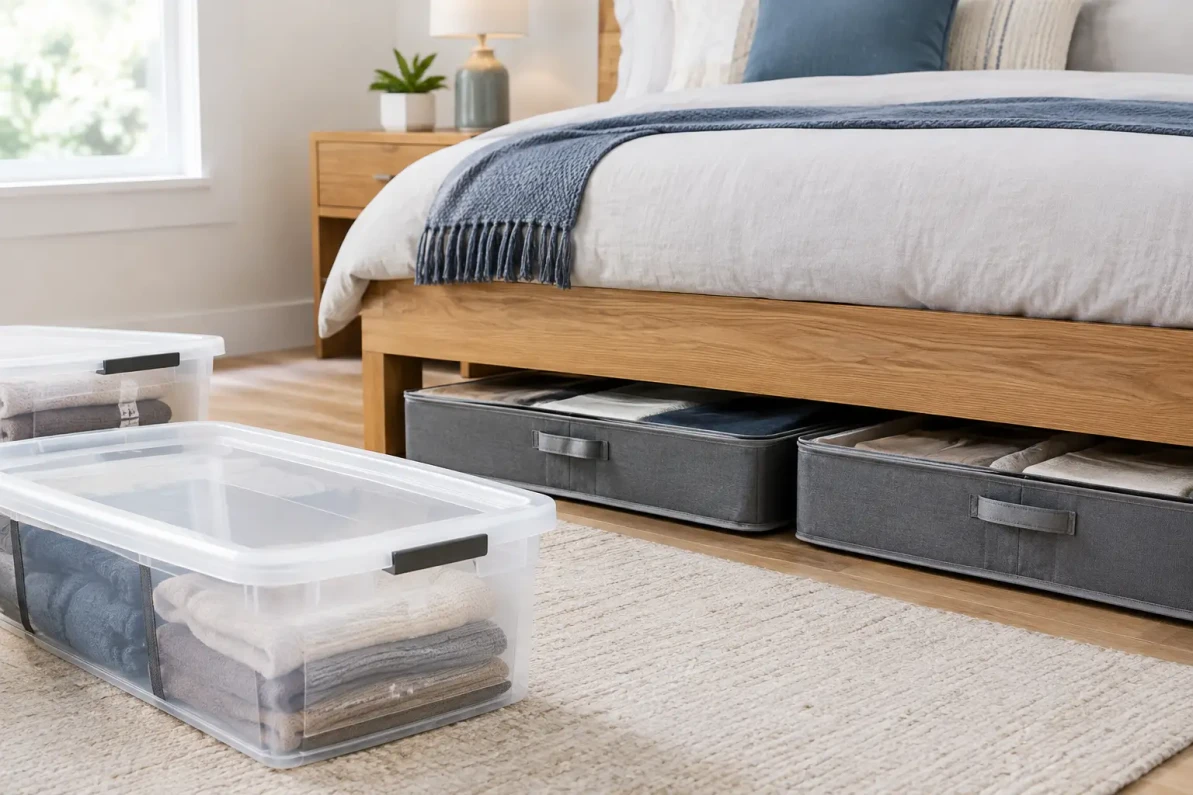
Material should match the job. Plastic storage containers are a dependable option for items that need structure and protection from dust, such as shoes, folded clothing, linens, craft materials, or packaged household goods. Fabric storage bags work well for lighter, flexible items like comforters and off-season clothing, particularly when clearance is limited. Metal frames and wooden rolling drawers can look more finished, but they usually cost more and are less practical when you need simple, high-capacity organization.
A lid is often worth having. Closed containers keep dust, pet hair, and loose debris off stored items. For long-term storage in a basement-level room, garage-adjacent bedroom, or rental property, choose a secure lid rather than an open basket. If you need to reach for items regularly, a front-opening container or a lid that lifts without removing the entire bin can save time.
Choose a Container Style for What You Store
There is no single best option for every bed or every household. The most useful container style depends on what goes in it and how frequently it comes out.
Low-profile plastic bins
Low-profile plastic bins are a practical all-purpose choice. Their rigid sides keep folded stacks neat, and clear plastic lets you identify contents at a glance. Look for smooth edges, a stable base, and a lid that stays in place during movement. These bins are especially useful for seasonal clothing, extra sheets, towels, kids' toys, or packaged supplies.
Clear bins reduce the need for labels, although a simple label still helps when several containers hold similar items. Opaque bins can look tidier in an open room, but they require more careful labeling to prevent unnecessary digging later.
Rolling under-bed containers
Containers with wheels are helpful under heavier beds, deep platforms, and frames with a long reach from the edge to the center. They are also useful for people who rotate storage often, such as switching bedding by season or storing frequently used craft supplies.
Wheels are not always necessary. On smooth hardwood, tile, or laminate, a flat-bottomed container may slide easily. On thick carpet, small wheels can catch or sink, so choose larger casters or a lightweight container you can lift and pull. Check that wheels add no more height than your bed clearance allows.
Fabric zippered storage bags
Fabric bags are a good fit for soft, bulky items. Comforters, pillows, sweaters, and spare blankets can take up much less visual space when stored in a low, zippered bag. Handles make these bags easier to pull out, while a clear top panel helps identify contents.
The trade-off is less protection and less stackability. Fabric bags can sag when overfilled, and they are not the right choice for loose tools, fragile items, or anything that could leak. If the area beneath the bed is exposed to pet hair or dust, select a fully enclosed bag with a durable zipper.
Divided shoe organizers
Under-bed shoe organizers keep pairs separated and can free up valuable closet floor space. They work best for flats, sandals, sneakers, and other low-profile footwear. Measure the height of boots or bulky athletic shoes before choosing a divided organizer, since many compartments are shallower than expected.
For households with several shoe sizes, consider using one organizer per person and labeling the handle. It is a small detail that prevents a shared storage area from becoming another place to search.
Features That Make Storage Easier to Use
The lowest price is not always the best value if a container cracks, drags, or is difficult to open. These features make a noticeable difference in everyday use:
- A low profile that leaves at least a small gap beneath the bed frame
- A lid or zipper closure that protects contents from dust and debris
- Handles, pull straps, or a front grip that can be reached without moving the bed
- Clear sides or a label area for quick identification
- Wheels or a smooth base suited to your flooring
Avoid choosing a container only by its exterior dimensions. Interior dimensions can be smaller because of tapered sides, thick lids, or wheel housings. This matters when storing standard sheet sets, shoe boxes, document boxes, or neatly folded inventory.
Make the Most of Under-Bed Space
Under-bed storage works best when it holds items you need, but not every week. Seasonal items are the obvious choice, yet the space can also solve everyday organization problems. A guest room can hold extra towels and linens. A child's room can store toys that rotate in and out. A small apartment can use low containers for cleaning supplies, wrapping materials, or bulk paper goods.
For small businesses and home-based sellers, under-bed containers can also hold lightweight packing materials, labels, mailers, or product stock that does not require warehouse shelving. Use lidded plastic bins for these items rather than soft bags, especially if contents need to stay sorted and protected. Keep heavier supplies elsewhere so the containers remain easy to pull out safely.
Try to assign one category to each container. Mixing holiday décor, clothing, and household supplies may fill a bin quickly, but it makes retrieval frustrating. A container labeled “Guest Bedding” or “Summer Clothes” tells you exactly where to look and makes seasonal changeovers faster.
Common Buying Mistakes to Avoid
Buying containers that are too tall is the most common mistake. Even a difference of one inch can make a bin unusable once the lid is attached. Measure the actual clearance at the lowest point of the frame, not the highest open section near the edge.
Another issue is overloading. A large container invites people to pack it until it becomes heavy and awkward. This is particularly common with books, tools, canned goods, or dense supplies. Under-bed storage should be easy to access, not a hidden box that takes two people to move. Use several manageable containers for heavy categories.
Also consider the floor. Rough unfinished surfaces can scratch containers over time, while carpet can make shallow bins difficult to pull. A container with a reinforced base, smooth bottom, or suitable wheels will hold up better when used regularly.
Finally, do not overlook how your bed is made. A bed skirt, low-hanging comforter, or side rail can conceal storage nicely, but it can also interfere with handles and lids. Pull a measuring tape from the edge of the bed to the center before ordering, and leave enough clearance for normal use.
A Practical Setup That Stays Organized
A simple arrangement is usually the most effective: place less-used seasonal items toward the head of the bed and frequently needed items near the foot or open side. Keep containers facing the same direction so handles and labels are visible. If two bins fit side by side, leave a narrow gap between them instead of wedging them tightly together.
Easy Deal USA customers often look for storage that does more than hide clutter. The right under-bed container should make a small room function better, keep stored items cleaner, and reduce the time spent looking for what you already own. Measure carefully, choose a material that fits the contents, and prioritize access over maximum capacity. That approach leaves you with storage you will actually use, not another container pushed out of sight.
Recent Posts
-
Frigidaire Fridge Door Shelf Rail Broken: Replace 240534901
If the door shelf rail on your Frigidaire refrigerator has cracked, snapped off or keeps popping loo …Nov 21, 2026 -
Storage Totes for Contractors: Truck and Jobsite Guide
Every contractor knows the cost of a disorganized truck. You drive to the job, then spend twenty min …Nov 21, 2026 -
How to Pack a Heavy Box for Shipping Without Blowouts
A heavy box fails in predictable ways. The bottom seam splits when someone lifts it, a corner crushe …Nov 21, 2026