Best Storage Solutions for Renters That Move
A rental can run out of usable space fast. One closet has to hold clothes, luggage, cleaning supplies, and seasonal items, while the kitchen cabinets are already crowded before groceries arrive. The best storage solutions for renters add capacity without requiring permanent installation, expensive built-ins, or a repair project when it is time to move out.
The right choice depends on what you need to store, how often you use it, and how likely you are to move in the next year or two. A slim rolling cart can make a small bathroom work better every day. Stackable bins may be the smarter purchase for holiday decorations or off-season clothing. Start with the space and the job, not just the container.
What Makes Storage Renter-Friendly?
Renter-friendly storage is usually freestanding, removable, foldable, or easy to take apart. It should improve daily access without leaving holes, marks, or bulky pieces behind. That makes portable shelving, rolling carts, storage bins, folding tables, and compact organizers especially useful in apartments, rental homes, dorm-style rooms, and temporary workspaces.
Durability still matters. A low-cost shelf that bows under normal household items or a cart with weak wheels becomes a frustration instead of a solution. Check the overall dimensions, shelf spacing, weight capacity, and whether the unit fits through doorways or around tight corners. Measure the floor area as well as the vertical clearance before ordering.
Think about your move-out plan early. Storage that can be emptied, folded, nested, or used as a moving container earns its place more than a large piece that only works in one room.
Measure the Problem Before Buying Storage
A few quick measurements prevent the most common storage mistake: buying an organizer that technically fits the room but blocks a drawer, doorway, or walking path. Measure width, depth, height, and the clearance needed to open nearby doors and cabinets. In a closet, note where the rod, baseboard, and door swing limit usable space.
Also separate items by use frequency. Keep everyday supplies at waist or eye level, heavier items low, and occasional items up high or farther back. This simple rule applies to pantry bins, utility shelves, bathroom carts, and under-bed storage alike.
For small rentals, look for overlooked areas: the vertical space above a closet shelf, the gap beside a refrigerator, the bottom of a hall closet, the space under a bed, and the inside of a utility cabinet. The goal is not to fill every empty inch. Leave enough access that the storage system stays useful after the first week.
Best Storage Solutions for Renters by Room
Stackable storage bins for closets and seasonal items
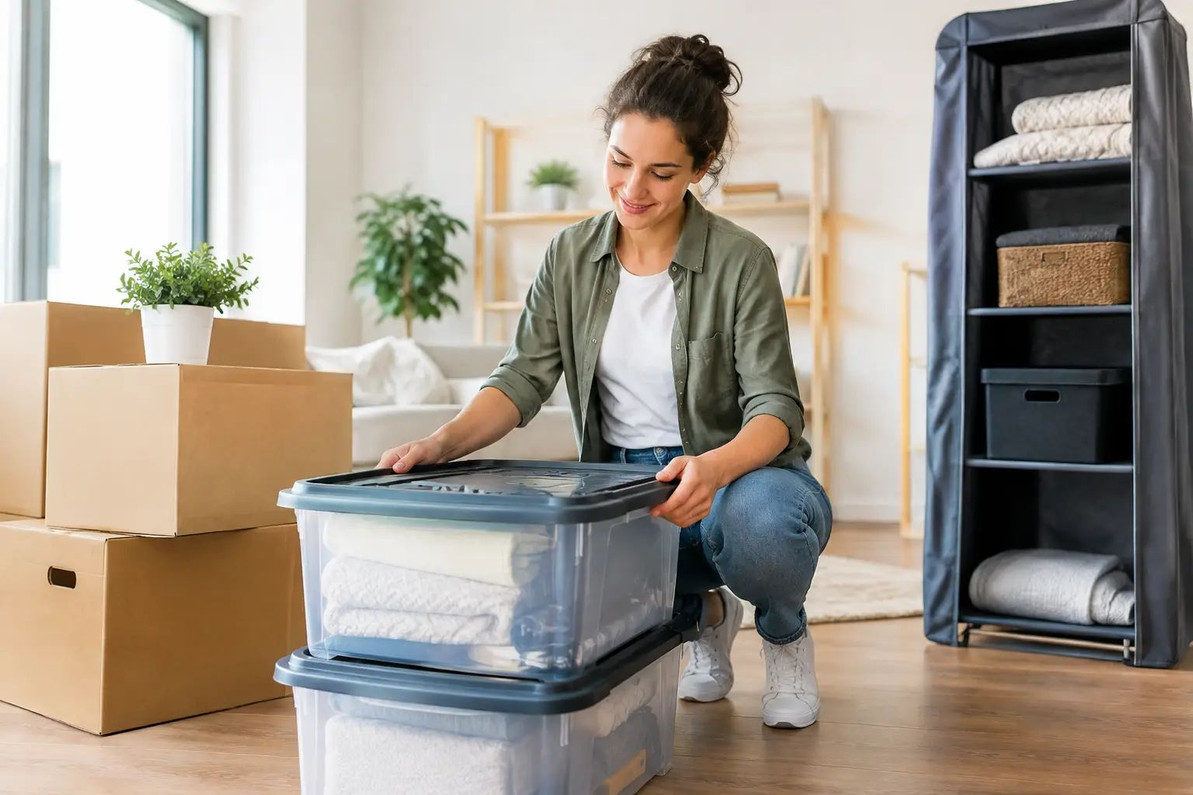
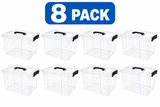
Clear or labeled stackable bins are one of the most flexible options for renters. They protect items from dust, make off-season clothing easier to sort, and can move directly from a closet to a vehicle when your lease ends. Choose bins with secure-fitting lids if they will be stored in a garage, basement, or other area where dust is more likely.
Matching bin sizes stack more securely and use shelf space better than a mix of random containers. For closet use, select a height that lets you access the top bin without removing a full stack. Shallow bins are usually better for shoes, accessories, craft supplies, and linens. Deeper bins work well for bulkier seasonal items, but they can turn into clutter if small items are tossed in without labels.
Freestanding shelving for kitchens, closets, and utility areas
A freestanding shelving unit creates vertical storage without changing the room itself. It can hold pantry overflow, cleaning supplies, small appliances, laundry items, tools, or packaged business inventory. Open shelves make it easy to see what you own, which helps reduce duplicate purchases.
Pay close attention to shelf dimensions and rated capacity. A narrow unit may work beside a washer or refrigerator, while a wider shelf is more practical for a storage room or walk-in closet. Place the heaviest boxes and appliances on lower shelves. If you live with children or pets, follow the product instructions for safe placement and keep tall units stable and out of busy traffic paths.
Wire-style or open shelving is practical for utility areas because it does not visually crowd a small room. Solid shelving can be a better fit when you need a more finished look or when small items could slip through open gaps. Either way, bins and labels turn a basic shelf into a system.
Rolling utility carts for tight, active spaces
Rolling carts are useful where fixed storage would get in the way. A slim cart can hold toiletries beside a bathroom vanity, cleaning supplies near a laundry area, coffee supplies in a compact kitchen, or office materials beside a desk. When guests come over or you need floor space, the cart can be rolled aside.
Look for a cart with enough clearance between shelves for the items you actually use. A three-tier cart is often ideal for bottles, towels, paper goods, and smaller containers, but taller items may need a deeper bottom shelf. Wheels are a convenience, not a reason to overload the cart. Keep heavier items on the lowest level and move it carefully over thresholds.
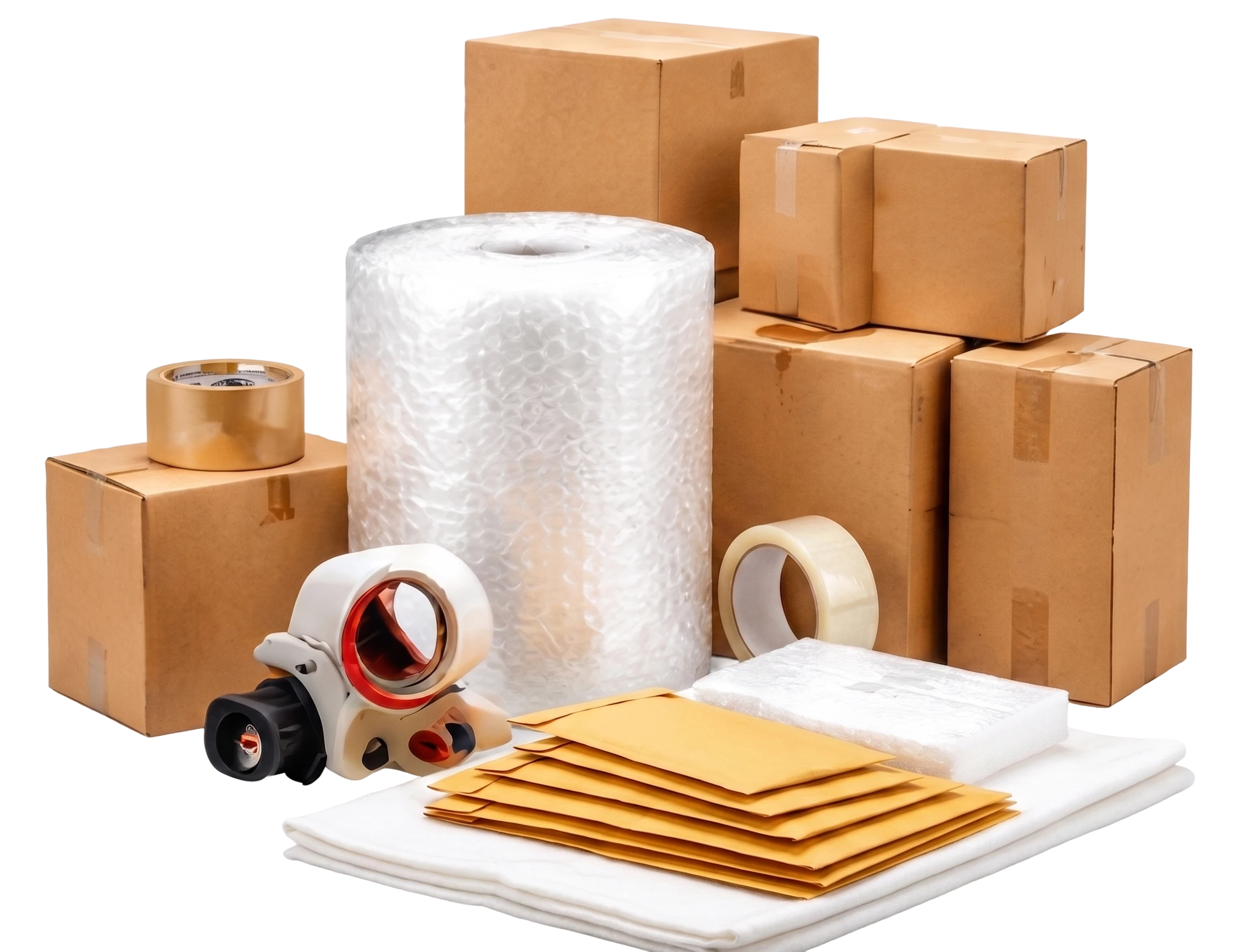
For renters who work from home or run a small online business, a utility cart can also serve as a mobile packing station. Store labels, tape, mailers, and small shipping supplies together, then roll the cart into a closet after the workday.
Under-bed storage for low-use belongings
The space under a bed is valuable because it does not take up any additional floor area. Low-profile bins can hold extra bedding, winter sweaters, shoes, wrapping supplies, or documents you do not need every day. Before choosing containers, measure the clearance from the floor to the bed frame, including any center supports.
This option works best for lightweight, clean, dry items. Avoid making under-bed storage a catch-all for things you have not decided whether to keep. Use simple labels on the side facing outward so you can find what you need without pulling out every container.
Folding tables and compact work surfaces
Not all storage problems are about where items sit. Sometimes the issue is that there is nowhere to sort laundry, assemble packages, handle repairs, or prepare supplies. A folding table adds a temporary work surface that can be stored against a wall or in a closet when finished.
For renters, this is often more useful than a permanent workbench or oversized desk. It can support organizing projects, small business packing tasks, craft supplies, or a temporary utility area. Check folded dimensions as carefully as open dimensions. A folding table only saves space if it has a realistic place to go afterward.
Choose Storage That Can Do More Than One Job
The most cost-effective storage purchases often serve two purposes. A lidded bin organizes a closet now and protects belongings during a move later. A rolling cart stores cleaning products but can also move supplies between rooms. A folding table creates a work area and becomes a packing surface when moving day arrives.
This approach is especially helpful if you expect to change apartments, share a home, or adjust a room for a new use. Avoid buying several narrow organizers just because each one solves a small problem. One appropriately sized shelf and a set of compatible bins may hold more, look cleaner, and be easier to relocate.
Easy Deal USA offers practical storage, utility, and household products designed for everyday organizing, moving, and workspace needs. When comparing options, focus on usable dimensions and capacity rather than appearance alone.
A Simple Plan for Setting Up Renter Storage
Start with one trouble spot, such as the entry closet or kitchen counter, rather than reorganizing the entire home at once. Remove expired, broken, duplicate, or unused items first. Then group what remains by activity: laundry, cleaning, pantry backup, work supplies, seasonal decor, or pet supplies.
Buy storage only after those groups are clear. Containers should fit the items, and furniture should fit the room. Label bins on more than one side if they may be stacked, and leave a little open space on every shelf for items that rotate in over time.
Finally, revisit the setup after two weeks. If frequently used items are still ending up on the counter or floor, the issue is usually location rather than a lack of containers. Move those items closer to where they are used and reserve higher or less accessible spaces for occasional belongings.
A well-organized rental does not need permanent cabinetry or a major makeover. A few portable, properly sized pieces can make daily routines easier now and make the next move considerably less stressful.
Recent Posts
-
Folding Table as a Desk: Home Office Setup Guide
Not every home has room for a permanent desk, and not every work-from-home setup needs one. Using a …Oct 24, 2026 -
Duct Tape vs Packing Tape: Which to Use and When
You are halfway through packing a stack of boxes and the packing tape runs out, but there is a roll …Oct 24, 2026 -
How to Organize Toys With Clear Storage Bins
Toy clutter tends to peak right before the holidays, when birthday gifts from the year are still sca …Oct 23, 2026