Best Garage Wall Storage Systems for Real Work
A garage gets cluttered when every item competes for floor space. The best garage wall storage systems move tools, seasonal gear, and work supplies upward so you can park a vehicle, roll out a cart, or simply find what you need without digging through piles. The right choice is not always the largest system. It is the one that holds the items you actually use, fits the wall construction, and remains easy to adjust as your needs change.
For most homeowners and small shops, a combination of wall-mounted shelving, rail-mounted hooks, and purpose-built racks works better than one oversized storage unit. Start with the gear you own, then choose storage around its weight, shape, and frequency of use.
What Makes a Garage Wall System Worth Buying?
A useful wall storage system does three jobs: it clears the floor, keeps equipment visible, and supports the load without constant readjustment. Price matters, but a low-cost rack is not a good value if it bends under common supplies or leaves you without the hooks and shelves needed for the job.
Look first at the wall itself. Finished garage walls typically have studs behind drywall, while unfinished garages may have exposed wood studs, masonry, or metal framing. Most heavy-duty wall storage needs to be fastened into studs or installed with anchors rated for the wall material. Drywall alone is not a dependable mounting surface for heavy shelves, bicycles, ladders, or loaded bins.
Load capacity should match the real load, not the empty container. A shelf holding paint, car-care supplies, garden products, and hardware can become much heavier than expected. Check both the capacity of the shelf or rail and the rating of each individual hook, bracket, or accessory. The lowest-rated component sets the practical limit.
Adjustment is another buying consideration. A fixed shelf is simple and strong, but a modular rail system can be rearranged when a new bike, stroller, or yard tool enters the garage. If your storage needs change with the seasons or your work is project-based, flexibility is usually worth paying for.
Best Garage Wall Storage Systems by Storage Need
There is no single winner for every garage. The best garage wall storage systems are built around the type of items you need to store.
Wall-Mounted Shelving for Bins and Bulk Supplies
Wall-mounted shelves are the best starting point for boxed supplies, cleaning products, small parts organizers, and labeled storage totes. They keep items off the floor and make inventory easier to see. Open wire shelves are practical for garages because dust does not collect as easily and spilled liquids can pass through rather than pooling.
Choose shelf depth based on your containers. Deep shelves can hold larger totes, but they can also turn into dark, hard-to-reach catchalls. For frequently used supplies, a shallower shelf often works better. Keep the heaviest bins on lower shelves and reserve higher shelves for seasonal decorations, spare packaging, or items used only a few times a year.
Fixed heavy-duty shelving is a strong fit for property maintenance areas, small warehouses, and garages that store cases of supplies. Before ordering, measure the open wall width, ceiling clearance, door swing, and the space needed to open vehicle doors. A shelf that projects too far can make a narrow garage harder to use.
Slatwall and Track Systems for Flexible Tool Storage
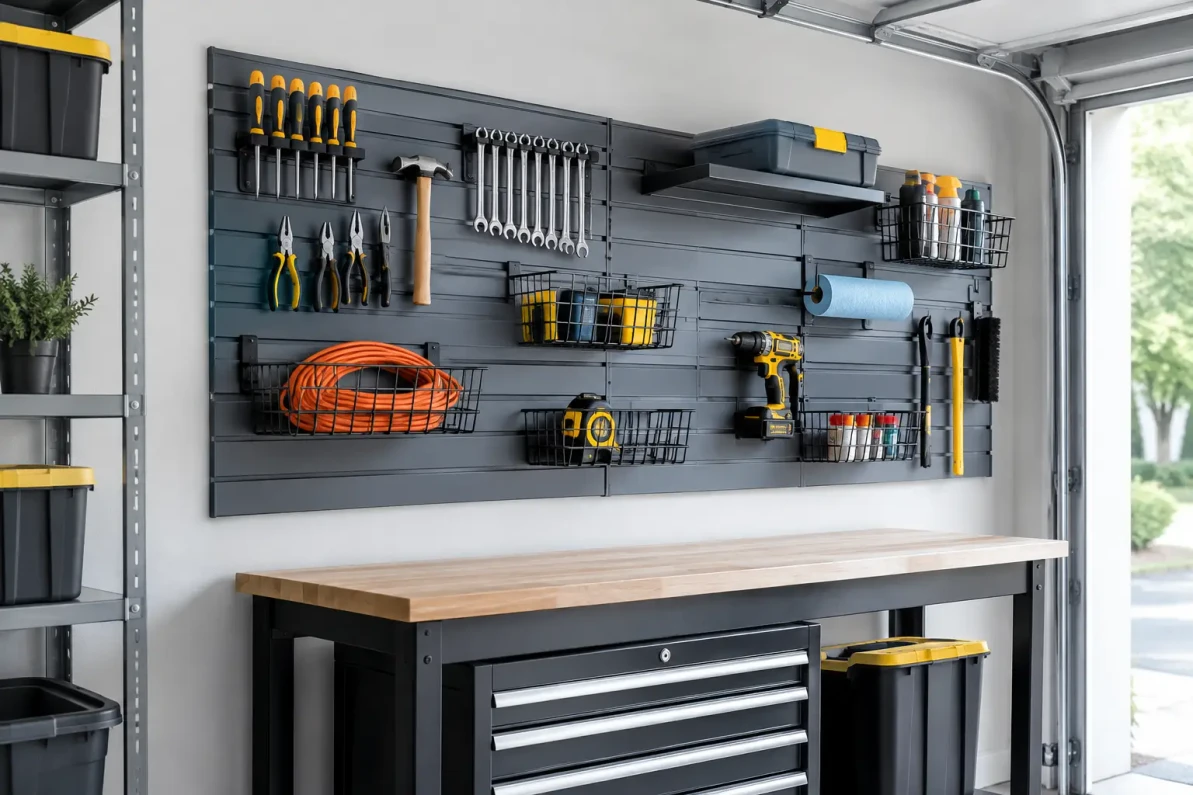
Slatwall panels and horizontal track systems offer the most flexibility for hand tools, extension cords, hoses, rakes, shovels, and lighter equipment. The wall-mounted base stays in place while hooks, baskets, and holders can be moved as your setup changes.
This system is especially useful near a workbench. Arrange frequently used tools at eye level, place heavier items lower, and keep awkward long-handled tools in dedicated holders rather than leaning them in a corner. Grouping tools by task is more useful than arranging them by appearance. Keep car-care items together, gardening tools together, and workshop supplies near the work area where they are used.
The trade-off is accessory cost. A basic rail may be affordable, but a complete setup can add up once you include several specialty hooks, baskets, and shelves. It makes sense when flexibility matters. If you only need to store a few heavy bins, simple fixed shelves may provide better value.
Heavy-Duty Hooks for Bikes, Ladders, and Yard Tools
Individual wall hooks are one of the most affordable ways to reclaim floor space. They work well for folding ladders, leaf blowers, trimmers, hoses, chairs, and bicycles when they are correctly mounted. Rubber or vinyl-coated hooks can help protect handles and frames from scratches.
Bikes require a little planning. A vertical hook can save more wall width, while a horizontal rack may be easier for children or anyone who uses a bike daily. Leave enough room between stored bikes so handlebars, pedals, and tires do not interfere with each other. Do not position them where they block the path to a vehicle, electrical panel, or exit door.
For ladders, verify the hook's capacity and install it into solid framing. Store the ladder low enough to remove safely, but high enough that it does not create a tripping hazard. Long ladders are often better supported at two points to prevent sagging or shifting.
Pegboard for Small Tools and Repair Areas
Pegboard remains a practical option for screwdrivers, pliers, wrenches, tape measures, fasteners, and other small repair tools. It is easy to customize and makes missing tools obvious. A framed or reinforced pegboard installed over studs is more stable than thin board attached directly to drywall.
Pegboard is not the right system for everything. Large power tools, heavy tool bags, and bulky equipment need stronger brackets or shelving. Use it as part of a larger wall plan, especially above a workbench where small tools need to stay visible and within reach.
Wall Cabinets for Cleaner, More Protected Storage
Wall cabinets are useful when you want supplies out of sight or protected from garage dust. They are a good choice for cleaning products, automotive fluids, paint supplies, and small equipment that should not be left exposed. Lockable cabinets can also help limit access to certain household or work supplies.
Cabinets take more installation effort than open shelves and can make it easier to forget what is stored inside. Clear labels and a simple category system solve that problem. Reserve cabinets for items that benefit from protection, then use open storage for everyday gear.
Plan the Wall Before You Buy
A few measurements prevent most ordering mistakes. Measure each usable wall section, accounting for garage doors, windows, outlets, switches, water heaters, and utility equipment. Mark stud locations with a stud finder or inspect exposed framing. Then measure the items you want to store, including the full width of handlebars, ladder rails, and bin lids.
Divide the wall into zones. Put daily-use items close to the entrance or workbench. Store long-handled tools together in one zone. Keep automotive supplies near the vehicle area, and place rarely used seasonal items on high shelves. This approach creates a garage that works during a busy Saturday project, not just one that looks organized after installation.
Avoid filling every inch of wall space. A small open section gives you room for temporary project materials, a new tool, or an item waiting to be donated. It also makes the storage system easier to maintain.
Installation Details That Affect Safety and Capacity
Follow the manufacturer's mounting instructions and use the specified hardware whenever possible. If mounting hardware is not included, select fasteners that match the wall material and the expected load. For heavy shelving and racks, attach directly to studs, masonry, or other solid structural support.
Use a level before drilling. Even a slight slope can cause bins to slide, doors to bind, or rails to look uneven. After installation, test the system gradually. Add weight in stages and check that brackets remain tight, shelves stay level, and hooks do not rotate or pull away from the wall.
Keep weight balanced across shelves and rails. Concentrating all heavy containers on one side can stress brackets and make the system less stable. Inspect mounting points periodically, especially after temperature changes, moisture exposure, or a garage reorganization.
How to Choose the Right Combination
For a typical family garage, start with one wall-mounted shelf section for totes and bulk supplies, a few heavy-duty hooks for large equipment, and a rail or pegboard area near the workbench. This combination handles most storage without forcing every item into the same type of organizer.
For a contractor, maintenance team, or small business, prioritize capacity, durable mounting, and quick access. Wall shelving for inventory and packaging supplies, organized tool storage near a repair area, and designated hooks for carts or ladders can reduce time spent searching for equipment. Buy systems with room to expand rather than rebuilding the wall every time storage needs grow.
The most useful garage storage wall is not the one with the most accessories. It is the one that gives every frequently used item a clear place, keeps heavy loads properly supported, and leaves the floor ready for the work or vehicle it was meant to hold.
Recent Posts
-
Frigidaire Fridge Door Shelf Rail Broken: Replace 240534901
If the door shelf rail on your Frigidaire refrigerator has cracked, snapped off or keeps popping loo …Nov 21, 2026 -

Storage Totes for Contractors: Truck and Jobsite Guide
Every contractor knows the cost of a disorganized truck. You drive to the job, then spend twenty min …Nov 21, 2026 -
How to Pack a Heavy Box for Shipping Without Blowouts
A heavy box fails in predictable ways. The bottom seam splits when someone lifts it, a corner crushe …Nov 21, 2026