
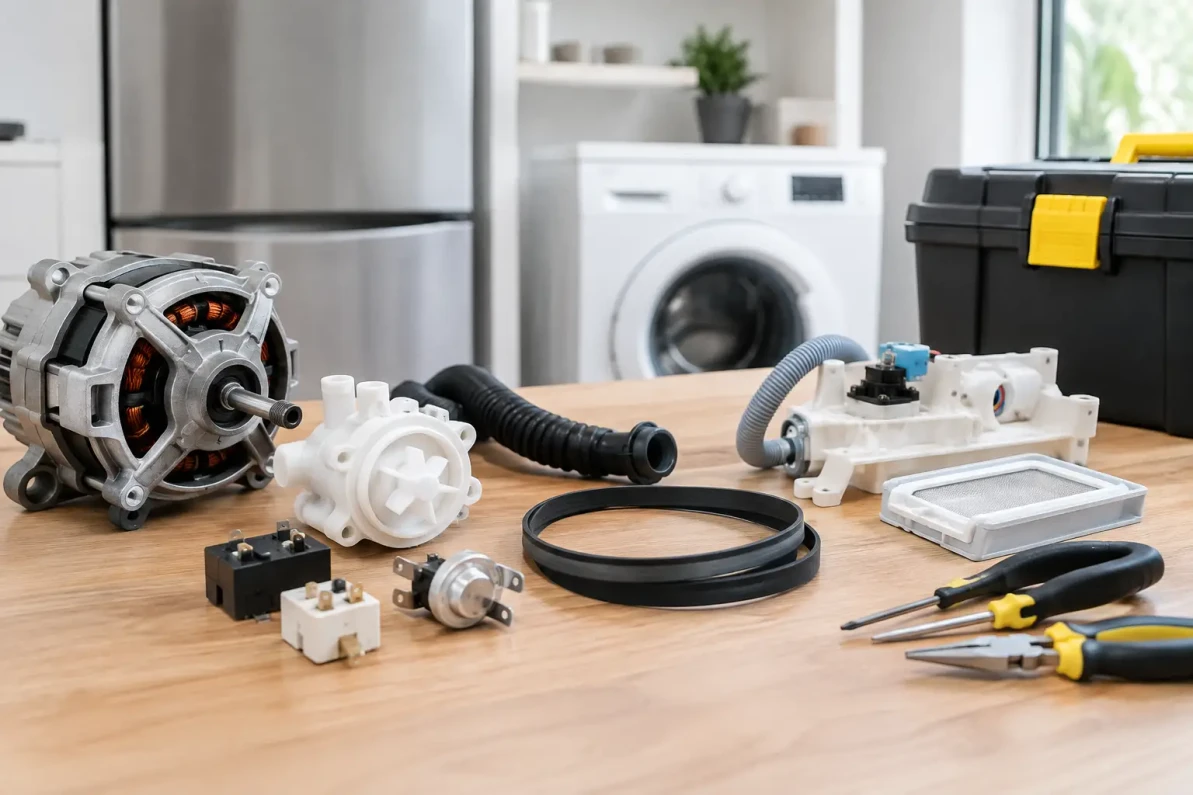
Appliance Repair Parts Trends for Smarter Fixes
A dishwasher that stops draining or a dryer that will not heat can interrupt a household, rental unit, or small business fast. The appliance repair parts trends shaping current buying decisions are less about replacing an entire machine and more about finding the correct, dependable part quickly. Shoppers are paying closer attention to model compatibility, part numbers, installation requirements, and whether a repair makes practical financial sense.
For homeowners, landlords, and maintenance teams, this shift creates a simple priority: identify the failure accurately before ordering. A replacement part can be affordable and straightforward to install, but only when it matches the appliance and solves the actual problem.
Appliance Repair Parts Trends Driving Better Buying Decisions
One of the clearest changes is the move away from generic guessing. Many appliance components can look nearly identical while using different mounting points, wire connectors, dimensions, or electrical ratings. A heating element, drain pump, door switch, thermal fuse, or refrigerator shelf may fit only a narrow group of model numbers.
That is why model-specific shopping has become the standard. Before purchasing, customers increasingly check the appliance's full model number from the manufacturer label, then compare it with the listed compatible models and replacement part number. On most appliances, the label is found inside the door frame, along a side panel, behind a drawer, or on the back of the unit. The serial number can be useful for determining production runs, but the model number is usually the starting point for parts matching.
This approach prevents a common and costly problem: ordering a part that looks right in a product photo but cannot be installed correctly. It also reduces downtime for property managers and businesses that need an appliance back in service without repeat repair visits.
More repairs are focused on common wear parts
Many appliance failures come from components that naturally wear over time. Door seals flatten, knobs crack, rollers wear down, filters clog, racks break, and switches lose reliable contact. These parts are often less expensive than major electronic assemblies and can restore normal use without replacing the whole appliance.
For example, a noisy dryer may need worn drum rollers, an idler pulley, or a damaged belt. A dishwasher that leaks may have a worn door gasket or loose hose connection. A refrigerator drawer that does not slide properly may only need a new rail, roller, or support. The trend is toward checking these practical failure points first, especially when the appliance otherwise operates normally.
This does not mean every repair is minor. Control boards, compressors, sealed refrigeration systems, and complex wiring issues can require professional diagnosis. The right decision depends on the appliance's age, condition, repair cost, and the skill level needed for safe installation.
Compatibility Is Now a Core Product Specification
Part compatibility is no longer a detail at the bottom of a listing. It is one of the main factors shoppers use to choose a replacement. A useful product description should make it easier to compare part numbers, appliance brands, supported model series, dimensions, connector style, and package contents.
Customers should also watch for replacement parts that supersede an older manufacturer number. Manufacturers may update a component's design while retaining the same intended function. In those cases, the newer part may have a revised bracket, plug, or included hardware. That can be normal, but it should be verified before ordering rather than assumed.
When reviewing a replacement part, compare more than the broad appliance type. A part listed for a washing machine is not automatically right for every washing machine. Check these details before adding it to the cart:
- The full appliance model number and, when provided, the supported model list
- The original part number printed on the failed component or shown in the owner's documentation
- Physical details such as shape, mounting holes, connector placement, and dimensions
- Whether the order includes related hardware, seals, clips, or wiring components
Clear compatibility information helps customers order with confidence and makes returns less likely. It is especially valuable for maintenance staff ordering multiple parts for different units across a property or facility.
Durable materials matter, but proper fit matters first
Shoppers are also placing more value on materials that hold up under regular appliance use. This is most noticeable with door gaskets, knobs, racks, shelves, rollers, hoses, and other parts exposed to moisture, heat, weight, or repeated movement. A replacement should be made for the job it performs, not merely resemble the original piece.
Still, durability claims should be considered alongside fit. A heavier-looking part is not necessarily a better replacement if it does not align properly or interfere with moving components. For parts that handle water, heat, or electrical current, incorrect installation can cause leaks, poor performance, or additional damage. Match the specification first, then consider construction and value.
For busy households and rental properties, keeping a few frequently needed maintenance items on hand can also reduce delays. The best items to stock depend on the appliances in use. A property with several similar dryers may benefit from keeping compatible belts or rollers available, while a small office kitchen may need spare refrigerator bins, water filters, or microwave accessories instead.
Faster Diagnosis Is Changing How Parts Are Purchased
Online troubleshooting guides, appliance diagrams, and repair videos have made it easier for customers to narrow down common issues before buying. This has increased demand for individual replacement parts rather than broad "repair kits" purchased without a confirmed diagnosis.
A practical diagnosis starts with what the appliance is doing. Is the dryer tumbling but not heating? Is the dishwasher filling but not draining? Does the refrigerator make an unusual noise, or is it failing to maintain temperature? Symptoms help narrow the likely cause, but they do not always confirm it.
Take a dryer that will not start. The cause could be a door switch, thermal fuse, start switch, power supply issue, or control problem. Ordering a new belt based only on the fact that the dryer will not run may not solve anything. A quick inspection, basic continuity testing where appropriate, or professional service can prevent buying the wrong component.
For DIY customers, the trend is toward repairs that are visible, accessible, and clearly documented. Replacing a shelf, rack wheel, door handle, filter housing, or simple seal may be manageable with basic tools. Repairs involving gas connections, high-voltage components, sealed systems, or extensive disassembly are better left to qualified technicians.
Repair versus replacement depends on the full picture
Repair is often a practical choice when the appliance is in good overall condition and the failed component is a common service part. A relatively new dishwasher with a damaged latch or worn gasket is a strong repair candidate. The same can be true for a dryer with a broken belt or a refrigerator with a cracked bin.
The decision becomes less clear when several major components are failing, the appliance has recurring problems, or the repair requires costly labor. For landlords and facility managers, downtime also matters. A repair that saves money on the part may not be the best option if it creates repeated service calls or leaves a tenant without a necessary appliance for too long.
Keep a simple record of the appliance model, installation date, previous repairs, and part numbers used. This is useful for homes with multiple appliances and even more valuable for properties or businesses managing several units. It turns future repairs into a faster ordering process instead of another search from the beginning.
What to Look for When Ordering Replacement Parts Online
Convenience is a major reason appliance parts are increasingly purchased online, but accurate ordering still requires a careful final check. Review the listing photos and description, confirm compatibility, and make sure the part's function matches the symptom you are addressing. If the listing identifies an alternate or updated part number, compare it against your original component before proceeding.
Also consider delivery timing, return terms, and whether the part should be inspected as soon as it arrives. Check for shipping damage, confirm the connector and mounting points, and avoid forcing a part into place. A part that needs excessive pressure, modification, or improvised wiring is a sign to stop and recheck compatibility.
Easy Deal USA focuses on practical replacement parts and clear product details because a correct order is the most useful kind of value. Whether you are restoring one appliance at home or maintaining equipment across several units, a careful match can save time, reduce waste, and keep everyday routines moving.
The next time an appliance acts up, start with the model number, the symptom, and the failed component's details. That small amount of preparation can turn a frustrating breakdown into a repair you can plan with confidence.
Recent Posts
-
How to Organize Toys With Clear Storage Bins
Toy clutter tends to peak right before the holidays, when birthday gifts from the year are still sca …Oct 23, 2026 -
Folding Chairs for Church Halls and Community Centers
Church halls, fellowship rooms and community centers ask more of their seating than almost any home. …Oct 23, 2026 -
Restaurant Bus Cart Guide: Using a Utility Cart for Bussing
Every busy dining room hits the same wall at some point in a shift: dirty plates stack up, servers m …Oct 23, 2026
