
7 Checks Before Buying From Appliance Parts Distributors
A low price means little if the replacement part does not fit, arrives too late or cannot be returned. Before buying from appliance parts distributors, check more than the product photo and advertised discount. The right supplier should make it possible to verify compatibility, understand what you are buying and resolve a problem after delivery.
These seven checks apply whether you are replacing a refrigerator component at home or ordering parts for a maintenance business. Start with the appliance’s full model number, then evaluate the part, seller and purchase terms before paying.
1. Verify appliance parts distributors can confirm exact fit
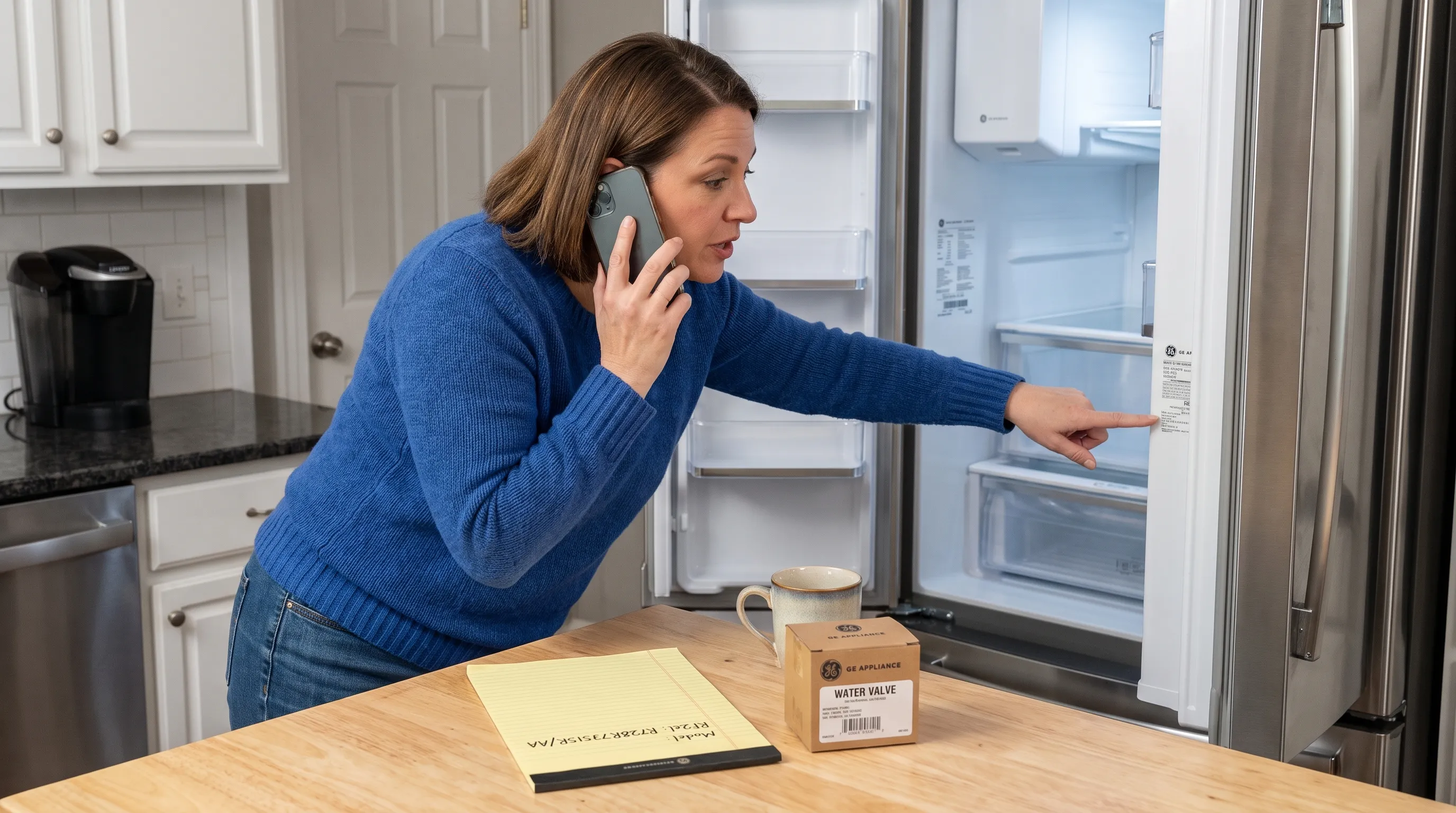
Match the part to the complete appliance model number, not just the brand or appliance name. Two refrigerators from the same product family can use different components. A suffix, production revision or serial-number range may affect compatibility.
Find the appliance’s identification label and copy the model and serial numbers exactly. Use the manufacturer’s parts lookup or documentation to identify the component. For example, Whirlpool’s replacement-parts resources provide a manufacturer starting point rather than relying solely on a marketplace search.
Compare that information with the seller’s compatibility details. A listing that says “fits Whirlpool refrigerators” is less useful than one identifying specific models and applicable restrictions.
A product such as the W11455232 replacement ice maker illustrates why an exact part reference matters. Seeing your appliance brand in the title does not establish that the assembly fits your particular refrigerator.
When compatibility remains uncertain, ask appliance parts distributors to confirm the match in writing using your full model number. Save that response with your order confirmation, especially if the supplier recommends an alternative part.
2. Trace the part number and any replacement numbers
The number printed on a removed component is useful, but it is not always the current orderable part number. You might be looking at a casting number, supplier code or older reference that the manufacturer has replaced.
A part-number supersession means one service part number has been replaced by another. Verify the relationship through manufacturer documentation or a supplier that can explain its source. Do not assume that a similar-looking number represents an interchangeable part.
Listings can also include several cross-reference numbers. For example, a refrigerator defrost thermostat listing with multiple part references should prompt you to verify which reference applies to your appliance, rather than treating every number as a universal fit.
Ask whether the order includes the complete assembly, an individual component or a kit. A replacement may require a harness, bracket or adapter that is not included with the item shown.
Reliable appliance parts distributors should distinguish documented replacement numbers from loose keyword matches. That distinction can prevent ordering a part that looks correct but cannot be installed as intended.
3. Identify whether the part is OEM or aftermarket
An OEM service part is supplied through the appliance manufacturer’s parts channel. An aftermarket part is made by another company as a replacement. Both categories can be relevant, but the listing should clearly identify what is being sold.
“Compatible with” does not mean “made by” the appliance brand. Likewise, “OEM quality” is a marketing description, not proof that a part is genuine OEM. Look for the stated manufacturer, condition and warranty rather than relying on those phrases.
Ask whether the item is new, used, refurbished or open-box. For an aftermarket component, check the manufacturer’s compatibility information and specifications. Similar dimensions do not establish equivalent electrical ratings, temperature limits or operating behavior.
When comparing appliance parts distributors, pay particular attention to components involving heat, mains electricity, gas or protective functions. Ask a qualified technician if you cannot establish whether a substitute is suitable.
For a known safety issue, check the U.S. Consumer Product Safety Commission’s recall database before purchasing. A recalled appliance may require a specific remedy rather than an ordinary replacement part. Do not assume that replacing one component resolves the recall.
4. Check the seller’s identity and actual stock status
A professional-looking storefront is not enough. Look for a business name, working contact details and accessible shipping, return and warranty policies. Test the contact method if the order is expensive or time-sensitive.
Review customer feedback for patterns relevant to parts purchasing: incorrect items, unexplained substitutions, delayed refunds or orders accepted despite unavailable stock. A single complaint does not tell the whole story, but repeated recent problems deserve attention.
The Federal Trade Commission’s online-shopping guidance recommends researching sellers and understanding purchase terms. Payment options with dispute processes can offer additional protection, subject to the provider’s rules and deadlines.
Also distinguish “listed for sale” from “ready to ship.” Ask whether the part is physically available, backordered or shipped by another supplier. For an urgent repair, get an estimated dispatch date as well as the delivery estimate.
Ask appliance parts distributors how they handle stock shortages after checkout. You should know whether they will seek approval for a substitute, allow cancellation or hold the order until the original item becomes available. Save the listing and relevant correspondence in case the terms later change.
5. Compare the delivered cost, not just the unit price
The lowest advertised price may not produce the lowest repair cost. Shipping charges, taxes, handling fees and the cost of a failed return can change the comparison. Missing installation accessories may add another purchase.
Use the checkout total whenever possible. For business purchases, also confirm whether a bulk discount applies to that specific item and whether it changes the return terms.
This hypothetical comparison shows how shipping can reverse the apparent bargain:
| Cost item | Supplier A | Supplier B |
|---|---|---|
| Part price | $38 | $45 |
| Shipping | $12 | $0 |
| Total before tax | $50 | $45 |
These are illustrative figures, not current prices or offers. Compare the same part, condition and quantity before drawing a conclusion.
For appliance parts distributors serving businesses, ask whether quantity pricing requires a minimum order or applies only to selected products. A written quote should identify the exact part, quantity, shipping charge and expected dispatch date.
Delivery timing belongs in the cost comparison too. “Expedited shipping” describes a shipping service, but it does not necessarily mean immediate dispatch. Confirm the order cutoff, processing time and whether all items ship together. A low-cost part that misses the scheduled repair appointment can create extra expense.
6. Read the return policy for the exact part category
A storewide return window does not answer every question about appliance components. Some suppliers apply separate conditions to electrical parts, special orders, installed items or opened packaging.
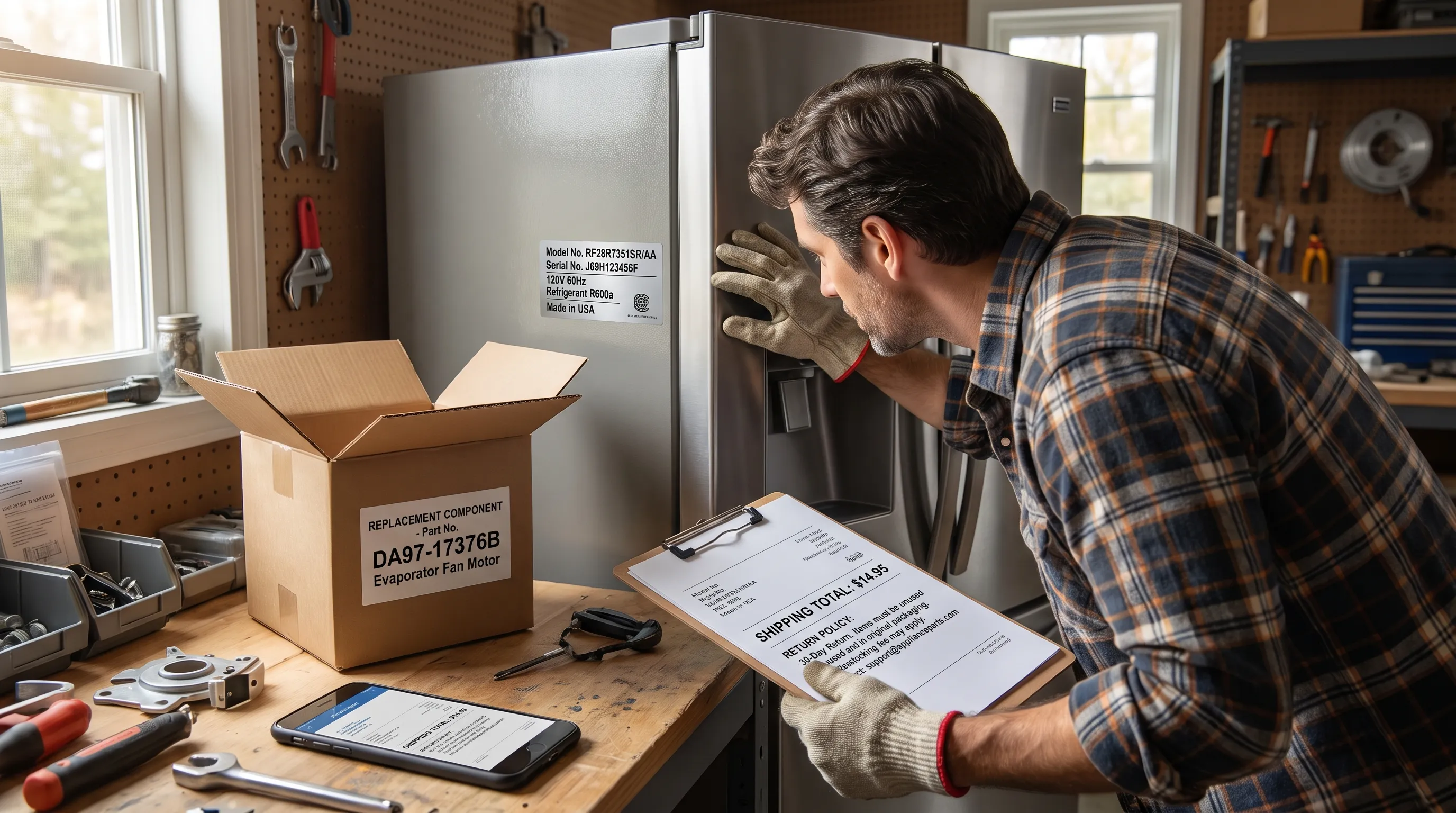
Before ordering, establish when the return period starts, whether opening the package affects eligibility and who pays return shipping. Check for restocking fees and whether a return authorization is required before sending anything back.
A wrong-part return and a defective-part claim may follow different processes. A supplier might accept an unused component under its return policy but handle a defective item through a separate warranty procedure. Ask how a fault discovered during installation would be assessed.
When comparing appliance parts distributors, look for a clear explanation of how incorrect shipments and transit damage are handled. Those situations should not be confused with a customer ordering the wrong item.
On delivery, photograph damaged packaging, check the label against your order and inspect the contents before installation. Keep packaging and documentation until you have confirmed the item is correct and working.
Do not install a questionable part just to see whether it fits. Installation can affect return eligibility, and physical fit alone does not establish safe compatibility. Contact the seller first if connectors, markings or included hardware differ from what you expected.
7. Confirm support and warranty responsibilities
Before payment, find out who helps if the part arrives incorrect, fails or needs additional installation information. Sales support, fitment assistance and technical diagnosis are different services.
A useful supplier response should identify what it can confirm and what requires a technician. If a representative diagnoses an appliance solely from a brief symptom description, seek a more reliable diagnosis before ordering. Several faults can produce the same symptom.
For warranty coverage, check the duration, exclusions and responsible party. Ask whether claims go through the seller or manufacturer, what evidence is required and whether the remedy is replacement, repair or refund. Do not assume labor, troubleshooting or shipping costs are covered.
Appliance parts distributors should make the claims process understandable before a problem occurs. Save the invoice, part number, compatibility confirmation and any warranty documents so you can provide a consistent record.
For maintenance teams, ask about repeat availability and how replacement-number changes are communicated. For a household repair, prioritize accessible support and clear instructions for resolving an incorrect order.
Before handling internal components, disconnect the appliance’s power and follow its service instructions. Gas work, sealed refrigeration-system repairs and tasks beyond your training belong with a qualified professional.
Frequently Asked Questions
Do I need the appliance’s serial number to order a part? Sometimes. The full model number is the starting point, but certain parts vary by production run. Have the serial number available so the seller or manufacturer can check any applicable restrictions.
Are aftermarket appliance parts always a bad choice? No. A clearly identified aftermarket part may be suitable, but suitability depends on documented compatibility and specifications. Do not treat appearance or a broad brand claim as proof of equivalence.
Can I return an electrical part after installing it? That depends on the seller’s policy and the reason for the return. Confirm installed-part restrictions and defective-part procedures before buying, rather than assuming a general return window applies.
Should I buy from the cheapest distributor? Compare appliance parts distributors on confirmed fit, delivered cost, availability and after-sales terms. A small price difference may be worthwhile if it reduces uncertainty or avoids a second order.
Shop with the fit and purchase terms confirmed
Easy Deal USA offers appliance parts alongside home and business products, with fast U.S. shipping, 30-day easy returns and U.S.-based support. When shopping for appliance parts at Easy Deal USA, check the individual listing for compatibility, current availability and applicable purchase terms.
Before completing any order, you should be able to answer three questions: Is this the right part, when will it arrive and what happens if there is a problem? If an answer is missing, resolve it before paying.
Recent Posts
-
How to Hand Wrap a Pallet | Easy Deal USA
A pallet that leaves your dock tight and square should arrive the same way. A pallet that's wrapped …Oct 09, 2026 -
Samsung Dryer Not Heating? Causes and How to Fix It
Your Samsung dryer tumbles, the timer counts down, and the clothes come out just as damp as they wen …Oct 07, 2026 -
How to Store Holiday Decorations in Latching Storage Totes
Every January the same scene plays out: ornaments rolled loose in a cardboard box, a tangle of light …Oct 07, 2026