Wire Shelving Versus Plastic Shelving Compared
A storage shelf can look fine on delivery day and become a daily frustration once it is loaded with bins, cleaning supplies, tools, pantry goods, or shipping inventory. The practical choice in wire shelving versus plastic shelving comes down to what you are storing, where the unit will sit, and how much weight it needs to carry over time.
Wire shelves are often the better fit for garages, utility rooms, storerooms, and business backrooms where airflow and capacity matter. Plastic shelving is usually a strong choice for damp locations, lighter household storage, and quick, simple setup. Neither material is automatically better. The right answer depends on the job.
Wire Shelving Versus Plastic Shelving: Key Differences
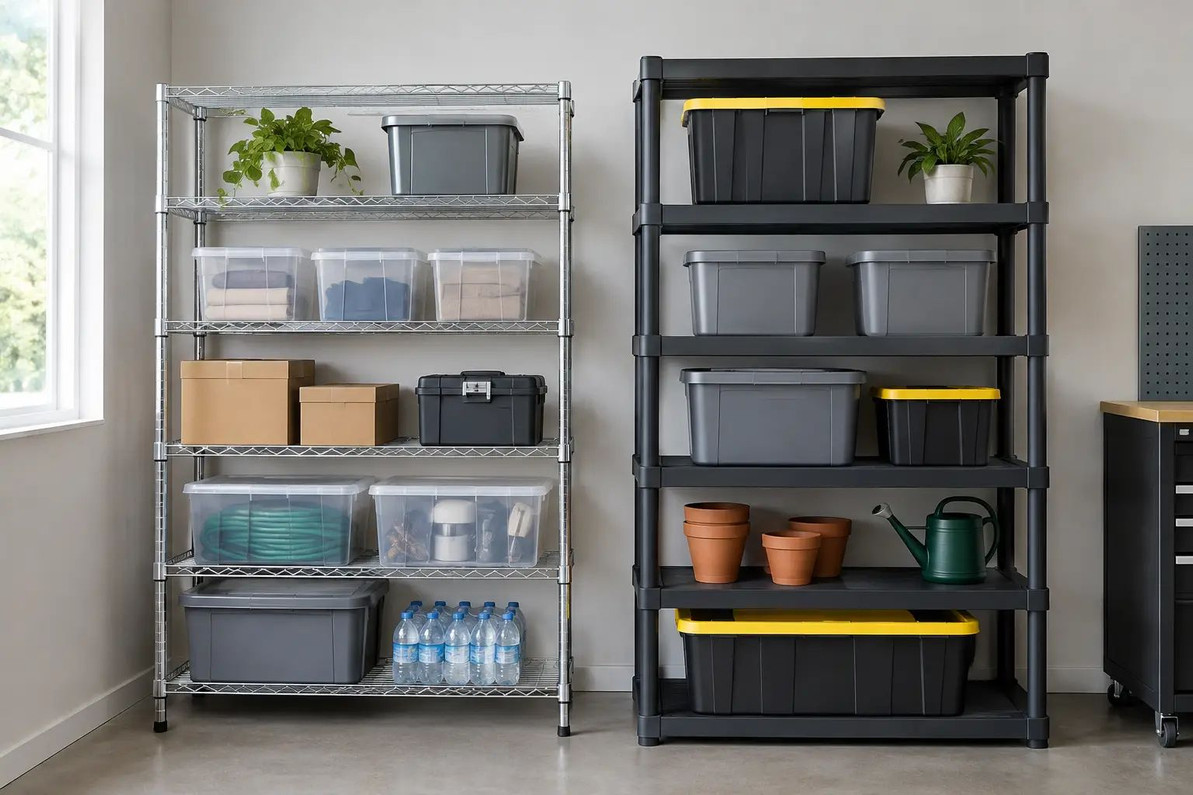
The biggest difference is structure. Wire shelving typically uses steel posts and open wire decks. Many units have an adjustable design, allowing each shelf to move up or down in small increments. That flexibility helps when you need room for tall totes, bulk paper products, small appliances, or cartons of supplies.
Plastic shelving usually has solid molded shelves supported by plastic legs or posts. It does not offer the same industrial appearance or open design as wire, but it can be easy to assemble and easy to wipe down. For laundry rooms, closets, patios with covered storage, and household utility spaces, that can be exactly what is needed.
Capacity is another major divider. Well-built wire shelving commonly handles heavier loads than typical plastic shelving, particularly when weight is spread evenly across the shelf. Plastic units work well for lighter to medium-duty items, but they are not the first choice for dense toolboxes, cases of beverages, heavy equipment, or large quantities of warehouse inventory.
Always check the stated weight capacity for the complete unit and for each shelf. Do not assume every shelf in a product line has the same rating. A shelf's real-world performance also changes with the load shape, shelf span, assembly quality, and whether the unit is level.
When Wire Shelving Makes More Sense
Wire shelving earns its place in hardworking storage areas. The open grid lets air move around stored items, which is useful in garages, basements, stockrooms, janitorial closets, and pantry spaces. Better airflow can help reduce trapped dust and moisture around boxes and containers.
It is also easier to see what is stored. Small items may need bins or shelf liners, but cartons, labeled totes, and supplies remain visible from multiple sides. For a small business handling packing supplies or fulfillment inventory, that visibility can speed up restocking and picking.
Strength for heavier storage
Choose wire shelving when your storage plan includes heavier or frequently changing loads. Common examples include tool cases, paint and maintenance supplies, bulk household goods, shipping materials, replacement parts, and storage totes. Metal construction generally provides a firmer platform for these applications than molded plastic.
Adjustable wire shelving is especially useful when one rack needs to serve several purposes. A lower shelf can hold larger bins while upper shelves keep lighter, smaller items within reach. This makes it a practical option for renters, homeowners, maintenance teams, and warehouse operators who expect their storage needs to change.
Open shelves have a trade-off
The same open design that improves airflow can create a few inconveniences. Small loose objects can tip or fall through the gaps. Spills may drip onto lower shelves, and some wire shelves can leave light impressions on soft cardboard boxes over long periods.
Shelf liners, trays, or bins solve many of these issues. If you store bottles, small hardware, cleaning products, or loose packaged goods, plan for containers that match the shelf dimensions. This small addition can make a wire rack far more functional.
Moisture and finish matter
Not all wire shelving is intended for wet or humid conditions. Chrome-style finishes are common and look clean indoors, but they may not be the best option for a consistently damp basement, outdoor area, or washdown environment. For areas with regular moisture exposure, look for shelving designed with an appropriate corrosion-resistant finish.
Even with a suitable finish, wipe up standing water and avoid placing a wire rack directly in a location where it will stay wet. A shelving unit lasts longer when it is kept level, clean, and away from conditions that exceed its intended use.
When Plastic Shelving Is the Better Buy
Plastic shelving is appealing because it is straightforward. Many units are lightweight, quick to move, and simple to assemble without complex tools. For a household that needs a place for detergents, towels, seasonal decor, or lightweight storage bins, plastic can offer good everyday value.
Solid shelves are helpful when you want a continuous surface. A bottle, small container, or oddly shaped item does not need a liner to stay stable. That makes plastic shelves convenient for laundry supplies, plant-care products, craft materials, and cleaning items.
A practical option for damp utility areas
Plastic does not rust, which makes it a sensible material for damp utility rooms, certain basement storage areas, or covered outdoor storage where the shelf will not be exposed to harsh weather. It is also easy to clean after a spill. In many cases, a damp cloth and mild household cleaner are enough.
That said, plastic is not immune to wear. Extended sun exposure can weaken or fade some plastics, and extreme heat or cold can affect performance. If a shelf will live in a hot garage, unconditioned shed, or outdoor space, confirm that the product is intended for those conditions.
Know the limits of lighter construction
Plastic shelving can be a poor fit when the load is dense, heavy, or concentrated in one spot. A few heavy buckets, a large appliance part, or stacks of boxed inventory can cause a lighter shelf to sag over time. Weight should be distributed across the shelf rather than piled in the center or at the front edge.
For this reason, plastic works best when the contents are relatively light and easy to handle. Think household overflow, linens, paper goods, kids' storage bins, and cleaning supplies. If you regularly load and unload heavy merchandise, metal wire shelving will usually be the more dependable choice.
Compare the Storage Area Before You Buy
Before choosing either material, measure the space and map out how the rack will be used. A shelf that technically fits may still block a doorway, crowd a water heater access area, or leave too little room to pull out bins. Measure width, depth, height, and the clearance needed in front of the unit.
Consider the floor as well. Uneven concrete can make any tall shelving unit feel unstable. Adjustable feet can help in some setups, but they do not replace careful placement. Heavier racks should be positioned on a sound, level surface, and tall units may need to be secured according to the manufacturer's instructions, especially where they could be bumped.
The type of container you use matters too. Clear plastic totes work well on either material. Cardboard boxes may benefit from the support of a solid plastic shelf or a wire shelf liner. For wire racks, choose bins with a stable, flat base so they do not rock on the grid.
Cost, Setup, and Long-Term Value
Plastic shelving can have a lower initial cost, especially for compact household units. It may be the economical choice when the load is light and the storage need is temporary or seasonal. Its lighter weight also makes it easier to relocate during a move, garage cleanup, or room reorganization.
Wire shelving can cost more upfront, particularly in larger, heavier-duty sizes. Its value often shows up over time through higher capacity, adjustable shelves, and a design that can move from a pantry to a garage, stockroom, or workshop as needs change. For business storage, buying a rack that safely handles the expected load can prevent the cost and inconvenience of replacing undersized shelving later.
Assembly is worth considering. Plastic units are often designed for quick snap-together installation. Wire shelving may require a little more attention to shelf clips, leveling, and placement, but the process is typically manageable with the instructions and a careful check that every shelf is seated evenly.
Which Shelving Should You Choose?
Pick wire shelving if you need higher capacity, adjustable shelf positions, airflow, and a more versatile rack for a garage, workshop, pantry, warehouse, or business backroom. Add bins or liners when you store small items or want a solid surface.
Pick plastic shelving if you need an easy-clean, rust-free option for lighter household storage, a laundry area, or a damp utility space. Keep the load within the listed rating and avoid using it as a substitute for heavy-duty warehouse shelving.
The best shelf is the one that matches the weight, space, and daily use you actually have. Start with the heaviest item you plan to store, measure the area twice, and choose a unit with enough capacity and clearance to stay useful long after the first round of organizing.
Recent Posts
-
How to Organize Toys With Clear Storage Bins
Toy clutter tends to peak right before the holidays, when birthday gifts from the year are still sca …Oct 23, 2026 -
Folding Chairs for Church Halls and Community Centers
Church halls, fellowship rooms and community centers ask more of their seating than almost any home. …Oct 23, 2026 -
Restaurant Bus Cart Guide: Using a Utility Cart for Bussing
Every busy dining room hits the same wall at some point in a shift: dirty plates stack up, servers m …Oct 23, 2026