
Stove Repair Parts to Check When a Burner Won't Heat
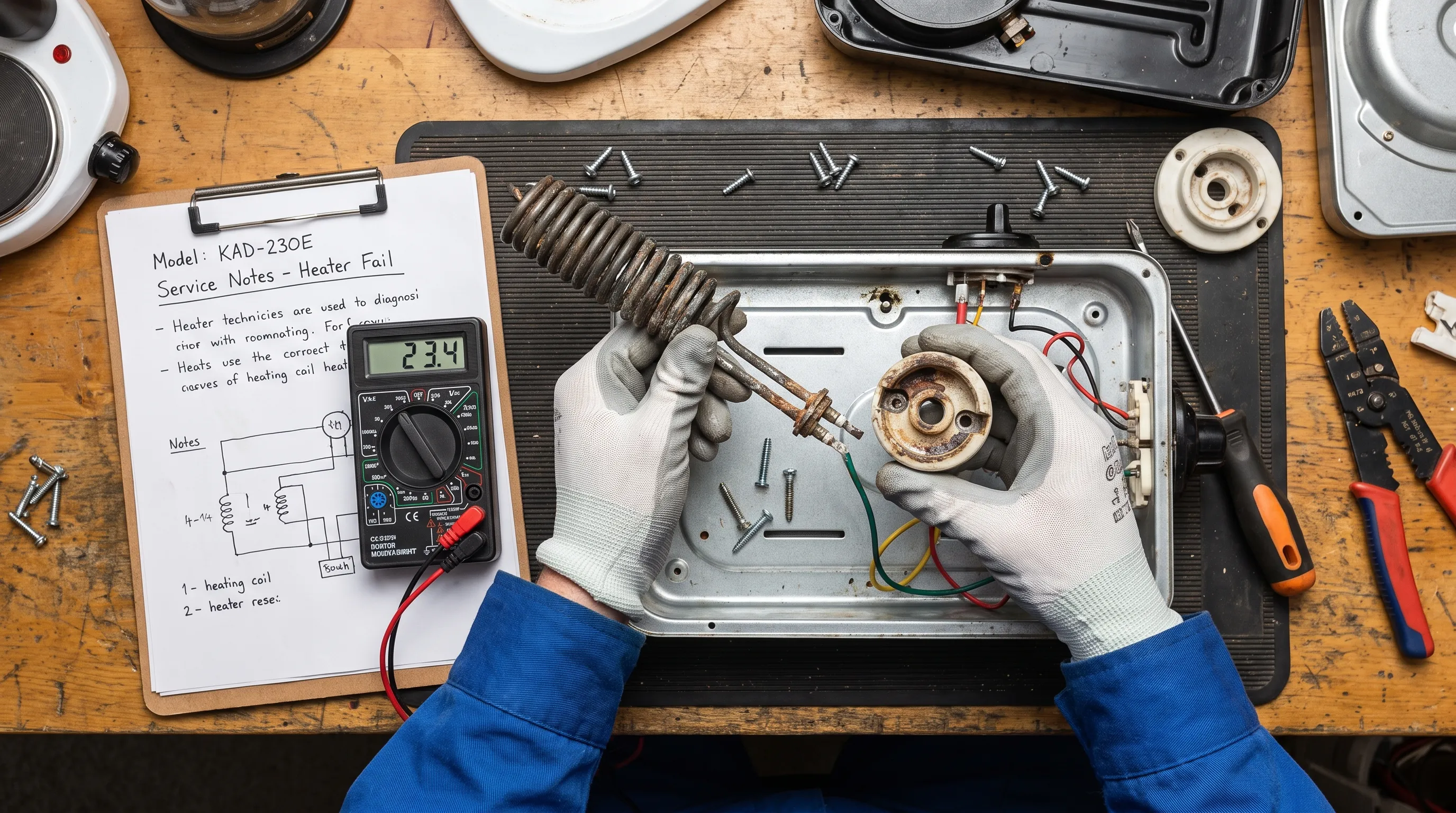
When one burner stays cold, the right stove repair parts depend on whether you have an electric coil, smooth-top radiant, gas or induction cooktop. A failed heating element is only one possibility. A loose connection, damaged control switch, misplaced burner cap or incompatible pan can produce a similar symptom.
Start by identifying the burner type and checking whether the problem affects one cooking zone or the entire appliance. That distinction helps you avoid ordering a part that will not fix the problem.
Before checking anything, make the stove safe
Turn every burner control off and let the cooktop cool completely. Before removing a user-serviceable electric element or inspecting connections, disconnect electrical power as directed by the manufacturer. Turning the burner knob off does not disconnect power to the appliance.
Do not pull out a heavy range just to reach its plug. If you cannot safely isolate power or access a part, leave the inspection to an appliance technician.
If you smell gas, stop troubleshooting immediately. Leave the building without operating electrical switches, using a phone indoors or creating a flame. Call your gas utility or emergency services from a safe location outside.
For any burner type, stop using the appliance if you notice melted wiring, a scorched connector, repeated breaker trips or broken cooktop glass. Keep combustible items away during normal cooking, consistent with NFPA’s cooking fire safety guidance.
Which stove repair parts match your cooktop?
“Burner” describes several different heating systems. Identify yours before searching for replacements.
| Cooktop type | How it produces heat | Parts or conditions to investigate |
|---|---|---|
| Electric coil | An exposed resistance element gets hot | Coil element, burner receptacle, wiring connections and control switch |
| Smooth-top radiant | A resistance element heats beneath the glass | Radiant element assembly, limiter, switch or electronic control |
| Gas | Gas burns through openings around a burner head | Burner cap placement, blocked ports, spark electrode and ignition system |
| Induction | A magnetic field heats compatible cookware | Pan compatibility, control settings, power supply and internal electronics |
Also check the other burners. If only one fails, a local component becomes more likely. If several fail at once, shared power, controls or ignition components deserve attention before you buy multiple replacement burners.
Write down what happens when you turn the affected burner on: no response, clicking without flame, partial heating or an error code. These details are more useful than simply saying the stove is broken.
Electric coil burners: check the element and its connection
For exposed-coil models, the most relevant stove repair parts are usually the heating element, its plug-in receptacle and the control switch. Each plays a different role, so replacing the coil alone is not always the answer.
Inspect the removable heating element
With power disconnected and the burner cold, consult the owner’s manual to confirm whether the coil is designed for user removal. Some elements pull out of a receptacle, while others have different mounting arrangements.
Look for a broken coil, pronounced blistering, damaged terminal ends or signs that the element was not seated correctly. If the manual permits it and there is no damage, reseating a loose element may restore its connection.
Do not force the terminals into place or bend them to fit. A heating element can also fail internally while looking normal, so appearance alone cannot confirm that it works.
A technician can test a disconnected element for continuity and resistance, using the model’s specifications. Avoid testing energized terminals or relying on a generic resistance value found online.
Check the receptacle and control switch
The receptacle supplies power to a plug-in coil. Heat damage, looseness or corrosion at that connection can prevent heating or cause intermittent operation. A new coil installed into a damaged receptacle may not solve the problem.
When selecting stove repair parts for a coil burner, include the receptacle in the diagnosis rather than treating it as a passive socket. Scorching or melted insulation calls for professional inspection of the connector, wiring and element terminals.
Many conventional electric ranges use an infinite switch to regulate the burner’s output. A failed switch can prevent power from reaching an otherwise functional element. Its shaft shape, terminals and electrical rating must match the application; a similar-looking switch is not necessarily interchangeable.
Smooth-top burners: distinguish normal cycling from failure
Radiant burners beneath glass commonly cycle on and off while cooking. That cycling is not automatically a fault. Diagnose whether the cooking zone heats at all, reaches the selected output or loses only one section of a dual-zone element.
If the inner ring works but the outer ring does not, the problem may involve one heating circuit, the element assembly or its control. If neither ring heats, a failed element, switch, connection or electronic control could be responsible.
The radiant element and limiter
A radiant element assembly may include a temperature limiter that protects the cooktop from excessive heat. Depending on the model, a failed limiter may require replacement of the assembly rather than a separately sold component.
The stove repair parts for a glass-top range must match the heating zone’s diameter, wattage, mounting points and number of circuits. Diameter alone is not enough to establish compatibility.
Access often requires lifting or removing the cooktop and working near fragile glass and electrical wiring. Unless the manufacturer provides a user-service procedure you can safely follow, have a technician diagnose the element and controls before ordering. Never bypass a limiter to make a burner heat.
Gas burners: check placement and cleanliness before ignition parts
A gas burner that will not heat needs a different diagnostic approach. First determine whether it fails to ignite or lights but produces a weak or uneven flame. Do not keep attempting ignition if gas is flowing without lighting; follow the appliance’s instructions for failed ignition.
Before buying stove repair parts for a gas cooktop, check the removable cap and burner head with the appliance off and cool. A simple placement or cleaning issue can resemble an ignition failure.
Burner caps and blocked ports
A cap that sits crookedly can disrupt ignition and flame distribution. Remove and reposition it only as described in the owner’s manual, ensuring it belongs to that burner. Caps from different burner sizes may look similar but are not interchangeable.
Food residue can block flame ports, particularly after a boil-over. Clean removable components using the manufacturer’s approved method, then let them dry thoroughly before reassembly.
Do not drill ports, enlarge openings or insert tools into a gas orifice. These openings control gas flow, and changing them can create unsafe combustion. If a properly assembled burner still produces an abnormal flame, stop using it and arrange service.
Spark electrodes and ignition components
A spark electrode creates the spark that lights gas at the burner. Cracked ceramic insulation, contamination or a damaged connection can interfere with ignition. Clicking alone does not prove that the electrode is sparking correctly at the burner.
If several burners lose ignition together, the shared spark module, ignition switches or electrical supply may be involved. On some designs, all electrodes spark when one burner is selected, so that behavior alone does not indicate failure.
Leave gas valve, regulator, manifold and fuel-conversion work to a qualified professional. A replacement electrode also needs model-specific positioning and compatibility.
Induction cooktops: rule out cookware and settings
An induction cooking zone does not operate like a radiant burner. It transfers energy into compatible cookware, so the absence of a glowing element is normal. The glass can still become hot from contact with the pan.
Test with a pan known to work on another induction zone, following the cooktop’s minimum pan-size requirements. Center it on the affected zone and check that the controls are not locked. A magnet sticking firmly to the pan’s base is a useful screening check, but it does not guarantee that every cooktop will detect that pan.
When the issue is inside the appliance
Record any error code and consult the model’s manual before resetting power. If the problem persists with suitable cookware and correct settings, diagnosis may involve a sensor, induction coil assembly, power electronics or another model-specific component.
Unlike a removable electric coil, induction stove repair parts usually sit within an electronically controlled system. Replacing a board based only on a symptom can be expensive and unsuccessful.
Internal electronics can also retain hazardous electrical energy after disconnection. Have a technician evaluate the appliance rather than opening it for exploratory testing.
How to order a replacement that actually fits
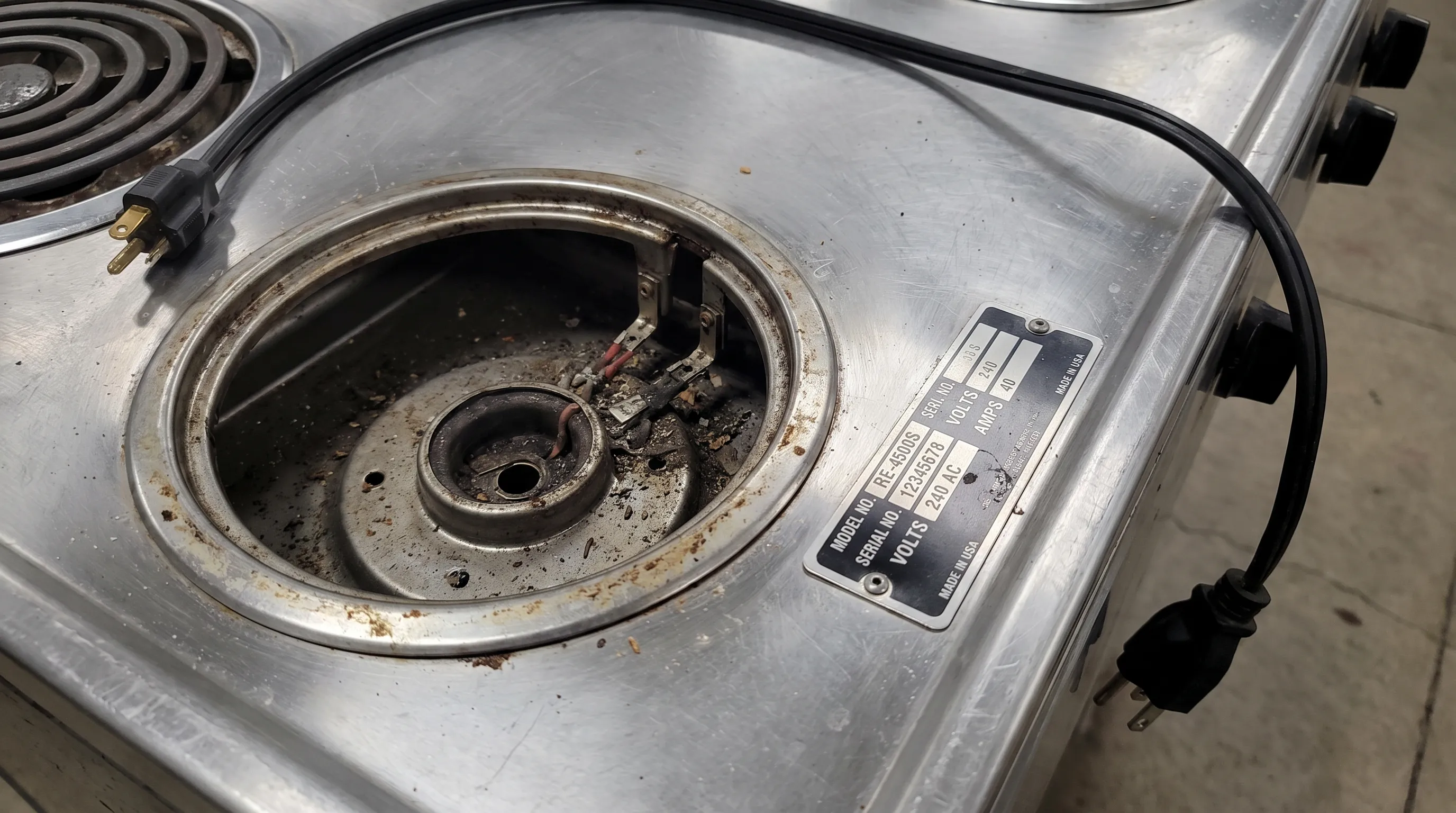
The complete model number matters more than the brand name or the part’s appearance. Two ranges from the same manufacturer can use different elements, switches and ignition components despite having similar cooktops.
Find the appliance’s model label using the owner’s manual. Common locations include the oven door frame, the drawer area or a label beneath a separate cooktop. Do not move or dismantle the appliance merely to hunt for the label.
Before ordering, gather these details:
- Complete model number: Include every letter, number and suffix shown on the label.
- Serial number: Some manufacturers use production changes to determine compatibility.
- Burner location: Specify front or rear, left or right and the cooking-zone size.
- Part identification: Record the manufacturer’s part number and any documented replacement number.
- Connection details: Confirm terminals, mounting points, electrical rating and applicable fuel type.
When comparing stove repair parts, treat a seller’s compatibility list as a starting point, not a substitute for checking your exact model. A photograph cannot confirm wattage, internal circuitry or the correct terminal arrangement.
For gas components, natural gas and propane requirements must also be respected. Do not assume a part can be converted or used with either fuel unless the manufacturer explicitly specifies that application.
When to call an appliance technician or electrician
A service call is the better next step when the diagnosis requires live electrical measurements, opening the cooktop, repairing damaged wiring or disturbing gas connections. Repeatedly replacing plausible parts can cost more than identifying the fault first.
If several electric burners stop heating together, the incoming electrical supply may need checking. Some ranges can have working lights or controls while lacking the supply needed for proper heating. An appliance technician or licensed electrician can determine whether the fault is in the range or the home’s electrical system.
Also arrange service for a burner that will not turn off, persistent abnormal gas flames or recurring electrical faults. Keep the affected appliance disconnected or out of use as appropriate until it has been assessed.
Frequently asked questions
Should I replace the heating element first when one burner will not heat? Not automatically. The element is one candidate, but a failed receptacle, control switch or connection can produce the same symptom. Diagnose the circuit before choosing stove repair parts.
Can I use a universal replacement burner? Only when its documented compatibility includes your exact model and required specifications. Matching the diameter or connector shape alone is insufficient.
Why does my gas burner click but not light? Possible causes include a misplaced cap, moisture, blocked burner ports or an ignition fault. Follow the manual’s failed-ignition procedure and stop immediately if you smell gas.
Is a radiant burner defective if it turns on and off? Not necessarily. Cycling is a normal part of heat regulation on many models. A burner that never heats, heats only partially or cannot be controlled needs further diagnosis.
Can I return a part after installing it? Check the retailer’s return conditions before ordering or installing. Do not assume every installed electrical or gas component is eligible for return.
Shop with your model number in hand
Once the fault is identified, use the complete model number and confirmed part number to guide your search. You can browse Easy Deal USA’s appliance parts and other practical products, then review the listing’s compatibility details before purchasing. If fit is unclear, ask U.S.-based support before placing the order rather than relying on visual similarity.
Recent Posts
-
How to Hand Wrap a Pallet | Easy Deal USA
A pallet that leaves your dock tight and square should arrive the same way. A pallet that's wrapped …Oct 09, 2026 -
Samsung Dryer Not Heating? Causes and How to Fix It
Your Samsung dryer tumbles, the timer counts down, and the clothes come out just as damp as they wen …Oct 07, 2026 -
How to Store Holiday Decorations in Latching Storage Totes
Every January the same scene plays out: ornaments rolled loose in a cardboard box, a tangle of light …Oct 07, 2026