How to Protect Hardwood Floors From Furniture Scratches
One dragged chair can leave a scratch on a hardwood floor that never fully goes away. Kitchen chairs, dining tables and heavy cabinets do the most damage because they move every day or press down on a small spot for years. The good news is that learning how to protect hardwood floors from furniture is cheap and fast. A pack of self-stick felt pads and a few minutes per room stop most scratches and dents before they start.
This guide covers which furniture needs pads, how to apply them so they stay put, and when to replace them.
Why Furniture Scratches Hardwood Floors
Most floor damage comes from three things:
- Sliding. Bare wood, metal or plastic legs drag grit across the finish every time a chair moves.
- Point pressure. Heavy pieces on narrow legs press into softer woods and leave dents over time.
- Trapped dirt. Sand and small stones stuck under a leg act like sandpaper.
Felt pads address all three. They give the leg a soft, wider contact surface, they glide instead of grinding, and they keep hard leg edges off the finish. The same idea works on tile, laminate, vinyl plank and other hard surfaces.
Which Furniture Needs Felt Pads First
If you are starting from scratch, work in order of how often each piece moves:
- Kitchen and dining chairs. They move dozens of times a day and cause the most scratches.
- Desk chairs without casters and bar stools. Constant shifting and swiveling.
- Dining and coffee tables. Moved for cleaning and bumped often.
- Heavy storage pieces. Cedar chests, curio cabinets, dressers and bookcases rarely move but can dent the floor or scrape it badly when you do move them.
- Decor and small items. Plant stands, lamps, side tables and even the bottoms of folding chairs used for guests.
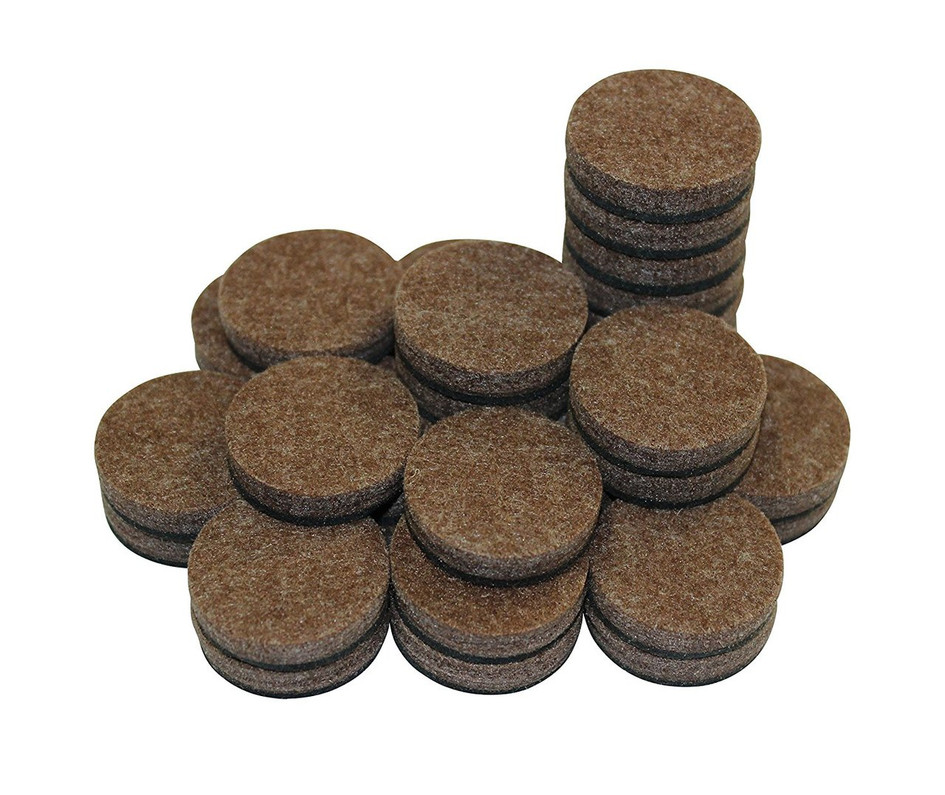
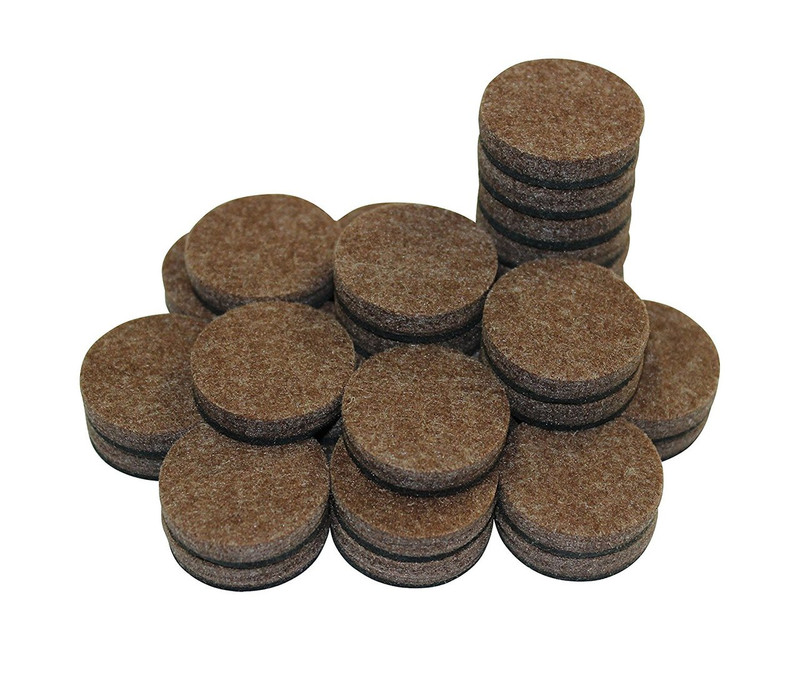
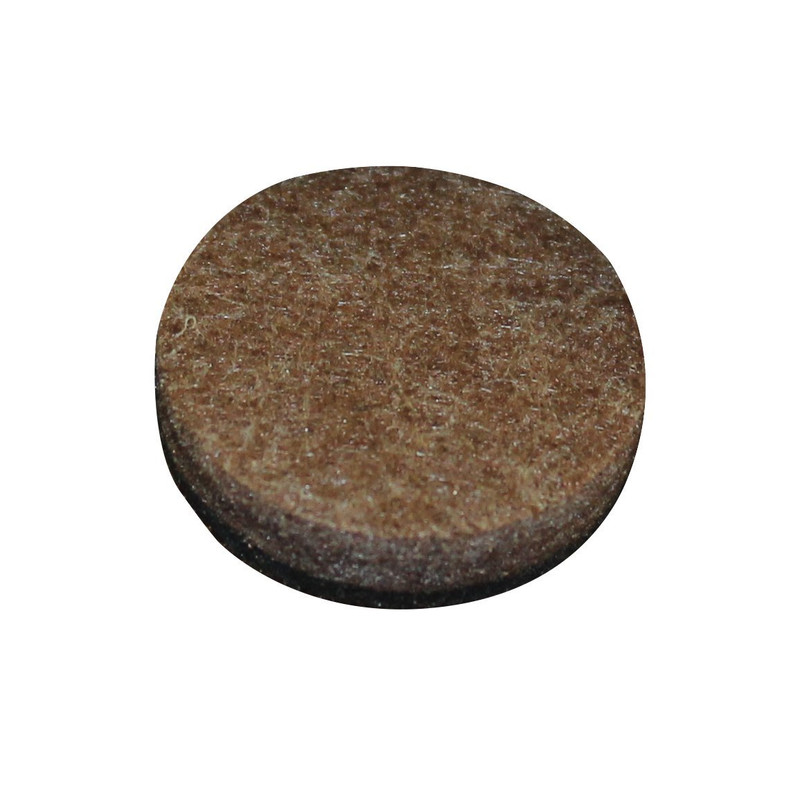
Our Self-Stick Furniture Round Felt Pads are 1 inch round and come 50 to a pack, which is enough to cover several chairs and tables in one go. The listing names tables, cedar chests, chairs, curio cabinets and desks as typical uses. They are available in brown to blend with darker wood and grey for lighter or gray-toned floors.
How to Apply Felt Pads So They Stay On
Most pads that fall off were stuck onto a dirty or uneven leg. Follow these steps:
- Flip the furniture. Turn chairs upside down on a towel or rug. For heavy pieces, have a helper tilt them one side at a time. Do not try to lift a heavy cabinet alone.
- Remove old pads and glue. Peel off worn pads and scrape away old adhesive and stuck debris.
- Clean the leg bottom. Wipe with a cloth dampened with rubbing alcohol to remove dust, wax and oils. Let it dry completely.
- Check the size. The pad should cover the leg bottom without hanging far past the edge. Overhanging felt catches and peels. A 1 inch round pad suits many chair and table legs; measure yours first.
- Peel and press. Center the pad, then press firmly for 30 seconds or so. Pressure is what makes a self-stick adhesive bond.
- Let it set. If you can, leave the furniture upside down or unused for a few hours so the adhesive can grab before the pads take any sliding force.
Angled and Uneven Legs
Some chair legs splay outward, so only one edge of the leg bottom touches the floor. Place the pad where the leg actually contacts the floor, not dead center, or sand a tiny flat spot first. On metal chair feet with plastic caps, clean the cap well since smooth plastic gives adhesive less to hold.
More Ways to Protect Hardwood Floors From Furniture
- Lift, do not drag. When moving heavy furniture, lift it or use a dolly with soft wheels. Felt pads help with daily movement but are not meant for sliding a loaded dresser across the house.
- Use rugs under high-traffic zones. A rug with a non-slip pad under the dining table protects the area where chairs move most.
- Sweep often. Grit under pads works its way into the felt and can scratch. Sweep or dust mop high-traffic rooms regularly.
- Mind rolling chairs. Felt pads are for fixed legs. Office chairs with casters need a chair mat instead.
- Control humidity. Wood floors expand and contract with the seasons. Keeping indoor humidity steady helps the finish resist dents.
When to Replace Felt Pads
Check pads every few months, and right away if you hear a chair scrape. Replace them when the felt is flattened, dirty and hard, torn, or starting to peel. Busy kitchen chairs may need fresh pads a few times a year, while a curio cabinet can go much longer. Keeping a spare pack in a drawer makes this a two-minute job.
Frequently Asked Questions
Do felt pads really protect hardwood floors?
Yes, when they are clean, the right size and replaced when worn. They cushion the leg, spread out pressure and let furniture glide instead of scraping the finish.
Why do my felt pads keep falling off?
The most common causes are a dirty or waxy leg, a pad that hangs over the edge, or using the furniture before the adhesive set. Clean the leg with rubbing alcohol, size the pad to the leg and press firmly.
What color felt pads should I choose?
Pick the color least likely to show. Brown suits medium and dark wood, while grey blends with gray-washed or lighter floors and most tile.
Can I use felt pads on tile and laminate floors?
Yes. Felt pads work on most hard surfaces, including tile, laminate and vinyl plank, as well as hardwood.
Protect Your Floors Today
A few minutes with felt pads saves a costly floor refinish later. Order the brown felt pads or grey felt pads, and explore more household essentials in our Home and Garden department.
Recent Posts
-
How to Organize Toys With Clear Storage Bins
Toy clutter tends to peak right before the holidays, when birthday gifts from the year are still sca …Oct 23, 2026 -
Folding Chairs for Church Halls and Community Centers
Church halls, fellowship rooms and community centers ask more of their seating than almost any home. …Oct 23, 2026 -
Restaurant Bus Cart Guide: Using a Utility Cart for Bussing
Every busy dining room hits the same wall at some point in a shift: dirty plates stack up, servers m …Oct 23, 2026