
How to Label Moving Boxes: A System That Saves Hours
Most moving stress shows up on unpacking day: a kitchen full of boxes marked only "stuff," movers asking where everything goes, and the coffee maker hiding somewhere in a stack of thirty identical cartons. Learning how to label moving boxes the right way fixes that. A clear labeling system takes a few extra seconds per box while you pack and saves hours when you arrive. This guide covers a simple room-and-number system, what to write on every label, where to put labels, and the supplies that make it faster.
Whether you are moving across town, into a dorm or relocating a small office, the same steps apply.

Why Labeling Moving Boxes Matters
Good labels do three jobs. They tell movers or helpers which room each box belongs in, they tell you what is inside without opening it, and they flag boxes that need special handling. Without labels, boxes get dropped wherever there is floor space, and you end up moving them twice.
How to Label Moving Boxes: The Room and Number System
This system is simple enough for anyone helping you to follow.
- Assign each room a code. Use short names such as KIT for kitchen, LR for living room, BR1 and BR2 for bedrooms, BATH, OFFICE and GAR for garage. If you like color coding, give each room a color too.
- Number every box. Label boxes in order as you pack them: KIT 1, KIT 2, KIT 3 and so on.
- Keep a master list. In a notebook or spreadsheet, write each box number and a short contents list. If a box goes missing, you will know exactly what was in it.
- Add priority markers. Mark boxes you need first with OPEN FIRST, and boxes that can wait with a simple LATER.
- Label the destination rooms. At the new home, tape a matching sign to each room's door frame so movers can match codes without asking.
What to Write on Every Moving Box Label
Keep labels short and consistent. Each one should include:
- The room code and box number, written large.
- A brief contents summary, such as "pots and pans" or "winter coats."
- Handling notes when needed: FRAGILE, THIS SIDE UP or HEAVY.
- Your last name, if you are using a shared moving truck or storage unit.
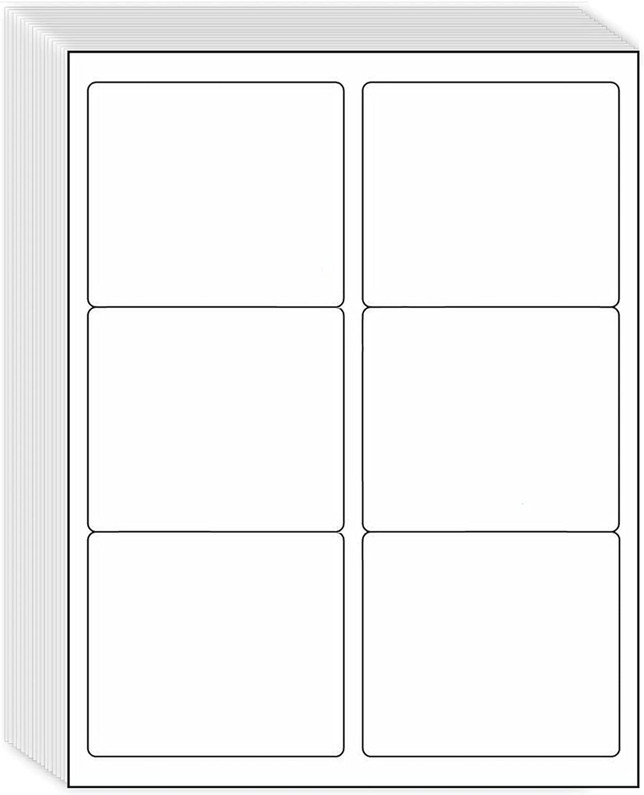
Printed labels are easier to read than marker on cardboard, especially on brown boxes. Laser and inkjet printers both work with sheet labels like the 6000 Premium Address Shipping Labels, which measure 3 1/3 by 4 inches, print 6 per sheet and are made from white paper with a strong adhesive. That size leaves room for a big room code plus a few lines of contents. Set up one template with your room codes, print a full sheet per room and number them by hand as you pack.
Where to Put Labels on Moving Boxes
Placement matters as much as what you write.
- Label two sides, not just the top. Once boxes are stacked, the top is hidden. Put one label on the top and one on a long side so you can read it in a stack.
- Keep labels off the seams. Labels placed across a flap get cut when you open the box. Place them on a flat panel.
- Use the same spot on every box. For example, top right corner of a long side. Helpers learn where to look.
- Do not reuse old labels. Cover or remove old shipping labels and markings so nobody gets confused.
Use Small Labels for Parts and Cords
Tiny sheet labels are handy for the little things that cause the most frustration on moving day. The 30-up Self Adhesive Labels print 30 labels per sheet on laser or inkjet printers, which is useful for marking cords, bags of furniture hardware, remote controls and shelf pins. Write which piece of furniture each bag belongs to, then tape the bag to that item or keep all hardware bags in one box labeled OPEN FIRST.

Seal the Box Before You Label It
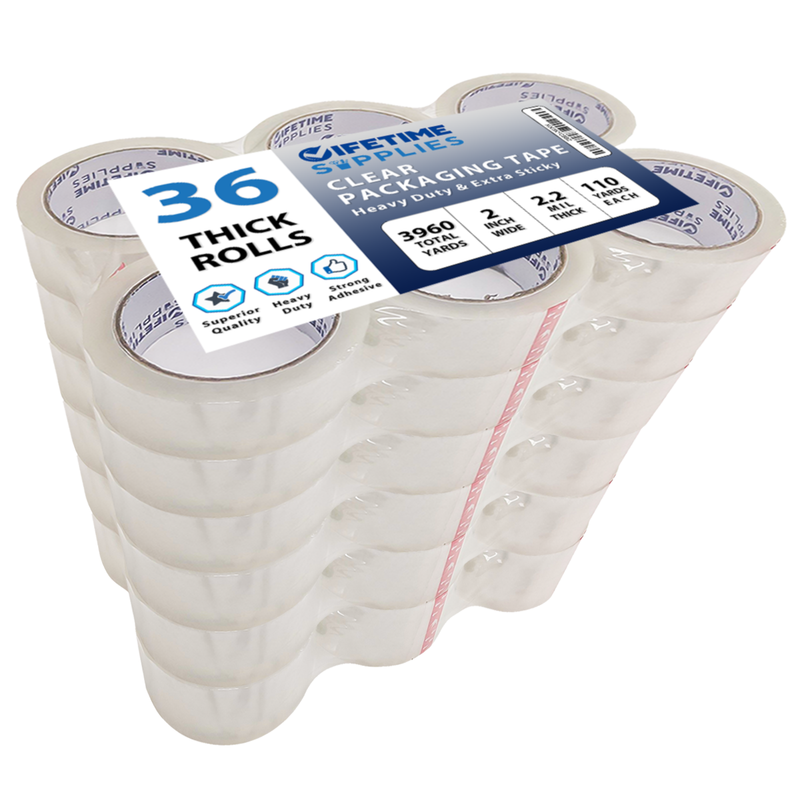
Labels stick best on a clean, sealed box. Tape the bottom first with a strip along the center seam and strips across the edges, fill the box, then seal the top the same way. Press labels on firmly after taping so they lie flat. For a whole-house move, buying tape in bulk keeps you from running out mid-pack. The 36 Rolls Carton Sealing Packing Tape comes in 2 inch wide rolls in clear or brown, with two roll lengths to choose from. Clear tape can also go over a paper label to protect it from rain or scuffs, as long as it does not cover anything a mover needs to write on.
Moving Box Labeling Checklist
- Room codes chosen and written on a sign for each room at the new place.
- Labels printed for each room before packing starts.
- Every box numbered and recorded on a master list.
- Labels on the top and one side of each box, away from seams.
- FRAGILE, HEAVY and OPEN FIRST boxes clearly marked.
- Hardware bags and cords labeled with the item they belong to.
Safety note: mark heavy boxes clearly and keep each box to a weight one person can lift comfortably. Pack books and tools in smaller boxes, lift with your legs and use a dolly or hand truck for heavy loads.
Frequently Asked Questions
Is it better to write on moving boxes or use labels?
Printed labels are cleaner and easier to read from a distance, and they make it simple to reuse boxes later. Marker works in a pinch, but write large and on two sides.
Should I color code moving boxes?
Color coding helps a lot when friends or movers are unloading. Pair each color with a room code so the system still works if colors look similar in low light.
What does OPEN FIRST mean on a moving box?
It marks the essentials you will need the first night: bedding, toiletries, a few dishes, phone chargers, basic tools and furniture hardware. Load these boxes last so they come off the truck first.
How many labels do I need for a move?
Plan on at least two per box, plus extra for cords, hardware and room signs. Printing a full sheet per room as you go avoids running short.
Get Your Labeling Supplies Ready
A labeling system only takes an evening to set up and pays off the moment the truck arrives. Stock up on printable shipping labels, small 30-up labels and carton sealing tape, or browse all shipping supplies at Easy Deal USA.
Recent Posts
-
How to Label Moving Boxes: A System That Saves Hours
Most moving stress shows up on unpacking day: a kitchen full of boxes marked only "stuff," movers as …Nov 06, 2026 -
Hot Cocoa Bar Setup With a Folding Table
A hot cocoa bar is one of the easiest ways to make a holiday gathering feel special. Guests mix thei …Nov 06, 2026 -
Folding Chairs for Office Meeting and Training Rooms
When a team meeting grows from eight people to twenty, or a quarterly training session needs a room …Nov 06, 2026
