How to Hand Wrap a Pallet | Easy Deal USA
A pallet that leaves your dock tight and square should arrive the same way. A pallet that's wrapped loosely shifts, leans and spills, and damaged freight costs you product, time and customer trust. Learning how to hand wrap a pallet with stretch film correctly takes a few minutes, needs no machine and makes a real difference in how your loads hold up in transit and in storage.
Safety note: walking in circles around a pallet can make you dizzy, so pause between loads. Keep the floor around the pallet clear of film scraps, use a safety cutter rather than an open blade, and never wrap a pallet while it's raised on a forklift.
What You Need
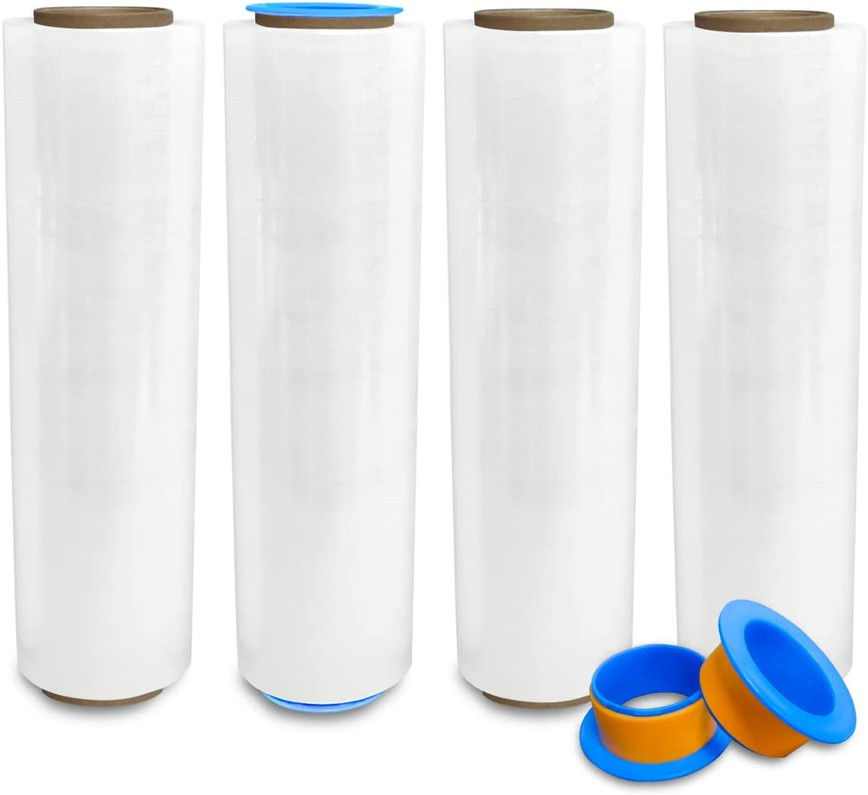
- Hand stretch film sized for manual wrapping. Hand rolls are typically 12" to 20" wide. Wider rolls cover more of the load with each pass; narrower rolls are lighter and easier to control.
- A dispenser or roll holder to keep tension even and save your hands.
- A safety cutter for the film tail.
- Gloves for grip.
- Optional: corner boards for crushable or stacked cartons, and a top sheet for dust or moisture protection.
Choosing the Right Stretch Film
Gauge (thickness)
Gauge describes film thickness. A higher gauge is thicker and more puncture-resistant. Mid-range film such as 80 gauge is a common general-purpose choice for boxed goods of moderate weight. Heavy, sharp-cornered or irregular loads call for a thicker film; light, uniform cartons may need less.
Cast vs. blown film
Cast film is generally clearer, quieter as it unwinds and clings well, which makes it easy to work with. Blown film is typically tougher and more resistant to punctures and tears. Check the product details for which type a roll is.
Core size and dispenser fit
Match your dispenser to your roll's core diameter and width. The Stretch Film Dispenser Pole Holder fits rolls with 2" to 3" diameter cores and lengths from 12" to 24", which covers most hand rolls.
Step-by-Step: How to Hand Wrap a Pallet
- Build a stable load. Stack the heaviest cartons on the bottom, keep the load square and avoid overhanging the pallet edges. Overhang crushes cartons and makes wrapping uneven. Interlock layers in a brick pattern when the box sizes allow.
- Anchor the film. Pull out about 12" to 18" of film, bunch it into a rope and tuck it between the pallet deck boards or wedge it between two bottom cartons. Hold it in place for the first pass.
- Lock the load to the pallet. Walk around the pallet and make 3 to 5 tight wraps at the base, letting the film overlap the top boards of the pallet itself. This is the most important step: it ties the cartons to the pallet so the load can't slide off as one block.
- Rope the bottom wrap (optional). For heavy loads, twist the film into a rope for one pass around the pallet deck for extra holding strength.
- Spiral upward. Raise the roll gradually as you walk, overlapping each pass by about half the film width. Keep steady tension; the film should stretch and grip tightly without tearing.
- Reinforce the top. Make 2 to 3 wraps around the top layer, and fold the film slightly over the top edge to hold the upper cartons down. Add a top sheet first if the load needs dust or rain protection.
- Spiral back down. Work your way back to the bottom for a second layer of coverage, crossing your first spiral at an angle for strength.
- Finish and secure the tail. Cut the film and press the tail firmly against the wrapped load. Film clings to itself, so wipe it flat with your hand. Tuck loose ends under a previous layer.
- Check your work. Push on a corner of the load. A properly wrapped pallet moves as one unit with the pallet base.
Common Pallet Wrapping Mistakes
- Skipping the base wrap. If the film doesn't grab the pallet, the whole load can slide off in one piece.
- Uneven tension. Loose sections let cartons shift; over-stretched sections can tear on corners.
- Too little overlap. Gaps between passes create weak bands where the load can bulge.
- Using more film than needed. More layers aren't always stronger. Proper tension and overlap matter more than the number of passes and save film.
- Ignoring sharp corners. Use corner boards on loads with sharp edges that can puncture film.
When Hand Wrapping Makes Sense
Hand wrapping is ideal for small warehouses, e-commerce sellers, moving jobs and operations that ship a modest number of pallets each day. It needs no power, no floor space for a machine and very little training. As your volume grows, a good dispenser keeps hand wrapping fast and consistent.
Frequently Asked Questions
How many times should you wrap a pallet?
Plan on 3 to 5 wraps at the base, 2 to 3 at the top and a spiral up and back down with about 50% overlap in between. Heavier or less stable loads may need more passes.
What gauge stretch wrap is best for pallets?
Mid-range film such as 80 gauge is a common choice for general palletized boxes. Use a heavier gauge for heavy, sharp or irregular loads.
Should stretch wrap go around the pallet itself?
Yes. Wrapping the first passes around the top boards of the pallet locks the load to its base. Without that, the cartons can slide off the pallet together.
Do I need a stretch film dispenser?
It's not required, but a dispenser makes tension more consistent, reduces hand fatigue and speeds up wrapping, especially if you wrap several pallets a day.
Stock Up on Pallet Wrapping Supplies
Find hand rolls like the 18" x 1500' 80 Ga 4 Rolls Pallet Wrap, the Stretch Film Dispenser Pole Holder, and more in our stretch wraps collection, or browse all shipping supplies at Easy Deal USA.
Recent Posts
-
How to Hand Wrap a Pallet | Easy Deal USA
A pallet that leaves your dock tight and square should arrive the same way. A pallet that's wrapped …Oct 09, 2026 -
Samsung Dryer Not Heating? Causes and How to Fix It
Your Samsung dryer tumbles, the timer counts down, and the clothes come out just as damp as they wen …Oct 07, 2026 -
How to Store Holiday Decorations in Latching Storage Totes
Every January the same scene plays out: ornaments rolled loose in a cardboard box, a tangle of light …Oct 07, 2026