
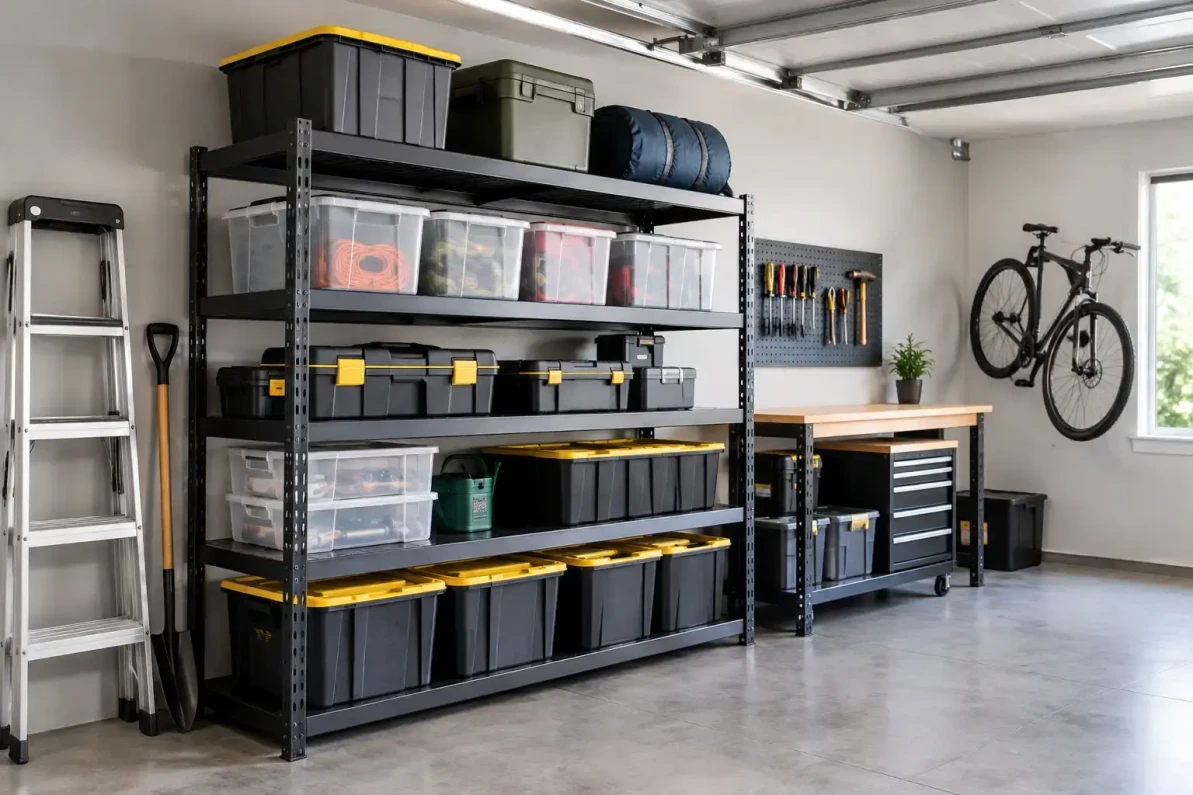
Best Garage Racks for Organized, Usable Space
A garage becomes hard to use when storage spreads across the floor. Bikes lean against boxes, tools disappear behind seasonal bins, and parking space shrinks one item at a time. The best garage racks address that problem by moving supplies upward, creating clear zones, and making frequently used items easier to reach.
The right choice is not always the biggest rack or the one with the highest stated capacity. A homeowner storing paint, bins, and yard tools needs something different from a contractor organizing jobsite materials or a small business holding shipping supplies. Start with what you need to store, how often you need it, and how much wall, ceiling, and floor space is actually available.
What Makes the Best Garage Racks Worth Buying?
A useful garage rack should solve a specific storage problem without making the garage harder to navigate. That usually comes down to four practical factors: capacity, dimensions, installation requirements, and access.
Capacity matters, but it should be considered shelf by shelf, not just as one large total. A rack may hold a substantial combined load, yet the weight still needs to be distributed across its shelves. Heavy toolboxes, cases of supplies, and power equipment belong on lower shelves whenever possible. Lighter bins and seasonal decorations can go higher.
Dimensions are equally important. Measure the available width, depth, and height before shopping. Then measure around the proposed location, including garage-door tracks, electrical panels, outlets, windows, and vehicle doors. A shelving unit that fits against a wall on paper may still block a car door or reduce the walking path to the house.
Access is the factor shoppers often overlook. Storing an item is only helpful if you can retrieve it without unloading half the garage. Keep items used weekly or monthly between knee and shoulder height. Reserve high shelves and overhead storage for things you use once or twice a year.
Best Garage Racks by Storage Need
There is no single best design for every garage. Most organized garages use a combination of rack types, with each one assigned a clear role.
Freestanding shelving racks for everyday supplies
Freestanding steel shelving is often the most flexible starting point. It works well for storage totes, automotive supplies, cleaning products, boxes, small equipment, and packaged inventory. Because it sits on the floor, it can usually be positioned where it makes the best use of an empty wall or corner.
Look for adjustable shelf levels if your items vary in height. This lets you leave extra space for tall containers while keeping shorter supplies from wasting vertical room. Open-wire shelving is easy to see through and does not collect as much dust as solid shelf surfaces, though small loose items may need to be kept in bins.
For renters, a freestanding rack can be especially practical because it may require less permanent installation than wall- or ceiling-mounted options. It is still smart to secure tall shelving to a wall when recommended by the manufacturer, particularly in busy garages or areas where children may be present.
Wall-mounted racks for floor clearance
Wall-mounted garage racks are a strong option when floor space is limited. They can hold bins, garden equipment, folding chairs, tools, and other items that tend to pile up in corners. By lifting storage off the floor, they also make sweeping, parking, and finding dropped items much easier.
The key consideration is the wall structure. A rack must be fastened into suitable framing or another approved mounting surface, using the correct hardware and installation method. Drywall alone is not a reliable support for heavy storage. If stud locations are unclear or the wall has unusual construction, verify the mounting plan before loading the rack.
Wall systems work best when the stored items are relatively predictable. If your garage contents change frequently, freestanding adjustable shelving may provide more flexibility.
Overhead racks for seasonal and bulky items
Ceiling-mounted racks make sense for items that are large but rarely needed. Holiday decorations, camping bins, spare household supplies, and seasonal gear are common examples. They can reclaim valuable wall and floor space in a crowded garage.
Overhead storage involves more planning than a standard shelf. Check ceiling height, garage-door clearance, lighting placement, and the location of ceiling joists. You should also consider whether you can safely lift and lower the items being stored. Large containers might fit overhead, but they are not a good choice if retrieving them requires balancing on an unstable stool or stretching beyond a comfortable reach.
Keep overhead loads organized in durable, clearly labeled bins. Avoid placing loose items overhead, and do not use this area for anything you need regularly.
Specialty racks for long, awkward gear
Some garage items take up more space because of their shape than their weight. Long-handled yard tools, ladders, extension cords, sports gear, and folding equipment can create clutter even when there is plenty of shelf space available. A dedicated wall rack or hook-style organizer can keep these items upright, separated, and visible.
Choose a specialty rack based on the actual shape of the item, not a vague category label. For example, a ladder needs support points that keep it stable and out of the walkway, while a garden-tool organizer needs slots or hooks that prevent handles from tangling together.
How to Choose the Right Size and Capacity
Before buying, make a simple inventory of what is currently taking up garage space. You do not need to count every screw or rag. Focus on the bulky categories: bins, tools, equipment, cartons, household overflow, and business supplies. Estimate how many containers you have now and leave room for a few more.
A practical approach is to group storage into three levels. Put the heaviest items low, commonly used items in the middle, and seasonal items high. This arrangement helps prevent a garage rack from turning into a stack of hard-to-reach boxes.
When comparing capacity, use the manufacturer’s stated limits and follow all assembly and loading instructions. Do not assume each shelf carries the same rating as the entire unit. Spread weight evenly across a shelf rather than concentrating it in one spot, and avoid loading a rack beyond its specified limit just because it appears sturdy.
Depth deserves careful attention. Deeper shelving holds more, but it can hide items at the back and make narrow garages feel tighter. A shallower rack may be the better choice near a parking area, while deeper shelves can work well on a rear wall where you have more room to stand and sort supplies.
Material and Construction Details That Matter
Steel racks are a common choice for garages because they are designed for demanding storage and are easy to clean. Powder-coated or corrosion-resistant finishes can be useful in garages that experience humidity, wet boots, snow, or occasional spills. Still, no finish replaces basic care. Wipe up moisture, inspect hardware periodically, and do not store leaking containers directly on shelving.
Wire shelves provide visibility and airflow, while solid shelves provide a flatter surface for smaller boxes and loose supplies. If choosing wire shelving, bins with flat bottoms help prevent wobbling. Adjustable feet can also be valuable on uneven concrete floors, helping the rack sit level and reducing rocking.
Pay attention to practical construction details: cross braces, locking shelf supports, wall-anchor points, and clear assembly instructions. These features are not glamorous, but they affect stability and setup time. For commercial or warehouse use, confirm that the rack dimensions and capacity match the cartons, supplies, or equipment you plan to store rather than relying on a general product description.
Plan the Layout Before You Install
The best garage racks support a layout, not just a pile of possessions. Start by keeping a clear path from the garage entrance to the home and around parked vehicles. Next, place frequently used categories close to where they are used. Yard equipment belongs near the garage door, for example, while vehicle-care products are often easiest to access near the parking area.
Avoid blocking access to utility equipment, electrical panels, or safety controls. Leave enough space to open bins and cabinet doors fully. If you use a cart, dolly, or mower in the garage, check that it can still move through the intended aisle after the racks are in place.
Labels make a bigger difference than many people expect. Use simple labels such as “car care,” “shipping supplies,” “holiday,” or “hardware,” and place them where they can be read without moving containers. For small businesses and e-commerce sellers, consistent labels can also make picking and replenishing supplies faster.
A Better Way to Start Organizing
You do not need to rebuild the entire garage in one weekend. Start with the area that causes the most daily frustration, whether that is the parking wall, the workbench corner, or a stack of bins near the door. Choose a rack style that fits that zone, measure carefully, and load it with the items that truly belong there.
A well-chosen rack creates more than storage capacity. It creates usable room for projects, vehicles, equipment, and everyday tasks. When you select the right size, install it correctly, and give each shelf a purpose, the garage becomes a practical part of the property again.
Recent Posts
-

Moving Dolly Capacity for Real-World Loads
A dolly rated for 800 pounds can still be the wrong choice for a 500-pound load. The issue is not al …Nov 21, 2026 -
Frigidaire Fridge Door Shelf Rail Broken: Replace 240534901
If the door shelf rail on your Frigidaire refrigerator has cracked, snapped off or keeps popping loo …Nov 21, 2026 -

Storage Totes for Contractors: Truck and Jobsite Guide
Every contractor knows the cost of a disorganized truck. You drive to the job, then spend twenty min …Nov 21, 2026